‘The arteries of modern civilization’: The US and allies take action to protect seabed cables

Global Powers Unite to Safeguard Critical Seabed Infrastructure
The arteries of modern civilization – International security cooperation has reached a new level as the United States, Australia, and the United Kingdom advance plans to fortify their defenses against threats to undersea cables. These vital networks, often referred to as the “arteries of modern civilization,” underpin global energy distribution and digital communication, making them prime targets for strategic disruption. The trio aims to deploy advanced unmanned submersibles under the framework of their AUKUS alliance, a move expected to be operationalized by the end of 2026. This initiative was announced during a high-level defense summit in Singapore, where officials outlined their shared commitment to countering emerging risks in maritime domains.
The growing concern centers on the potential for sabotage by Russia and China, which have increasingly targeted critical infrastructure. Additionally, Iran’s ability to exploit data routes in the Persian Gulf has raised alarms, prompting Western nations to prioritize maritime security. Australia’s Defense Minister, Richard Marles, emphasized the strategic importance of the seabed, stating it has become a battleground for geopolitical influence. “We have seen a surge in attacks on subsea systems that threatens the very foundations of global connectivity,” he remarked during the summit, underscoring the need for proactive measures against vessels suspected of covert operations.
Rising Threats in the Digital Age
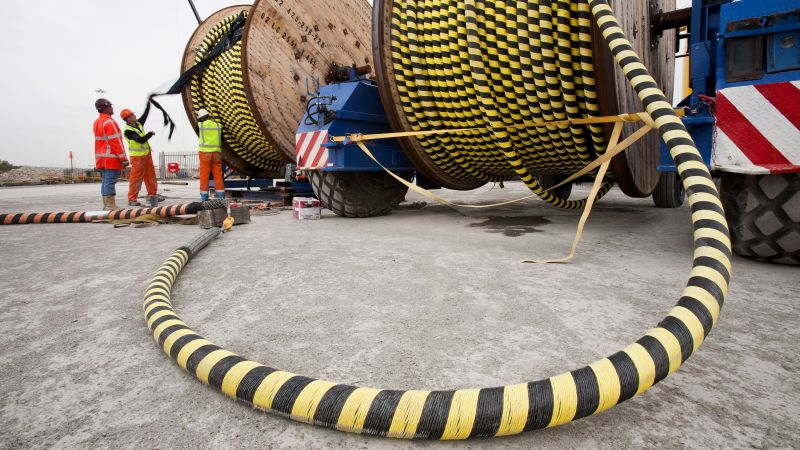
The reliance on undersea fiber-optic networks has never been greater, with approximately 570 cables—plus an additional 80 slated for expansion—carrying 95% to 99% of intercontinental data traffic. These cables transmit terabits per second, far surpassing the capacity of satellite systems, which underscores their critical role in sustaining economies and digital ecosystems. The vulnerability of these networks has intensified with the proliferation of green energy infrastructure, as cables now also support the global transition to renewable power sources. This dual function has made them indispensable yet exposed to a broader array of threats.
Recent events have highlighted the urgency of this task. Last month, the UK reported tracking three Russian submarines conducting clandestine surveillance missions in the North Atlantic, a development that aligns with broader concerns about underwater sabotage. “Our adversaries are using the seabed as a conduit for strategic advantage,” warned UK Defence Secretary John Healey, adding that any attempt to damage critical infrastructure would face swift and decisive retaliation. The UK’s parliamentary intelligence committee echoed this sentiment, noting that the nation’s systems might be targeted in a crisis, with doubts about its ability to respond effectively.
Innovating Defense with Underwater Technology
Central to the AUKUS strategy is the integration of autonomous underwater vehicles (AUVs) equipped with cutting-edge sensors and weaponry. These AUVs are designed to enhance reconnaissance capabilities, improve strike precision, and bolster anti-submarine operations. US Defense Secretary Pete Hegseth highlighted the adaptability of the new systems, stating they would “support undersea missions and sustain our collective edge in maritime operations.” The deployment of such technology is part of a broader effort to ensure uninterrupted connectivity, particularly as AI-driven data centers expand globally.
With the rise of massive AI data hubs in Saudi Arabia and the United Arab Emirates, the demand for secure and reliable undersea fiber optic networks has surged. These centers require robust infrastructure to deliver digital services across continents, making the cables a linchpin in the digital economy. However, the Gulf conflict has disrupted projects like Meta’s 2Africa Pearls initiative, which was intended to extend a 45,000-kilometer cable system through the region. This setback reflects the broader challenges of maintaining critical infrastructure in volatile geopolitical environments.
Western governments have also criticized European allies for underinvesting in defense capabilities, particularly in securing maritime routes. President Donald Trump previously lambasted European nations for their lack of commitment to naval operations and freedom of navigation in the Gulf. Yet, despite these criticisms, the US continues to collaborate with partners in Europe and Asia on innovative defense technologies, including drones that play a pivotal role in modern warfare. The AUKUS program builds on this collaboration, blending advanced robotics with traditional military strategies to counter evolving threats.
The UK has been vocal about the risks posed by Russia’s deep-sea surveillance capabilities. Its Main Directorate of Deep Sea Research has developed specialized submarines for monitoring undersea cables, as revealed in earlier CNN reports. This capability has raised concerns among European intelligence agencies, which have documented instances of Russian shadow fleets—comprising oil tankers and other vessels—being used for espionage and sabotage. Since the full-scale invasion of Ukraine in 2022, there have been multiple incidents in the Baltic Sea involving damage to both gas pipelines and data cables, illustrating the interconnected nature of physical and digital infrastructure.
Marles reiterated the existential stakes of the situation, pointing out that island nations like Australia are particularly vulnerable due to their geographic positioning. “Over the past 18 months, attacks on subsea systems have escalated to an unprecedented scale,” he stated, noting the frequency and intensity of such threats. This sentiment is shared by the UK, where Telecoms Minister Liz Lloyd described the cables as “digital highways” that facilitate everything from financial transactions to international trade. The disruption of these systems could have cascading effects, from economic instability to communication breakdowns.
The AUKUS project represents a significant leap in maritime defense, combining technological innovation with strategic diplomacy. By leveraging unmanned submersibles, the alliance aims to create a more agile and responsive force capable of detecting and neutralizing threats in real time. This initiative also aligns with broader efforts to counter Russian influence in key regions, particularly the Atlantic and Gulf areas. As the world becomes increasingly dependent on undersea networks, the need for robust protection mechanisms has never been more pressing.
Experts predict that the AUKUS alliance will set a new standard for undersea security, integrating advanced surveillance, rapid response systems, and data protection measures. The collaboration not only strengthens the trio’s military capabilities but also reinforces their economic ties, ensuring the continuity of digital and energy systems. With the stakes rising, the focus on seabed security is expected to expand, potentially influencing future defense strategies and international partnerships.