
Who is the Ukrainian tycoon at the center of mysterious Monaco bombing?
Who is the Ukrainian tycoon at the center of mysterious Monaco bombing?
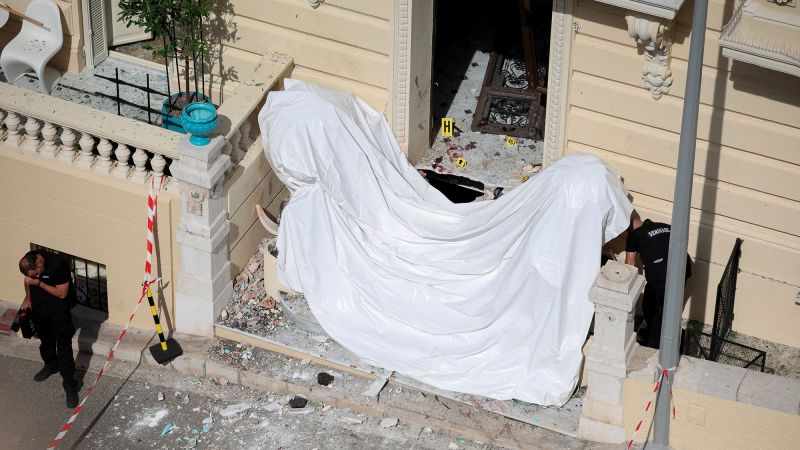
Who is the Ukrainian tycoon at – Monaco, the tiny luxury city-state renowned for its opulence and law-abiding reputation, found itself thrust into a crisis of uncertainty after a bomb attack targeted a Ukrainian-born millionaire on Monday. The incident, which left the victim critically injured, has raised questions about motives and connections, leaving residents in shock. While the identity of the injured individual was initially unclear, reports from CNN’s French affiliate BFMTV confirmed that Vadym Yermolaiev, a prominent figure in Ukrainian business circles, was the primary target of the explosion. The attack, occurring just moments before the device detonated, shattered the city’s image of tranquility and security.
Yermolaiev’s Financial Rise and Personal Life
Vadym Yermolaiev, now 58, built his fortune in the southeastern Ukrainian city of Dnipro during the chaotic post-Soviet era. His career centered on real estate development, and at one point, he was listed among Ukraine’s wealthiest individuals. Beyond his business ventures, Yermolaiev was deeply involved in the city’s Jewish community, a group that has historically played a vital role in Dnipro’s cultural and economic life. This connection adds another layer to the mystery surrounding the attack.
Yermolaiev’s personal life took a significant turn in 2019 when he renounced his Ukrainian citizenship. According to public records, he became a citizen of Cyprus, though he continued to reside in Monaco. The Ukrainian Foreign Ministry later stated that the injured individuals in the blast were part of a “family of Ukrainian origin,” highlighting the country’s possible stake in the incident. However, local authorities initially withheld specific details about the victim, only revealing that the man was a Monaco resident since 2021.
The Son’s Criminal Connections
Yermolaiev’s family ties to Ukraine’s underworld may offer clues. His son, Artur Yermolayev, is a well-known figure in the nation’s criminal landscape. Arrested in Cyprus in 2021 over allegations of leading a large-scale fraud scheme, Artur was later extradited to Estonia, where he was convicted of orchestrating a deceptive investment operation. The court documents describe the scheme as a complex phone-based scam that lured victims across Europe with promises of high returns, only to steal approximately 100 million euros ($114 million) between 2019 and 2022.
Artur’s activities in Estonia alone accounted for 5.4 million euros ($6.16 million) in losses. Despite his conviction, he avoided serving the full five-year sentence, opting for a deal that allowed him to be deported after just four months. As part of the agreement, he paid a fine of 8.5 million euros and covered the costs of his extradition to Estonia. Estonian media later reported that he was sent to Israel, though the exact reason for his relocation remains unspecified. This connection to his son’s criminal past may have influenced the recent attack, though no direct link has been established yet.
Monaco’s Unique Environment and the Attack’s Impact
Monaco, a place where wealth and privacy are prioritized, has long been considered a haven for the affluent. Its legal system, tax policies, and low crime rates have attracted residents from around the world. The bombing, however, disrupted this carefully maintained order. The city’s Minister of State, Christophe Mirmand, noted that such an attack had never occurred before, emphasizing the unprecedented nature of the event. The explosion at Yermolaiev’s residence not only injured him but also two others—a woman and a child—whose identities remain undisclosed.
The blast’s timing and location have sparked speculation about its significance. Yermolaiev, who was not present at the scene during the attack, was speaking to Ukrainian media on Tuesday. His wife confirmed that she was not at home when the explosion happened and sustained no injuries. These details suggest the attack was intentional, targeting Yermolaiev specifically. Yet, the broader implications of the event remain unclear, with no immediate indication of a political or ideological motive.
Yermolaiev’s Statements and the Motive Debate
Yermolaiev has shared insights into his decision to leave Ukraine. In an interview cited by the Ukrainian edition of Forbes, he explained that he renounced his citizenship to secure “international protection.” He criticized Ukraine’s judicial system, calling it “not perfect,” and highlighted concerns about the fairness of its tax policies. These remarks underscore his belief that the country’s legal and financial frameworks posed risks to his personal safety.
“The Ukrainian judicial system, to put it mildly, is not perfect, and the tax system is not objective,” Yermolaiev was quoted by Forbes as saying.
Despite his criticisms, Yermolaiev’s actions have been scrutinized. He was sanctioned by Kyiv in December 2023 for conducting business in Russian-occupied Crimea, an allegation he disputed. This controversy adds to the complexity of the case, as it raises questions about his potential ties to the war in Ukraine. Yet, the attack itself seems to have been a personal act, leaving investigators to piece together a puzzle that includes both domestic and international elements.
The attack has also reignited debates about the safety of high-profile individuals in Monaco. While the city is typically secure, the incident highlights vulnerabilities in its infrastructure and the possibility of foreign operatives exploiting its status as a tax haven. Some analysts suggest that Yermolaiev’s dual citizenship and international business dealings may have made him a target for those seeking to disrupt his financial interests or retaliate against his actions in Crimea.
Ongoing Investigations and Public Reaction
As of now, the motive behind the attack remains elusive. Authorities have not yet identified the suspect, and the bomb’s origin is still under investigation. The incident has prompted a mix of reactions from Monaco’s residents, who are now questioning the security of their city. Some have speculated that the attack could be a warning or a broader strategy to target Ukrainian expatriates living in Europe’s wealthiest regions.
Monaco’s reputation as a refuge for the elite contrasts sharply with the chaos of the bombing. The city’s tax regime, which allows residents to pay minimal taxes on global income, and its strict privacy laws have long made it an ideal location for wealthy individuals. However, the attack has exposed potential weaknesses in this system, as it left the victim and his family vulnerable despite their financial security. The incident also serves as a reminder of the global reach of Ukraine’s criminal networks, which have extended into Cyprus, Estonia, and even Israel.
Yermolaiev’s story is emblematic of the complex web of fortunes and tensions that define Ukraine’s post-Soviet era. From Dnipro’s bustling markets to Monaco’s gilded avenues, his journey reflects the country’s struggle to balance economic growth with political stability. As the investigation continues, the bombing stands as a symbol of the fragility of that balance, and the unpredictable dangers that can arise for those who have built their lives abroad.
CNN’s report on the incident was contributed by Lex Harvey, Stephanie Halasz, Victoria Butenko, Elina Baudier Kim, and Kosta Gak. Their findings shed light on the lives and connections of those involved, but the full story of the attack and its perpetrator remains to be uncovered. For now, the city of Monaco is left to grapple with the implications of an event that disrupted its serene status quo and drew attention to the far-reaching influence of Ukrainian business and crime networks.
