Curfew established around Newark ICE facility after days of protests

Newark’s Delaney Hall ICE Facility Faces Nightly Curfew Amid Protests
Curfew established around Newark ICE facility – After days of escalating demonstrations, a nightly curfew has been imposed around Delaney Hall, a 1,000-bed immigration and customs enforcement (ICE) facility in Newark, New Jersey. The measure aims to enhance public safety following tensions that flared between protesters and law enforcement. Mayor Ras J. Baraka emphasized the urgency of the situation, stating in a Sunday statement that police intervention was necessary to prevent further incidents. “The conditions at Delaney Hall have worsened, and multiple individuals have already been arrested with weapons, highlighting the gravity of the threat,” he said.
Curfew Details and Immediate Measures
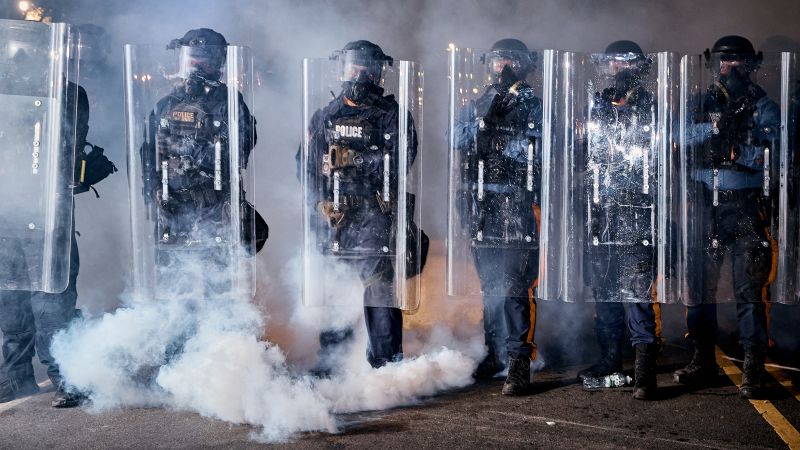
The curfew, which began at midnight Sunday, will remain in effect from 9 p.m. to 6 a.m. each night until additional information is provided. This decision follows a series of confrontations outside the facility, including a violent clash on Saturday night that involved both protesters and officers. Video footage from the scene showed mounted police moving into crowds, tear gas being deployed, and protesters using debris like chairs to ignite fires in the streets. “These actions have endangered both peaceful demonstrators and law enforcement personnel,” said state police Lt. Col. David Sierotowicz during a midday news conference.
Protest Context and Allegations
Protesters have gathered outside Delaney Hall for several days, drawing attention to reported inhumane conditions for detainees. Some of the detainees’ legal representatives claim tensions first heightened during the Memorial Day weekend, when hundreds of individuals participated in a hunger strike to protest the quality of food and overall living standards. Despite this, the Department of Homeland Security (DHS) has dismissed the hunger strike, asserting that it was not an organized event. “The protest was chaotic, with masked individuals breaking barriers and engaging in aggressive behavior,” said Governor Mikie Sherrill, who also noted that projectiles were thrown and tires were set ablaze.
Sherrill further stated that the incident involved “national extremist groups,” though she did not specify which organizations were involved. “I am unsure of their motives, but these actions threaten New Jersey’s commitment to public safety and humane treatment of detainees,” she added. The governor also announced that limited visitation at the facility would resume at noon on Sunday, with regular visitation hours reinstated on Monday. This decision followed her request to DHS to address the issue of restricted family access, which had been a point of contention among advocates.
Political Backing and Institutional Defense
Homeland Security Secretary Markwayne Mullin has defended the facility’s conditions, criticizing politicians who highlight the challenges faced by detainees. During a cabinet meeting earlier in the week, Mullin argued that “illegal aliens” are treated better than any lawbreakers in history, with three meals a day, medical care, and due process. “The claim that there was a hunger strike is misleading,” he said, adding that some detainees refused to eat only because they wanted “ethnic group or ethnic-right food.”
Meanwhile, acting assistant secretary Lauren Bis has accused “sanctuary politicians” of spreading false information about the facility. “These smears are inciting violent riots outside Delaney Hall,” she stated in a Friday press release. The controversy has drawn attention from national figures, including House Minority Leader Hakeem Jeffries, who visited the facility on Sunday and described the conditions as “unsanitary, with inadequate medical care and unhealthy food.” He pledged continued oversight to ensure detainees are treated with dignity and humanity.
Impact and Public Reaction
The protests have sparked widespread concern among residents and advocates, with some questioning the balance between security and civil liberties. As the crowds grew larger, a SWAT team arrived in full riot gear, alongside officers from local police departments and the New Jersey State Police, to manage the situation. Despite the chaos, Sierotowicz noted that the protest remained orderly, though the presence of extremists and the use of aggressive tactics have raised alarms.
Attorney Alex Minogue, representing detainees at Delaney Hall, criticized the DHS statement, saying, “Many people are suffering from worms in their food, and that’s not a choice—they just don’t want to eat worms.” This sentiment reflects the frustration of those inside the facility, who feel their complaints are being overlooked. The situation has also drawn criticism from New Jersey Representative Rob Menendez, who has witnessed the conditions firsthand and called for greater scrutiny of the facility’s operations.
Broader Implications and Future Steps
The events at Delaney Hall highlight the growing divide between ICE and its critics, with protests intensifying as allegations of mistreatment persist. While the curfew is a temporary measure to restore order, it has not silenced the voices of those demanding accountability. Sherrill’s promise to reinstate family visitation is a step toward addressing concerns, but the underlying issues of food quality, medical care, and living conditions remain unresolved.
As the debate continues, the role of the media in shaping public perception becomes increasingly critical. CNN has covered the unfolding crisis, providing real-time updates on the clashes and the statements from officials. The combination of grassroots activism and political rhetoric has created a volatile environment, with the potential for further escalation. For now, the curfew stands as a symbol of the authorities’ response to a situation they describe as dire.
Delaney Hall’s position as a privately operated facility adds another layer to the controversy, as it allows for greater autonomy in management practices. Critics argue that this independence has led to a lack of transparency, while supporters of ICE highlight the facility’s capacity to handle large numbers of detainees efficiently. The balance between efficiency and compassion, however, seems to be under scrutiny, with protests continuing to draw attention to the human cost of the operations.
With the federal government and state officials both facing pressure to improve conditions, the future of Delaney Hall remains uncertain. The curfew is intended to provide immediate relief, but long-term solutions will require addressing the root causes of the unrest. As the community watches closely, the interplay between policy, protest, and public safety will likely define the next chapter of this ongoing crisis.
Quotes from Key Figures
“The escalating situation at Delaney Hall and the increasing need for police intervention have necessitated immediate action to protect public safety.”
“I do not know why these individuals attacked or what they wanted to accomplish, but I refuse to let these dangerous actions detract from New Jersey’s dedication to ensuring public safety.”
“Many detainees have been subjected to having worms in their food, and I wouldn’t say, as Mr. Mullin stated, that is an ‘ethnic choice of food’—I think they just don’t want to eat worms.”
“These types of smears are inciting violent riots outside the ICE facility in New Jersey.”
“No lawbreakers in the history of human civilization have been better treated than illegal aliens.”
The combination of these statements underscores the polarized views surrounding Delaney Hall, as the facility becomes a focal point for both national and local debates. For now, the curfew and the resumption of family visitation mark the latest efforts to stabilize the situation, though the path forward remains unclear. The protests, however, show no sign of slowing, as the community continues to demand change.