Search to recover 9 missing employees to resume after deadly chemical tank rupture in Washington

Search to recover 9 missing employees to resume after deadly chemical tank rupture in Washington
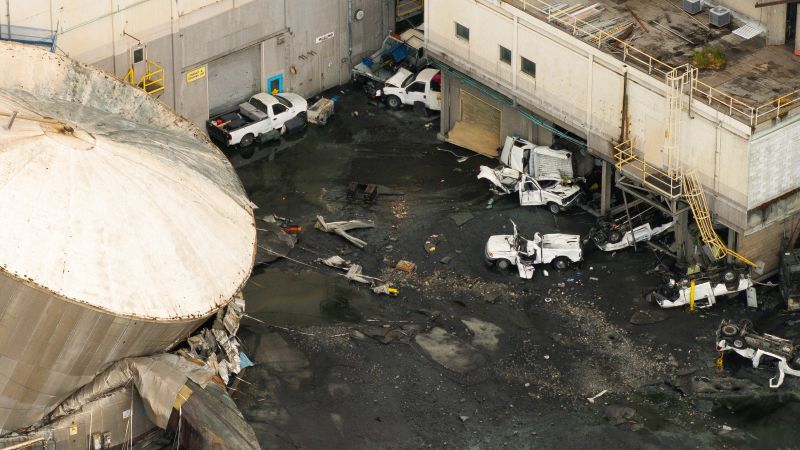
Search to recover 9 missing employees – Washington state authorities have announced that recovery operations for nine missing workers will begin anew on Wednesday following a catastrophic chemical tank rupture at the Nippon Dynawave Packaging Co. facility in Longview. The incident, which occurred on Tuesday morning, left at least one fatality and nine others injured. The ruptured tank, holding 900,000 gallons of hazardous material, is believed to still contain approximately 90,000 gallons of liquid, according to officials. The substance, known as white liquor, is a key component in paper production and can cause severe burns upon contact with the skin.
Stabilizing the Site for Recovery Efforts
Firefighters and emergency responders were forced to halt their search on Tuesday evening due to the instability of the damaged tank. Concerns arose that the tank might collapse, endangering first responders and exposing them to corrosive chemicals used in the plant’s pulp manufacturing process. “At the moment, we are not aware of any rescues that are yet to be made,” said Scott Goldstein, a Cowlitz County fire official, during a Tuesday briefing. Collaborative efforts between local, regional, and state agencies, along with facility personnel, are underway to reinforce the site and ensure it is safe for further operations to commence Wednesday morning.
The tank’s rupture triggered a chain reaction that led to an implosion, escalating the danger for those nearby. While the immediate threat to the community has been deemed low, the Longview Fire Department urged residents to stay clear of the area, particularly near the dikes and ditches between Washington Way and Prudential Boulevard. Officials noted that about 500,000 gallons of the chemical mixture were released, mixing with water from a ruptured on-site fire main. This combination is currently contained within the facility, Goldstein confirmed.
A Pattern of Industrial Accidents
The recent incident adds to a string of industrial disasters across the U.S. in recent months. In Southern California, a chemical tank emergency was averted last week after authorities managed to prevent an overheating tank from exploding, prompting the evacuation of tens of thousands of residents. A crack in the tank helped relieve pressure, eliminating the risk of a catastrophic blast. Similarly, in April, a chemical leak involving nitric acid and another substance at a West Virginia plant resulted in two deaths and over a dozen injuries, reported by The Associated Press.
Last October, an explosion at a Tennessee explosives plant killed 16 employees, with the blast registering as a 1.6 magnitude earthquake. Two months prior, a similar event at a US Steel facility in Pennsylvania injured more than 10 workers, one of whom was trapped under rubble. These events highlight the ongoing challenges faced by industrial sites, particularly those handling volatile materials. The Nippon Dynawave incident underscores the risks associated with large-scale chemical storage and the critical need for safety protocols in such environments.
Details of the Rupture and Its Consequences
Although the exact cause of the rupture remains under investigation, initial assessments suggest the tank’s failure was sudden. The substance inside, white liquor, is not only corrosive but also highly caustic, capable of causing second- and third-degree burns upon skin contact. Battalion Chief Matt Amos of the Longview Fire Department emphasized the dangers of inhaling concentrated vapor, which can irritate the respiratory system and eyes, even if it doesn’t pose an immediate life-threatening risk.
Officials have observed a temporary increase in pH levels in nearby waterways, prompting them to shut down dike system pumps in those areas to prevent further contamination. The situation has been closely monitored to ensure the chemical mixture does not spread beyond the facility. Despite these precautions, the surrounding community is advised to avoid the area until the site is fully stabilized. The plant, which produces pulp for paper products and paperboard used in packaging items like cups and cartons, is located in Longview, about 50 miles north of Portland, Oregon, and 130 miles south of Seattle.
Medical Response and Ongoing Recovery
PeaceHealth St. John Medical Center initially received nine patients from the Longview facility, including one who succumbed to their injuries and four others transferred to other hospitals. The injured range from those with mild symptoms to individuals suffering from severe chemical burns and eye or airway irritation. Three patients were later discharged, while one remains in fair condition, according to the medical center’s spokesperson. The incident has raised questions about the safety of industrial operations and the preparedness of facilities to handle emergencies.
As recovery efforts resume, teams will prioritize locating the nine missing employees. The search is expected to face significant challenges due to the hazardous environment and unstable conditions. Goldstein noted that the primary focus is now on securing the site and minimizing the risk of additional casualties. The company, Nippon Dynawave Packaging Co., has yet to provide detailed comments on the incident, though CNN has reached out for clarification. The event serves as a stark reminder of the potential dangers associated with chemical storage and the importance of rapid response in industrial accidents.
With the site now stabilized, the search for survivors and the retrieval of missing personnel can proceed. However, the ongoing investigation into the cause of the rupture will be crucial in preventing similar incidents in the future. The plant’s location and the scale of the disaster have drawn attention to the broader implications for industrial safety across the region. As the situation unfolds, officials will continue to monitor the environmental impact and provide updates on the recovery process.
“We’ve taken all necessary measures to secure the site and ensure the safety of both responders and the public,” said Goldstein. “The priority is to recover the missing individuals while maintaining control of the hazardous materials.”
The rupture has also prompted a review of safety procedures at other paper plants and chemical facilities. Industry experts are analyzing the incident to determine whether systemic issues or a single point of failure led to the disaster. The use of white liquor, a byproduct of the paper-making process, has been a focal point of discussions. While the substance is essential for production, its handling requires stringent precautions to prevent accidents. The Nippon Dynawave case highlights the potential for even minor equipment failures to escalate into life-threatening emergencies.
As the community begins to process the event, the focus remains on the missing workers and the families affected. The plant’s management is expected to provide more information in the coming days, including details about the rupture’s cause and the company’s response. Until then, the search for answers continues, with every step taken to ensure the safety of those involved and the surrounding environment.