
Alabama urges US Supreme Court to bring back GOP-friendly House map for midterm elections
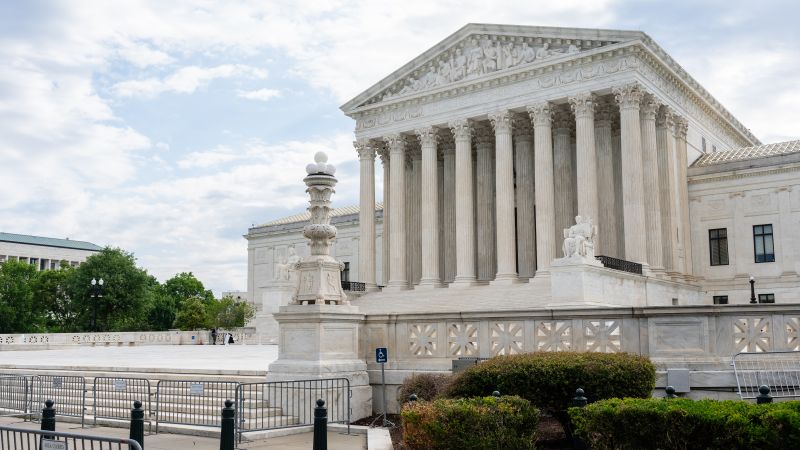
Alabama Calls on Supreme Court to Revisit GOP-Friendly House Map for Midterms
Alabama urges US Supreme Court to bring – Alabama has called on the U.S. Supreme Court to approve a congressional redistricting plan that could bolster Republican representation in the House of Representatives ahead of the 2026 midterms. The state’s request follows a recent federal court ruling that deemed the map discriminatory, prompting officials to seek a legal reversal. The decision has reignited debates over voting rights and the impact of redistricting on electoral outcomes, with Alabama officials arguing that the Supreme Court’s latest interpretation of the Voting Rights Act supports their position.
At the center of the dispute is a proposed map that Republican lawmakers claim will create a more favorable voting environment for their party. The plan would establish a district where Democratic Rep. Shomari Figures, a key Black voice in Alabama’s congressional delegation, is expected to face an uphill battle against a GOP candidate. This shift has drawn criticism from civil rights advocates, who argue the boundaries disproportionately dilute Black voters’ influence. However, Alabama’s appeal to the Supreme Court underscores its belief that the current federal ruling overreaches in its application of voting rights protections.
Supreme Court’s Role in Redistricting
“The Supreme Court’s decision in Louisiana v. Callais provides a clear legal foundation for our map,” stated Alabama officials in their filing.
This argument centers on the court’s recent narrowing of the Voting Rights Act’s standards, which Alabama claims allows for a more balanced approach to redistricting. The state’s case hinges on the idea that the proximity of the midterms makes it critical for the Supreme Court to intervene, as last-minute changes by federal judges could be seen as undue interference.
The federal court’s rejection of Alabama’s map earlier this week highlighted concerns about intentional racial gerrymandering, with judges citing evidence that the boundaries were crafted to minimize Black voting power. Despite this, Alabama’s lawmakers remain undeterred, emphasizing that the Supreme Court’s ruling in Callais sets a precedent for their efforts. The upcoming elections will serve as a test of whether this legal strategy can reshape the political landscape in favor of the GOP.
History of the Redistricting Battle
Alabama’s push for a GOP-friendly map is part of a larger pattern of redistricting challenges that have spanned decades. The state has repeatedly contested congressional boundaries, often citing the need to maximize electoral efficiency for its political party. In 2023, the Supreme Court had previously endorsed a court-ordered map that created a second Black-majority district, a move seen as a victory for Democratic representation. However, the current plan seeks to reverse that progress by returning the House seat to Republican control.
Lawmakers argue that the 2023 map, while ensuring two Democratic seats, inadvertently benefited the GOP by creating a more compact and competitive voting structure. Their latest proposal aims to adjust these boundaries to further consolidate Republican strength. Civil rights groups, meanwhile, warn that the new map could undermine the Voting Rights Act’s protections, particularly in districts where Black voters have long been a decisive force. The Supreme Court’s response to Alabama’s appeal will determine the fate of this strategy in the midterms.
Republican Governor Kay Ivey has publicly backed the map, framing it as a necessary step to secure electoral gains. The state’s argument rests on the timing of the midterms, with officials asserting that delays in court proceedings could cost the GOP crucial seats. This appeal aligns with broader conservative efforts to influence redistricting through legal channels, leveraging the Supreme Court’s shift in judicial philosophy to challenge previous rulings. As the midterms approach, the outcome of this case could have far-reaching implications for voting rights and partisan control.
