
UK cyberspying chief says the West is between peace and war as Russia ramps up hybrid attacks
UK Cyberspying Chief Says the West is Between Peace and War as Russia Ramps Up Hybrid Attacks
UK cyberspying chief says the West – Britain’s head of cyber intelligence, Anne Keast-Butler, has issued a stark warning about the growing threat posed by Russia, declaring that the West now finds itself in a precarious state where the line between peace and war is increasingly blurred. Speaking at a historic venue in London, the GCHQ director highlighted the accelerating use of artificial intelligence as a tool of geopolitical warfare, emphasizing its potential to disrupt global stability in ways that challenge traditional definitions of conflict. Her remarks underscore a critical shift in the nature of modern threats, as hybrid strategies blend cyber operations with physical attacks and information campaigns to destabilize adversaries.
“I’ve spent three decades working in national security, and the risk of miscalculation is as high as I’ve ever seen it,” Keast-Butler said in a speech at Bletchley Park, the former World War II code-breaking center. Her words reflect a deep concern that AI-driven technologies are becoming central to Russia’s efforts to outmaneuver the West, even as the country’s military losses in Ukraine mount.
The Evolving Threat Landscape
Keast-Butler framed the current situation as a “gray zone” where Russia’s hybrid activities operate just beneath the surface of full-scale war. These actions, she argued, target not only military assets but also the very foundations of democratic societies, including critical infrastructure, supply chains, and public trust. The scale of these operations has intensified, with Russian forces reportedly conducting daily cyberattacks alongside physical strikes, a strategy that complicates efforts to assess the true extent of their aggression.
The GCHQ chief pointed to the rapid development of AI as a pivotal factor in this shift. “Tech companies are rapidly deploying AI innovations, each step bringing new consequences,” she said. “Algorithms are being weaponized in a manner that closely approaches, but remains just below, the level of conventional warfare.” This underscores the urgency with which the UK and its allies must address cybersecurity, as the speed of technological advancement outpaces the ability to adapt defenses. “AI is an unstoppable force with great opportunity,” she added, “but it is also a force with risks.”
Strategic Priorities in Cyber Defense
A key focus of GCHQ’s efforts, Keast-Butler stated, is protecting the data and energy systems that underpin Britain’s infrastructure. “One area in sharp focus for us is safeguarding the critical cables and pipelines in and around British waters,” she explained. These physical and digital lifelines, she argued, are essential to maintaining national security, and their vulnerability to Russian sabotage poses a significant risk. “We do this by exposing Russia’s intent, motive, and underwater capabilities,” she said, highlighting the agency’s dual role in monitoring both cyber and physical threats.
Despite the escalating cyber aggression, Keast-Butler acknowledged that Russian military forces are struggling on the battlefield in Ukraine. Recent intelligence reports suggest that combat deaths have reached nearly 500,000 since the invasion began in February 2022. However, she warned that this does not signal a retreat in Russia’s broader strategy. “The country is scaling up its daily hybrid activity against the UK and Europe,” she said, noting that these operations span from the seabed to cyberspace, creating a multifaceted challenge for Western nations.
Global Cybersecurity Concerns
Keast-Butler’s warning aligns with a growing chorus of intelligence experts across the West. In recent months, authorities in Sweden, Poland, Denmark, and Norway have reported Russian-linked hackers targeting their power plants, dams, and other vital infrastructure. These incidents illustrate how hybrid warfare has evolved to exploit weaknesses in both physical and digital domains. “The ground beneath our feet is shifting,” she said, stressing that the West must act swiftly to avoid falling behind in the cybersecurity race.
The UK’s National Cyber Security Centre (NCSC) has also raised alarms about the rising sophistication of cyberattacks. Its head, Richard Horne, warned last month that hostile states such as Russia, China, and Iran are behind the most severe cyber threats facing Britain. He cautioned that if the country becomes entangled in an international conflict, the frequency and intensity of these attacks could surge dramatically. “The risk is real,” Horne said, “and the stakes are higher than ever.”
Collaboration and the Role of International Partnerships
Keast-Butler emphasized that the UK’s ability to counter Russian threats depends heavily on international cooperation. “The UK-US intelligence partnership is fundamental for the security of both our nations,” she stated, pointing to the strain caused by President Donald Trump’s “America First” policies and his skepticism toward long-standing alliances. “Without this collaboration, we risk being outmaneuvered by a technologically advanced adversary.”
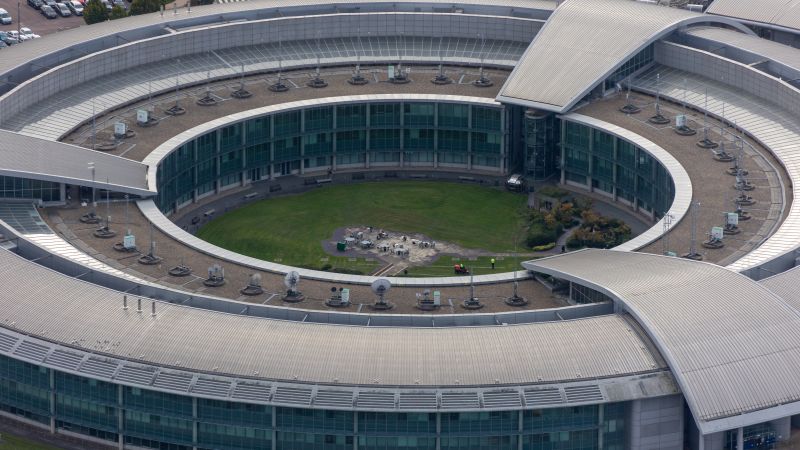
GCHQ, which stands for Government Communications Headquarters, works closely with MI5 and MI6 to monitor and mitigate threats. As the first woman to lead the agency, Keast-Butler has positioned herself as a leader in navigating the complexities of the digital age. Her speech at Bletchley Park, the site of historic code-breaking efforts during World War II, symbolized the connection between past and present intelligence strategies. “This building was where the world’s first computers were built,” she remarked, drawing a parallel between wartime innovation and today’s cyber challenges.
The GCHQ director’s call for a “narrowing window” to stay ahead of rivals like China highlights the competitive edge that technology now provides. “We must make cybersecurity 10 times more urgent,” she said, urging action from government officials, corporate leaders, and everyday citizens. “From boardrooms to living rooms, the entire nation must be vigilant.”
Future of AI in Cyber Defense
Looking ahead, Keast-Butler outlined GCHQ’s plan to integrate cutting-edge AI into cyber defense systems at machine speed. “We are developing a strategy to hardwire agentic AI into our security frameworks,” she said. This initiative aims to enhance the agency’s capacity to detect and neutralize threats, from translating foreign languages to analyzing vast data sets for hidden vulnerabilities. “AI can help us find needles in haystacks quicker than ever before,” she added, underscoring its transformative potential.
However, the rapid advancement of AI also raises concerns about its misuse. “The risk of miscalculation is growing,” Keast-Butler cautioned, noting that algorithms can be deployed in ways that escalate tensions without triggering a full-scale war. “We must ensure these tools are used responsibly,” she said, stressing the need for oversight to prevent unintended consequences. As the West grapples with hybrid threats, the balance between innovation and control will determine whether it can maintain peace or fall into conflict.
Keast-Butler’s speech also served as a reminder of the enduring importance of intelligence agencies in safeguarding national interests. “The lessons of Bletchley Park remain relevant,” she said, reflecting on the historical role of codebreakers in shortening the war and shaping modern computing. Today, the same principles of innovation and vigilance are being applied to the digital frontier, where the stakes are as high as they were during the last century’s global conflicts.
With Russia’s hybrid warfare strategy evolving at an unprecedented pace, the UK’s cyberspying chief has made it clear that the West must act decisively. “The battle for our future is not just in the skies or on the ground,” she said, “but in the code that powers our systems.” Her words signal a new era of cybersecurity, where the fusion of technology and strategy will define the outcome of the ongoing global struggle for dominance.
