Why is there fighting in Yemen and what does it mean for the Iran war?

Daftar Isi
Yemen Conflict Escalates as Houthi Forces Challenge Regional Stability
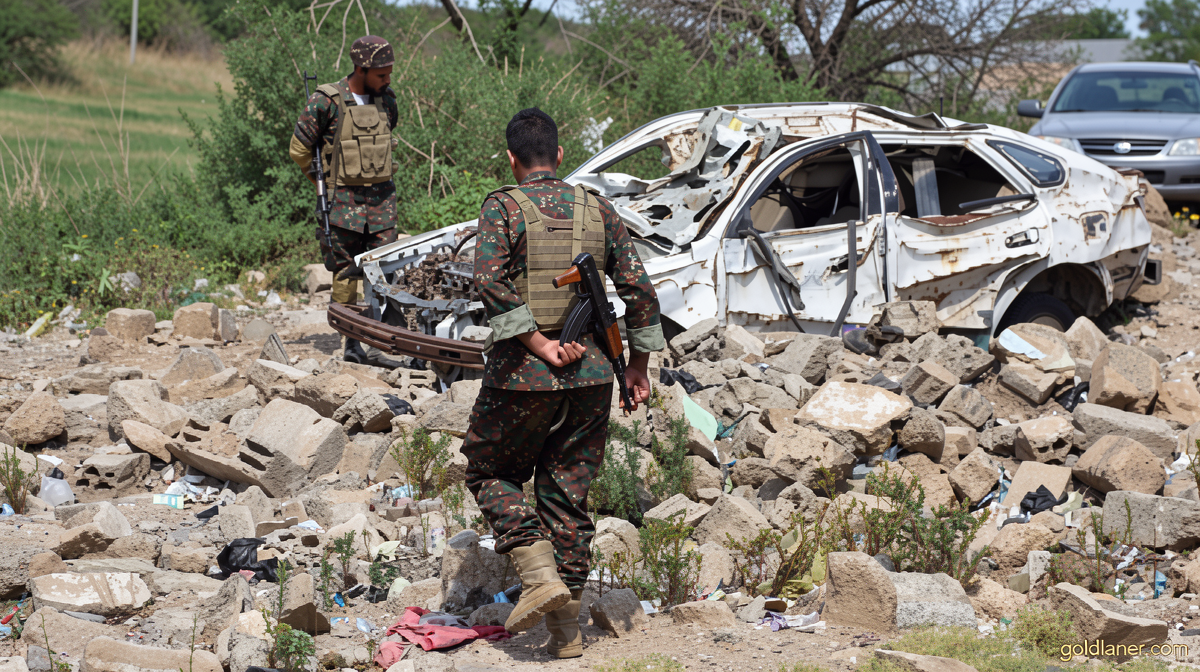
Goldlaner.com – Regional tensions are intensifying as Yemen’s Houthi movement, backed by Iran, initiates a series of strikes against American partners while closing off another vital maritime passage. This powerful militia, one of Tehran’s most significant allies in the Middle East, joined the broader conflict in March—just weeks following coordinated Israeli and American military operations against Iran—by launching missile barrages toward Israeli territory. Currently, the Houthi forces are engaged in combat with Yemen’s internationally recognized administration while simultaneously targeting Saudi Arabia, ending a four-year informal truce with the kingdom. This escalation unfolds amid uncertain maritime conditions in both the Strait of Hormuz and the Red Sea, coinciding with conflicting statements from Iran and the United States regarding whether direct negotiations to restore waterway access are occurring.
The renewed hostilities heighten concerns about a comprehensive war breaking out once again in Yemen. The previous conflict, which commenced in 2014, devastated the nation and created what became the most severe humanitarian emergency globally. Understanding this escalation requires examining its historical roots and potential consequences for the ongoing American-Iranian confrontation.
Historical Foundations of the Yemen Conflict
Yemen’s ongoing struggle spans more than ten years and centers primarily on tensions between Houthi insurgents and a Saudi-dominated coalition supporting the legitimate government. The Houthis represent Yemen’s Zaidi Shia Muslim minority and operate under the formal designation Ansar Allah, translating to “Partisans of God.” Following the Arab Spring uprisings of 2011, they captured a northern province and subsequently seized the capital city of Sanaa, maintaining control over Sanaa alongside substantial portions of Yemen’s Red Sea coastline throughout.
Through these territorial gains, the Houthis integrated into Iran’s “Axis of Resistance”—a comprehensive network of allied militant organizations spanning the region—while receiving weapons systems and technological support from Tehran. Saudi Arabia, a key American ally, dedicated seven years attempting unsuccessfully to remove the Houthis from northern Yemen, initiating a major military campaign against the movement in 2015. The resulting conflict generated one of humanity’s most devastating humanitarian emergencies.
A temporary truce materialized in 2022, though it never evolved into permanent peace. That same year, Yemen’s internationally recognized government, functioning under the Saudi-supported Presidential Leadership Council, was established within Saudi territory. Riyadh has consistently supported this government through aerial and naval operations alongside limited military deployments. Saudi Arabia subsequently maintained economic and aerial restrictions against Houthi-controlled territories, restrictions the movement has attempted to dismantle in recent weeks.
Saudi Arabia’s Growing Entanglement
Despite attempting to remain detached from regional conflicts, Saudi Arabia has become increasingly involved. The kingdom endured numerous missile strikes during the broader war and continues confronting attacks from Iranian-backed organizations in Iraq and Houthi forces in Yemen. The Houthis have emerged as particularly threatening to Saudi interests, targeting commercial oil vessels and establishing a blockade against Saudi maritime commerce through the Bab al-Mandeb Strait, a crucial maritime corridor positioned at the Red Sea’s southern entrance.
Analysts suggest the Yemeni rebel organization recognized an opportunity to recover losses sustained during the Iran conflict. While sharing ideological connections with Iran, the Houthis possess independent motivations for confronting Saudi Arabia. Danny Citrinowicz, former director of the Iran division within Israeli military intelligence, emphasized that Saudi Arabia’s confrontation with the Houthis remains unresolved, noting the movement has apparently surpassed a significant boundary.
“At the heart of Riyadh’s problem is the fact that the Houthis appear to have crossed a political and military threshold: they are no longer willing to return to a status quo in which Saudi Arabia can impose or support a maritime and land blockade on areas under their control without facing retaliation,” he wrote on X.
Citrinowicz further explained that the Houthis seem to adopt Iran’s strategic reasoning, believing “that time and strategic asymmetry work in their favor.” Becoming involved in an expanded conflict presents considerable risks for Riyadh. Over the past decade, the kingdom has prioritized attracting international investment and establishing itself as the region’s dominant economic force. This objective partly motivated its policy of improving relations with Iran well before the current war, ultimately producing a China-brokered agreement in 2023.
This strategy now faces serious challenges as Saudi Arabia finds itself positioned at the center of regional turbulence. Managing unpredictable opponents skilled in asymmetric warfare from multiple directions represents a fundamental challenge for military strategists. On Thursday, a Saudi representative informed CNN that the kingdom is preparing for “multiple coordinated attacks” involving Iraqi militia factions and Iranian-supported Houthi forces, citing “multiple intelligence reports” from both Saudi and American sources.
Regional Implications and Future Outlook
The current escalation carries substantial implications for regional stability and international commerce. The Bab al-Mandeb Strait handles approximately ten percent of global maritime trade, making any disruption economically significant. Additionally, the Strait of Hormuz, through which roughly twenty percent of worldwide oil passes, faces parallel security concerns as Iran and the United States navigate their diplomatic tensions.
Saudi Arabia’s economic transformation agenda, centered on reducing oil dependency through diversification and attracting foreign capital, faces potential setbacks if regional instability persists. The kingdom’s 2023 diplomatic breakthrough with Iran, which had previously been hostile, could unravel if Houthi attacks intensify or if Iranian involvement becomes more direct.
For Yemen, the consequences could be devastating. The previous war displaced millions, destroyed infrastructure, and created food and water shortages affecting millions of civilians. A renewed full-scale conflict would likely reverse some progress made during the ceasefire period and potentially draw in additional regional actors.
The situation remains fluid, with multiple diplomatic channels potentially offering pathways to de-escalation. However, the current trajectory suggests that the Yemen conflict, once considered contained, has re-emerged as a central element in broader Middle Eastern geopolitical struggles involving Iran, the United States, Saudi Arabia, and other regional powers.
Related Reading
Frequently Asked Questions
What is Why is there fighting in Yemen?
Why is there fighting in Yemen is the main topic of this guide. The article explains the context, practical details, and next steps readers should understand.
Why does Why is there fighting in Yemen matter?
Why is there fighting in Yemen matters because readers are looking for a useful answer, not just a short summary. Good content should match search intent and help them decide what to do next.