Lake Mead hits lowest water level on record as Colorado River crisis deepens

Daftar Isi
Colorado River Basin Faces Unprecedented Water Shortage as Lake Mead Reaches Historic Minimum
Goldlaner.com – The nation’s largest reservoir has plummeted to its lowest point in recorded history, signaling a deepening emergency for the Colorado River system that sustains millions across the American Southwest. On Thursday, water levels at Lake Mead measured 1,040.5 feet, surpassing the previous milestone of 1,040.58 feet established during July 2022. These figures, released by the US Bureau of Reclamation on Friday, confirm that the reservoir now sits at its minimum elevation since construction began nearly nine decades ago.
This dramatic decline represents more than a statistical anomaly. It reflects a fundamental shift in how the region manages its most critical water resource. The Colorado River, stretching 1,400 miles from the Rocky Mountains to the Gulf of California, has become increasingly strained under competing demands from agriculture, urban centers, and energy production.
A Reservoir System Under Pressure
Lake Mead, formed in the mid-1930s when the Hoover Dam redirected the Colorado River, serves as a vital water storage facility along the Arizona-Nevada boundary. More than 20 million residents depend on this reservoir for their daily water supply. Its counterpart, Lake Powell, faces similar challenges and could potentially reach record-low levels within coming weeks.
The combined water levels in both reservoirs dropped to their lowest point since 1957 during July. This historical comparison is particularly significant because 1957 predates Lake Powell’s initial filling, meaning the entire system has never simultaneously experienced such depleted conditions.
“Lake Mead and Lake Powell are essentially the region’s savings account, and we’ve been drawing it down for years because the river has been overallocated while enduring 25 years of persistent drought,” said Kathryn Sorensen, director of research at Arizona State University’s Kyl Center for Water Policy.
Climate Change Accelerates the Crisis
Multiple factors converge to create this unprecedented situation. Climate change has intensified temperatures and reduced precipitation across the basin. Snowpack levels, which historically provided steady water release through spring and summer melt, have declined significantly. Last winter’s snowpack was notably minimal, contributing to one of the lowest runoff years ever documented.
“There was very little snowpack last winter, and we’ve had one of the lowest runoff years on record,” said Sarah Porter, director of the Kyl Center for Water Policy at Arizona State University.
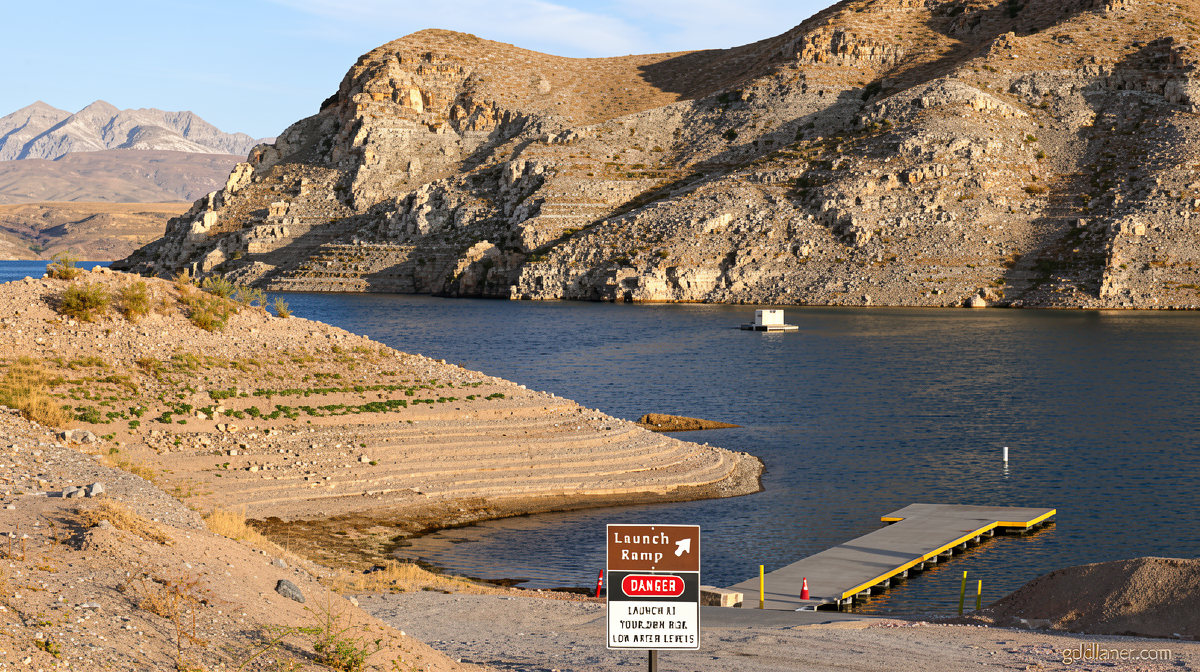
The visual evidence of this decline is unmistakable. Receding waters have exposed distinctive “bathtub rings” along Lake Mead’s rocky shoreline, creating permanent markers of previous water levels. These pale bands, etched into the canyon walls, tell a story of gradual but relentless depletion. The shrinking lake has also yielded unexpected discoveries, including a decades-old murder victim preserved in a barrel, found in 2022.
Regional Impact and Economic Consequences
The Colorado River’s importance extends far beyond water supply. The river irrigates more than 5 million acres of agricultural land, generates electricity sufficient for approximately 700,000 homes, and provides drinking water for 40 million people. It also supports diverse wildlife habitats and attracts millions of tourists annually.
Lake Mead earned designation as the United States’ first national recreation area in 1964. Its clear waters and surrounding mountain landscapes have long attracted visitors for boating, hiking, fishing, and camping. However, historically low water levels threaten this tourism economy. Exposed shorelines and reduced navigable areas may deter visitors, impacting local businesses and communities that depend on recreational tourism.
“Breaking the record is further evidence of the uncharted territory that the (Colorado River) Basin now finds itself,” said Jack Schmidt, director of the Center for Colorado River Studies at Utah State University.
Negotiations and Future Framework
Seven states share responsibility for managing the Colorado River’s declining resources. California, Nevada, and Arizona comprise the lower basin, while Utah, Wyoming, New Mexico, and Colorado form the upper basin. These states have engaged in complex negotiations for years, attempting to establish equitable water distribution as supplies diminish.
Deadlines have passed without resolution, prompting federal intervention. In July, the US Bureau of Reclamation unveiled a ten-year operating framework that could impose collective reductions of up to 3 million acre feet annually on lower basin states. This volume represents sufficient water to supply roughly 9 million average American households.
“This framework provides the flexibility to respond to changing hydrologic conditions while preserving the opportunity for the Basin States to continue working toward durable, consensus-based solutions,” said Secretary of the Interior Doug Burgum in a statement Friday.
Government officials emphasize their commitment to preventing both reservoirs from falling below critical elevations. Protecting infrastructure that supports water delivery and hydropower generation remains a priority as the basin navigates this challenging period. The coming months will test whether collaborative management strategies can prevent further deterioration of the Colorado River system or if more drastic measures become necessary to ensure long-term sustainability for the region’s communities and ecosystems.
Related Reading
Frequently Asked Questions
What is Lake Mead hits lowest water level?
Lake Mead hits lowest water level is the main topic of this guide. The article explains the context, practical details, and next steps readers should understand.
Why does Lake Mead hits lowest water level matter?
Lake Mead hits lowest water level matters because readers are looking for a useful answer, not just a short summary. Good content should match search intent and help them decide what to do next.