
He overcame his criminal past to help stop violence on Baltimore’s streets. His arrest reveals the job’s fragile balance
He overcame his criminal past to help stop violence on Baltimore’s streets. His arrest reveals the job’s fragile balance
He overcame his criminal past to help – Antoine Burton was a respected figure in his Baltimore neighborhood, known for his dedication to fostering peace and stability in a city often defined by its struggles with gun violence. Before taking on the role of a violence interrupter, he had built a reputation as someone deeply connected to his community, trusted by peers and family members alike. His work with Safe Streets, a community-led initiative aimed at reducing violence through mediation and support, was seen as a testament to his transformation. Yet, his recent arrest has cast a shadow over his efforts, raising questions about the challenges faced by those who walk the fine line between mentor and mediator.
The Role of Violence Interrupters
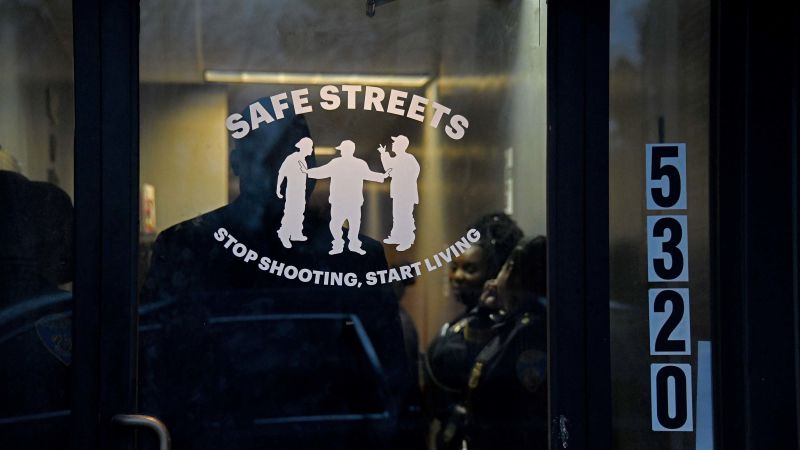
Safe Streets, a program funded by the city, relies on individuals like Burton to act as credible messengers within high-risk neighborhoods. Their job involves mediating conflicts, connecting people to resources, and offering guidance to those caught in cycles of violence. City officials emphasize that these workers must have a strong understanding of the community’s dynamics to be effective. “Burton was someone who had the trust of his peers to steer those at the highest risk of involvement in violence toward a better path,” said one official overseeing the program. This trust is critical, as interrupters often step into volatile situations with the hope of de-escalating tensions before they turn deadly.
The arrest of Burton, however, has disrupted this delicate balance. Last week, he was charged with first-degree attempted murder and gun-related offenses after allegedly shooting another man during a conflict. Police noted that he was prohibited from carrying a firearm due to prior convictions, making the incident all the more striking. Court records reveal that he was held without bond the day after his arrest, with a preliminary hearing set for July 8. This moment has left city officials and community members grappling with the irony of a program that once credited Burton with contributing to Baltimore’s historic decline in violent crime.
A City on the Cusp of Progress
Baltimore’s crime statistics have seen a dramatic shift in recent years, with the city recording its lowest number of homicides in nearly 50 years in 2025. This success is attributed in part to programs like Safe Streets, which have helped bridge the gap between at-risk youth and their communities. Yet, Burton’s arrest serves as a reminder that even in times of progress, the work of violence interruption is not without risks.
City officials describe the program’s impact as significant, with many workers credited for their role in keeping the streets safer. However, the incident has also sparked debate about the vetting process. Critics, including the State’s Attorney for Baltimore City, Ivan Bates, have pointed to the lack of transparency in the program’s operations, particularly regarding the identities of its workers. While some argue that the arrest is an isolated case, others see it as a potential setback to the program’s reputation, challenging the notion that all workers are immune to the very violence they seek to prevent.
A Personal Journey of Transformation
Sean “Weezy” Wees, a Safe Streets site director in Brooklyn, understands the complexities of the job firsthand. He described the mental preparation required for violence interrupters, who often enter conflict zones with the knowledge that their actions could either calm a situation or escalate it. “You never know how a person will react when approaching them in the middle of a fight,” Wees said. “At times, you have to accept disrespect, even from people you once considered your peers.” This sentiment reflects the internal conflict many workers face, balancing their past experiences with the need to remain a calming presence in their communities.
Wees, who was once part of the same violent cycle he now helps disrupt, recounted his own journey. In the early 2000s, he was a regular figure in Brooklyn, involved in activities that perpetuated the neighborhood’s cycle of violence. “I was one of the same ones carrying guns, selling dope, doing everything under the sun,” he said. It wasn’t until his younger brother was killed by gunfire in 2015 that he reevaluated his path. That tragedy became the catalyst for his transformation, leading him to join Safe Streets in 2019 and begin mediating disputes in his community. “We have to be able to engage with the type of guys I used to be,” he added. “It’s about building rapport, not just imposing rules.”
The Fragile Balance of Trust
Burton’s case highlights the precarious nature of being a “credible messenger.” While his arrest has shaken confidence in the program, it also underscores the challenges of maintaining that credibility. Violence interrupters often rely on their personal histories to earn trust, but that same history can become a liability if they are accused of rekindling the very violence they aim to stop. “The work comes in when you have to tolerate disrespect, even from people who once threatened your life,” Wees explained. “You’re not just trying to change their behavior—you’re also navigating your own past.”
The incident has also sparked a broader conversation about the role of former offenders in community programs. While some view their participation as a powerful tool for rehabilitation, others question whether the program’s focus on personal credibility might overlook systemic issues. “This arrest shows the thin line we walk,” said a community leader. “You’re trying to build a better future, but you’re always at risk of being pulled back into the chaos.” Despite these concerns, officials remain confident in the program’s effectiveness. “Burton’s case is an outlier,” one mayor’s representative noted. “It doesn’t diminish the impact Safe Streets has had on reducing crime across the city.”
A Movement Rooted in Shared Experience
Safe Streets is part of a growing movement that leverages personal stories to inspire change. Wees emphasized that the program’s strength lies in its ability to connect individuals to mentors who have walked similar paths. “When you come from the same background, people listen,” he said. This approach has been credited with helping reduce gun violence in neighborhoods where traditional methods have failed. However, the arrest of a key figure like Burton has forced the community to confront the reality that even those who have turned their lives around can face challenges.
The incident also raises questions about the accountability of violence interrupters. While their work has saved lives, the program’s lack of transparency has made it difficult to assess their reliability. “We need to be clear about who we’re working with,” said Bates, the State’s Attorney. “People deserve to know the risks involved.” Yet, the mayor and program overseers argue that the system is designed to adapt, with workers like Burton representing the program’s potential to transform lives. “This is a temporary setback,” one official stated. “It doesn’t change the fact that Safe Streets has been instrumental in keeping Baltimore’s streets safer.”
As the preliminary hearing approaches, the community watches closely. For those who have benefited from Burton’s efforts, the arrest is a bittersweet reminder of the work’s importance and the risks inherent in it. “He was a man who believed in the power of change,” said a local resident. “Now, we’re left wondering if his past will overshadow his future.” Despite the uncertainty, the program continues to operate, driven by the belief that every life saved is worth the effort. As Wees put it, “We are the alternative. We’re the ones who refuse to let violence define our community.”
