
Blazes burning with the intensity of ‘atomic bombs’: Europe enters a new era of mega fires
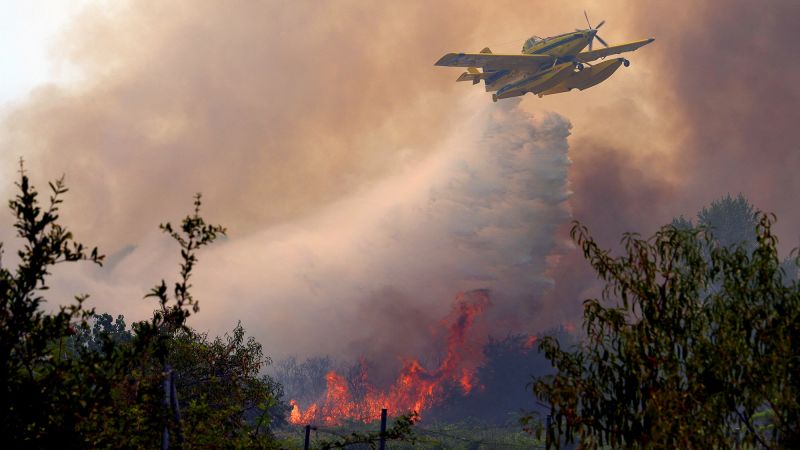
Europe’s Unprecedented Fire Season Signals a New Era of Mega Blazes
Goldlaner.com – Europe is experiencing something it has never witnessed before: massive wildfires generating their own thunderstorms. This extraordinary phenomenon, typically observed across North America and Australia, has now appeared in southwestern France, marking what experts describe as a pivotal moment in the continent’s climate history. The intense flames have created pyrocumulonimbus clouds—towering fire-generated storm systems that can produce lightning, wind, and rain while simultaneously feeding the blazes below.
A Continent Under Siege
While Europe has always experienced seasonal wildfires, the current situation represents an escalation beyond anything previously recorded. Firefighters across France and Spain are confronting flames that are not only larger in scale but also more unpredictable in their behavior. Authorities in both nations reported on Wednesday that certain fires had been brought under control, yet they cautioned that conditions could worsen as Europe endures its fourth heat wave of 2026.
The European Union has extended warnings about potential fire risks extending eastward into Greece and Italy. This current crisis follows immediately upon Europe’s record-breaking fire season of last year, positioning the continent alongside regions such as Siberia and the Amazon that now face consecutive years of extreme fire activity.
Unprecedented Scale and Intensity
French President Emmanuel Macron characterized the ongoing situation as the most challenging scenario since the conclusion of the Second World War. Speaking during a visit to Bordeaux on Monday, he described the fires as entirely without precedent in the nation’s history.
“The situation we face today is the hardest we’ve ever recorded, the hardest since the Second World War,” Macron declared.
The wildfires in France have now consumed over 160,000 hectares—approximately 617 square miles—establishing a new national record. With several months of fire season still remaining, the situation shows no signs of abating.
One of the most dramatic manifestations of this crisis occurred over the weekend in the Gironde region near Bordeaux, where pyrocumulonimbus clouds materialized above the burning landscape. These fire clouds develop when extreme heat from intense wildfires rises rapidly through cooler atmospheric layers, condensing into massive thunderstorm formations. Such clouds generate their own weather patterns and can transform ordinary blazes into self-sustaining firestorms.
“However, if confirmed, its development would highlight the exceptional intensity of the current fire and the extraordinary atmospheric conditions under which it is burning,” noted Francesca Di Giuseppe, the European Centre for Medium-Range Weather Forecasts’ fire forecast coordinator.
A Multinational Crisis
The geographic scope of these fires extends well beyond France’s borders. Both France and Spain have formally requested assistance from the European Union as flames ravage vast territories. Stefan Doerr, director of the Centre for Wildfire Research at Swansea University in Wales, emphasized that synchronized, multinational wildfire emergencies remain uncommon in Europe.
In Spain, the fire in Avila province—located west of Madrid—has become the country’s largest on record. Meanwhile, more than 300,000 residents across both nations have been evacuated, though some began returning home by Wednesday.
“What is uncommon is the current number of destructive wildfires: fires that spread rapidly, overwhelm fire brigades and force communities to evacuate,” explained Guillermo Rein, professor of fire science at Imperial College London.
The crisis has also reached Turkey, where authorities reported spreading fires in agricultural and forested areas of the southwestern Mugla province along the Aegean coast. In Greece, at least three firefighters lost their lives—two battling flames on Crete and one confronting a blaze in Gythio. Greek Prime Minister Kyriakos Mitsotakis offered condolences to the families of the fallen first responders.
“We have entered an era of fires that cannot be extinguished,” said Víctor Resco de Dios, lecturer of forestry engineering and global change at the University of Lleida in Spain. “These are fires that burn with the intensity of several atomic bombs.”
An evacuation order was also issued for Triopetra on Crete’s southern coast as the Mediterranean region continues to grapple with intensifying fire conditions.
Related Reading
Frequently Asked Questions
What is Blazes burning with the intensity of atomic?
Blazes burning with the intensity of atomic is the main topic of this guide. The article explains the context, practical details, and next steps readers should understand.
Why does Blazes burning with the intensity of atomic matter?
Blazes burning with the intensity of atomic matters because readers are looking for a useful answer, not just a short summary. Good content should match search intent and help them decide what to do next.
