YouTubers are setting box office records. It could change the future of moviemaking

YouTubers are setting box office records. It could change the future of moviemaking
YouTubers are setting box office records – In recent weeks, the most financially successful films in the United States have been crafted not by seasoned Hollywood veterans, but by young creators who first gained recognition on YouTube. These filmmakers, in their early 20s, have defied traditional industry norms by producing low-budget projects that now draw massive crowds to movie theaters. Their success has caught the attention of studios, who are beginning to see the potential of blending online content creation with big-screen storytelling. As the box office numbers continue to climb, experts suggest this model may become the blueprint for the next era of film production.
The Rise of ‘Obsession’
Among the standout titles is ‘Obsession,’ directed by 26-year-old Curry Barker. The film, which premiered in theaters on May 15, was created with a modest budget of approximately $750,000. Despite its limited funds, it has generated over $150 million in revenue, a remarkable achievement for a first-time director. This figure is especially impressive considering the typical box office returns for films with similar budgets. The success of ‘Obsession’ has not only surprised its producers, Focus Features and Blumhouse Productions, but also signaled a shift in how audiences perceive emerging talent.
‘Backrooms’ and the Power of Gen Z
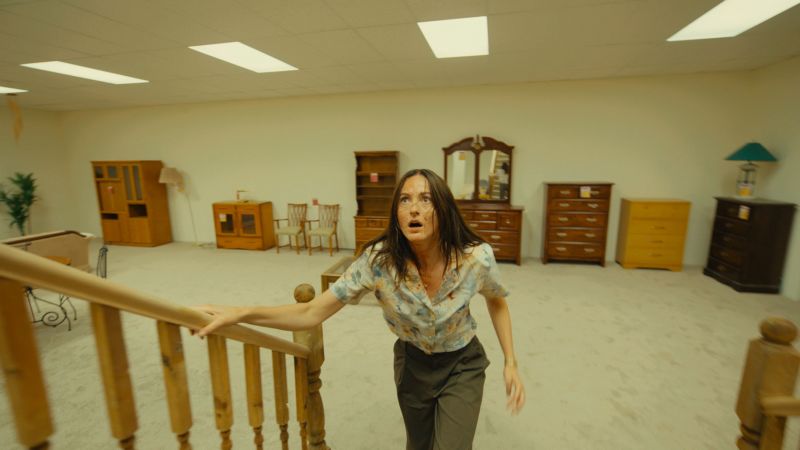
Following closely is ‘Backrooms,’ a psychological horror film directed by 20-year-old Kane Parsons. Unlike ‘Obsession,’ this project had a more substantial budget of around $10 million, allowing for a star-studded cast including Chiwetel Ejiofor, Renate Reinsve, and Mark Duplass. However, its impact on the box office was even more significant. The film topped the charts in its opening weekend, earning roughly $80 million in North America and $120 million globally. Its appeal lies in its ability to resonate with Gen Z, who are increasingly turning to theaters for experiences that align with their online-driven culture.
Studio A24, which has long supported young directors, noted that Parsons is now the youngest filmmaker in Hollywood history to achieve a No. 1 debut at the box office. This milestone underscores the growing influence of creators who have built their reputations through platforms like YouTube. The studio’s recognition of this trend suggests a broader acceptance of alternative paths to success in the film industry.
Industry Reactions and a New Paradigm
The box office triumphs of these two films have sparked a wave of analysis within the entertainment sector. Some industry insiders argue that this success is not an isolated event but part of a larger transformation. With platforms like YouTube providing a launchpad for aspiring filmmakers, the traditional gatekeeping model of Hollywood is being challenged. This shift is evident in how studios are now prioritizing creators who have already established a loyal following online.
Mark Duplass, who appears in ‘Backrooms’ as a scientist, highlighted the significance of this movement in a social media video. He stated,
“We’ve got an example of creators woodshedding things, putting them online, building an audience. And now the people with the purse strings are going to notice … because they see what they can do at the box office, you know, in the form of these two films that are over-performing.”
Duplass’s remarks reflect a growing belief that the combination of digital storytelling and cinematic quality can create a powerful synergy.
The phenomenon of YouTubers breaking into mainstream film is also linked to the evolution of social media as a marketing tool. Filmmakers like Parsons and Barker have leveraged platforms such as YouTube to gain visibility, secure brand partnerships, and refine their craft through direct feedback. This iterative process, where creators continuously engage with their audience, has become a critical component of their success. As one industry analyst noted, “The ability to test and refine ideas with real-time audience input is a game-changer.”
Historical Parallels and Future Implications
Some experts draw parallels between this current trend and past movements that reshaped the film industry. As screenwriter Zack Stentz wrote on X, “This feels like a genuine cultural moment in moviegoing, watching Zoomers who honed their craft doing YouTube shorts breaking into features the way the MTV directors did in the ’80s and Sundance kids did in the ’90s.” This comparison suggests that the rise of online creators may mirror the emergence of new talent in previous decades, but with a distinctly modern twist.
The Hollywood Reporter’s Steven Zeitchik has described this shift as “a teetering, if not the first hints of a collapse, of a legacy-driven studio system.” He emphasizes that the success of ‘Obsession’ and ‘Backrooms’ is not merely about discovering fresh talent but about redefining the role of creators in the film industry. The Alphabet-owned YouTube platform, in particular, has become a cornerstone of this new paradigm. It allows filmmakers to gain fame, distribute their work, and build a global audience without relying on traditional Hollywood infrastructure.
Zeitchik’s observation is supported by the performance of ‘Obsession,’ which continues to grow in popularity. Focus Features recently announced that, excluding holiday releases, the film is the first since 1982 to see increased box office revenue in its second and third weekends. This indicates that the audience is not only drawn to the films initially but remains engaged over time, a factor that Hollywood has historically struggled to replicate.
Warner Bros. and the Creator-Centric Model
At an industry conference last weekend, Warner Bros. Motion Pictures co-chair Michael De Luca emphasized the unique connection between young filmmakers and their audiences. He noted that creators like Parsons have been “in a dialogue with their audience from the word ‘go,’” meaning their work is shaped by real-time feedback and community interaction. De Luca also pointed out that these filmmakers “have had a billion test screenings” by the time their films reach theaters, a testament to the rigorous process of refining ideas through online engagement.
This approach has led to a more collaborative and audience-focused model of filmmaking. Instead of relying solely on studio executives to dictate a film’s direction, creators now have the power to guide the narrative through their online presence. This dynamic has created a pipeline that connects YouTube creators to Hollywood studios, enabling a new wave of films that blend digital innovation with cinematic storytelling.
The success of ‘Obsession’ and ‘Backrooms’ has also prompted studios to rethink their investment strategies. While franchises and sequels remain profitable, some executives are beginning to allocate more resources to original concepts that resonate with younger demographics. This could lead to a future where the traditional studio system is supplemented or even replaced by a model that prioritizes creator-driven content. As the industry adapts, the influence of online platforms on moviemaking is set to grow, reshaping the way films are made, marketed, and consumed.
Warner Bros. Discovery, CNN’s parent company, is at the forefront of this transformation. Its leadership is actively exploring ways to integrate the skills of digital creators into the mainstream film landscape, signaling a potential shift in how the industry evaluates talent and success. With the box office numbers continuing to rise, it’s clear that the future of moviemaking is being reimagined by those who first found their voice on platforms like YouTube.