
What we know about Venezuela’s biggest earthquake in more than a century
What We Know About Venezuela’s Largest Earthquake in Over a Century
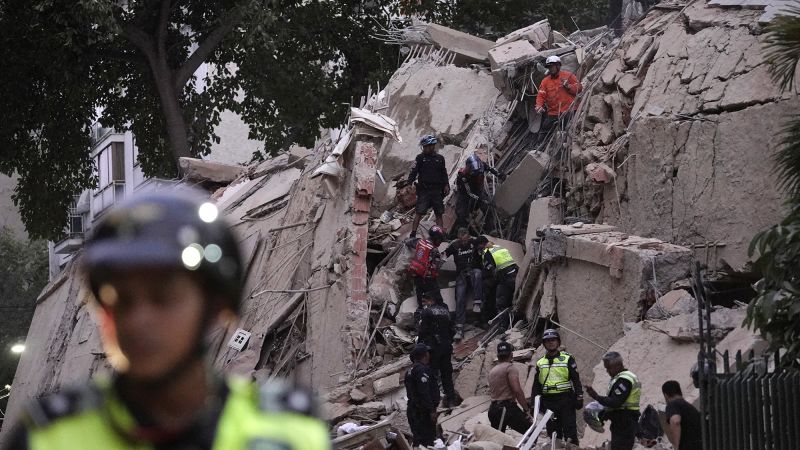
What we know about Venezuela s biggest – Two significant earthquakes struck Venezuela’s northern coastline on Wednesday, occurring within a short span of time. The first tremor, a 7.2 magnitude foreshock, was recorded near San Felipe, the capital of Yaracuy state, just after 6:04 p.m. ET. Forty seconds later, a more intense 7.5 magnitude quake followed, shaking the region approximately 23 kilometers southeast of Yumare, a town also located in Yaracuy. The sequence of events has left the country reeling, with officials reporting at least 164 fatalities and 971 injuries. However, the full extent of the damage and casualties is expected to grow as assessments continue.
A Nation in Crisis
Venezuela is currently navigating a deepening political and economic crisis, exacerbated by years of hyperinflation and a government led by an interim administration since the capture of President Nicolás Maduro earlier this year. The recent quakes have compounded the challenges, with the nation’s infrastructure and resources stretched thin. Acting President Delcy Rodriguez, who assumed leadership following Maduro’s arrest, addressed the nation in a video message on Thursday morning, emphasizing the gravity of the situation.
“We are currently engaged in arduous rescue operations to save as many lives as God allows. This is truly a tragedy,” Rodriguez stated. Her remarks came amid efforts to coordinate nationwide relief, as first responders and international aid teams mobilized to assist. The country has declared a state of emergency, creating a high-level task force to manage search and rescue activities. An initial $200 million fund has been allocated to support recovery and rebuilding efforts, though the financial strain remains evident.
Shaking the Region
The quakes were felt across multiple states and even in neighboring Colombia, hundreds of kilometers from the epicenter. The timing of the disaster, during a public holiday, may have contributed to the severity of the impact. Many residents were at home or attending events, leaving them vulnerable to the sudden tremors. “The scene was like a horror movie,” recounted a Caracas resident who fled a collapsed building, describing the chaos as a “complete disaster.”
“We couldn’t get out; there was hammering from one side and kicking from the other. I don’t know who actually rescued us, because they were shouting, ‘Get away from there, we’re coming and we are about six!’ until they finally burst through the door,” said Martha Añez, a Caracas resident. Her account highlights the panic and helplessness experienced by many, as entire sections of buildings crumbled under the force of the 7.5 magnitude quake.
The coastal state of La Guaira, a key economic hub, has been the hardest-hit area. Rodriguez announced that the region has been designated a disaster zone, with dozens of structures reduced to rubble. In Macuto, a large waterfront hotel stood as a symbol of the devastation, its remains scattered across the landscape. Meanwhile, videos from Catia La Mar showed high-rises suffering severe structural damage, with residents forced to flee their homes in fear.
Global Response and Challenges
The U.S. Geological Survey issued two separate red alerts via its PAGER system, warning of “high casualties and extensive damage” due to the back-to-back quakes. The alerts underscored the vulnerability of the region’s infrastructure, which includes many older buildings not designed to withstand such force. Internet connectivity across Venezuela plummeted after the quakes disrupted power and telecom systems, according to NetBlocks, a digital watchdog. This disruption could slow the flow of critical information from affected areas, complicating rescue operations.
“We are experiencing a sharp drop in connectivity, with many regions unable to access communication networks,” reported NetBlocks. The temporary loss of internet access, though slight, has raised concerns about the ability of emergency services to coordinate effectively. In addition, security forces have been deployed to maintain order, with the Ministry of Communication and Information stating that gas supplies have been cut off to certain buildings as a precautionary measure.
Ongoing Efforts and Recovery
Rescue workers have been working through the night, tirelessly sifting through rubble to locate survivors. International teams are now en route to Venezuela, offering both technical expertise and logistical support. The government has also called for nationwide prayers at 7 p.m. local time, a gesture intended to unite the population in mourning and solidarity.
Following the quakes, several non-essential activities, including rail services, have been suspended for the week. School classes will also be canceled, with students and teachers adjusting to the new normal. The temporary closure of Simon Bolivar Airport near Caracas further highlights the disruption to daily life, as emergency supplies and personnel face logistical hurdles in reaching affected zones.
As the dust settles, Venezuelans are grappling with the aftermath of what could be the most catastrophic natural event in the country’s recent history. The combination of political instability, economic hardship, and the earthquake’s destructive power has placed immense pressure on the nation’s resources. Yet, the resilience of its people and the commitment of international partners offer a glimmer of hope amid the devastation.
