Scientists are cracking the code of interspecies communication. Is that a good thing?

Decoding the Mystery of Interspecies Communication
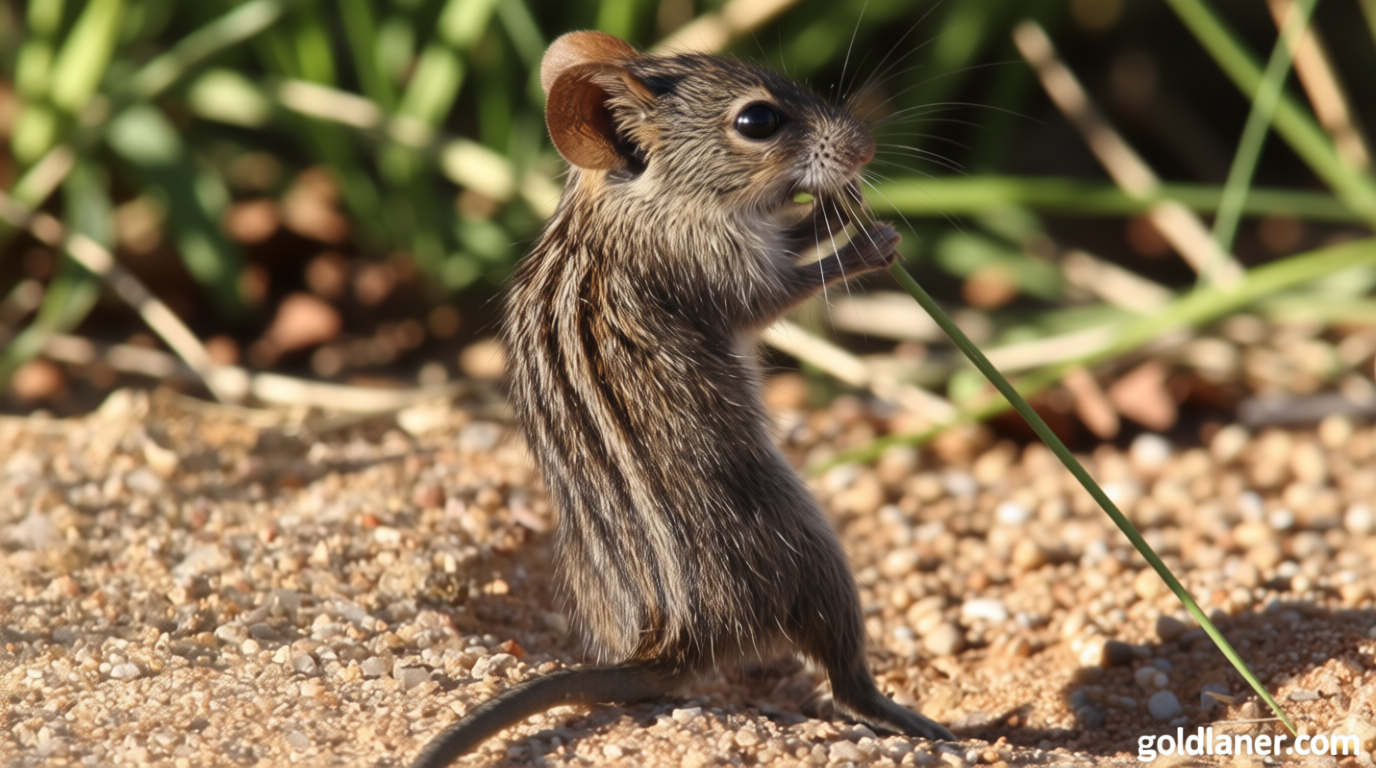
Scientists are cracking the code of interspecies – Deep in the Karoo, a sprawling semidesert region of South Africa, a small African striped mouse lounges beneath the shade of its bushy refuge. At dawn, the creature enjoys the gentle warmth of the sun, a moment of quiet before the day’s activities begin. Nearby, a cluster of microphones hums softly, capturing the faint, high-pitched squeaks emitted by the mouse. These sounds, imperceptible to human hearing, are part of a hidden language that has long gone unnoticed. When the researchers play back these recordings, the mouse reacts with alertness, standing on its hind legs and scanning its surroundings. This response, however, is not uniform—when the same call is played from a mouse in its own nest, the creature remains undisturbed, continuing its routine as if the sound were background noise.
Breaking Barriers in Animal Communication
Nicolas Mathevon, a professor at the University of Saint-Etienne in France, has dedicated his career to unraveling the complexities of animal vocalization. As the lead researcher on this study involving African striped mice, he emphasizes the profound implications of their findings. “When the call comes from a neighboring mouse, they display a strong reaction, almost as if they’re trying to identify the source,” Mathevon explains. “But if the sound is from a mouse they don’t recognize, their response is even more intense—like fleeing into the bush out of surprise.” This distinction highlights a sophisticated system of recognition and response, suggesting that these rodents are not merely reacting to sound, but to the identity of the speaker.
“Not so long ago, people thought animals were not communicating at all, or only through basic signals,” Mathevon says. “But now we see how intricate their vocal systems can be, even when we can’t hear them.”
Mathevon’s work builds on a broader trend in bioacoustics, where scientists are increasingly revealing the depth of animal communication. His research spans a wide range of species, from birds and dolphins to monkeys and hyenas, and even includes an exploration of human infant cries. The latest project, focusing on the African striped mouse, is part of a growing body of evidence that challenges traditional views of language as a uniquely human trait. “The idea that animals communicate in ways similar to humans is no longer a stretch,” he notes. “We’re just beginning to scratch the surface.”
The study’s methodology involved an extensive setup: over 12 days, Mathevon and his team deployed 23 microphones across four bushy nests to record the mice’s vocalizations. The result was a staggering 122,619 squeaks, each carrying subtle variations in frequency and pattern. Through machine learning algorithms, the researchers classified these sounds into at least seven distinct types, each associated with specific contexts. Some squeaks were used within the safety of the nest, while others were reserved for interactions at the edges of the territory. This distinction underscores the mice’s ability to modulate their communication based on environmental cues and social relationships.
Technology and the Future of Animal Language
Advancements in recording technology and artificial intelligence have made such studies possible. Mathevon’s team trained an artificial neural network, akin to the systems behind large language models like ChatGPT, to analyze the data. The tool enabled them to identify not just the general calls, but also unique vocal signatures for each nest and individual mouse. “Without machine learning, we’d be overwhelmed by the sheer volume of sounds,” he explains. “It’s essential for making sense of the patterns and meaning embedded in these signals.”
The findings suggest that animal communication is far more complex than previously believed. While humans have long associated language with sentience and social complexity, these mice demonstrate that even small creatures possess nuanced ways of conveying information. Mathevon believes that further research could uncover dynamic elements in these calls—such as indicators of stress or emotional states—that vary with context. “We’re moving from static information to something more dynamic,” he says. “This could open new doors in understanding how animals express their inner worlds.”
Awarding Innovation in the Field
The African striped mouse project has been recognized as a finalist for the Dolittle Prize, a prestigious award celebrating breakthroughs in animal communication. The prize, sponsored by British billionaire Jeremy Coller, offers $100,000 to the winning team and the potential for an additional $10 million in investment or $500,000 in cash if the researchers can prove that an animal communicates independently of human awareness. This year’s selection marks a milestone in the field, as it reflects the growing intersection of biology and technology in decoding the natural world.
“The vision is to achieve fluent two-way communication, where humans can engage with wild animals as they do with each other,” says Jonathan Birch, a philosophy professor and director of The Jeremy Coller Centre for Animal Sentience at the London School of Economics. “But we’re still a long way from that goal.”
While the prize highlights progress, experts remain divided on the long-term benefits of such communication. Some argue that understanding animal languages could foster deeper ecological harmony, enabling humans to better predict animal behavior and preserve habitats. Others caution that two-way interaction might disrupt natural instincts, creating unintended consequences. “We need to consider how this communication might affect the animals’ natural responses,” Birch adds. “It’s a powerful tool, but one that requires careful use.”
The upcoming announcement of this year’s Dolittle Prize winner on June 25 will mark another step in this evolving field. The inaugural award in 2025 was given to a team that discovered a language-like system in wild dolphins’ whistles in Sarasota, Florida. Such breakthroughs have reshaped scientific perspectives, revealing that animals may not only communicate but also adapt their signals in response to social and environmental factors. As researchers continue to listen in on the hidden conversations of creatures like the African striped mouse, the line between human and animal communication grows ever thinner. Mathevon’s work, and others like it, may one day lead to a world where humans and animals share more than just the environment—they share a dialogue.
Looking ahead, Mathevon envisions a future where bioacousticians not only interpret animal calls but also respond to them. “The dream is to create a conversation, not just an observation,” he says. “If we can teach animals to recognize and react to human voices, we might unlock new ways of coexistence.” This ambition, however, raises questions about the ethical implications of such interaction. Will animals view humans as allies or interlopers? And what does it mean for their autonomy when they begin to respond to signals designed by us? These are the questions that will shape the next chapter in the story of interspecies communication. As technology advances and our understanding deepens, the potential for collaboration between humans and the animal kingdom becomes more tangible than ever before.