How China’s World Cup dream unraveled – and how it’s slowly growing again

How China’s World Cup Dream Unraveled – and How It’s Slowly Growing Again
The World Cup Dream and Its Struggles
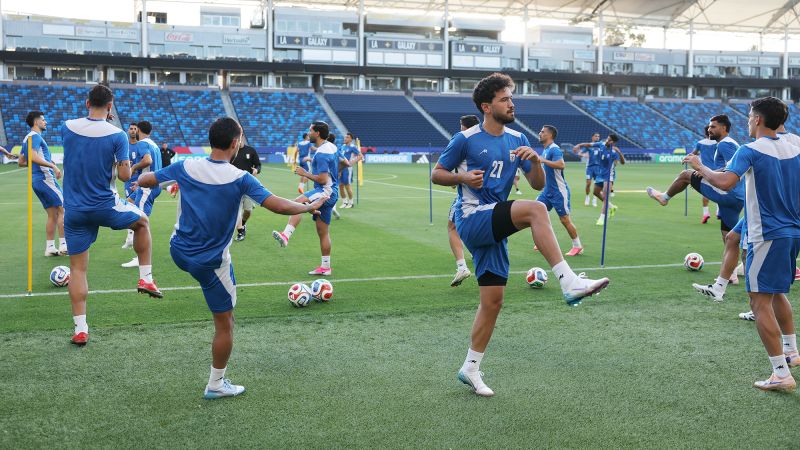
How China s World Cup dream – As the World Cup captivates audiences across North America this summer, China finds itself once again on the outside looking in. Yet, a subtle shift is occurring within the nation, with fans rallying behind amateur soccer enthusiasts—delivery drivers, village players, and local heroes—who are now competing in vibrant stadiums. This unexpected resurgence has sparked optimism among some observers, suggesting that the Beautiful Game might finally be taking hold in a country long dominated by basketball and table tennis.
For years, qualifying for the World Cup has been a central objective for China, a nation with the world’s second-largest economy. In 2016, the Chinese Football Association unveiled an ambitious roadmap to achieve global soccer supremacy by mid-century. The plan included constructing 70,000 pitches nationwide and enrolling 30 million schoolchildren in the sport by 2020. However, a decade later, progress remains modest. The men’s team has dropped from 82nd in the world rankings in 2016 to 94th out of 211 national teams, despite the World Cup’s expansion to 48 teams. A crushing 1-0 loss to Indonesia in June 2022 further dashed hopes of a return to the tournament, leaving China with only its 2002 debut to mark its World Cup history.
The Chinese Dream and Soccer’s Role
The concept of the “Chinese dream” emerged in 2012, shortly after Xi Jinping took leadership of the Communist Party. This vision of national rejuvenation became a cornerstone of China’s official narrative, emphasizing pride and progress. Soccer was no exception to this trend. The 2016 blueprint, which laid out plans for soccer’s rise, was framed as a tool to advance the broader goal of national revival. Yet, the strategy has faced challenges, revealing deeper issues in how the sport is managed and funded.
One of the most visible aspects of this strategy was the influx of foreign talent into the Chinese Super League (CSL). Between 2015 and 2017, clubs in the league spent over $1.12 billion on player transfers, according to Transfermarkt data. This spending spree included high-profile signings like Oscar, Paulinho, Carlos Tévez, and Hulk, who left European leagues for lucrative deals in China. While these stars brought temporary excitement, the economic model behind their recruitment proved unsustainable. Real estate developers, who funded much of the league’s expansion, prioritized short-term gains over long-term growth, often linking their investments to political influence.
The Guanxi System and Soccer’s Financial Quagmire
Behind the glossy stadiums and star-studded lineups lies a complex web of relationships. Dr. Tobias Ross, author of *Football, Business and State Power in Contemporary China*, explains that the initiative wasn’t rooted in football itself but aimed to solidify connections with local authorities. The concept of guanxi—informal networks of favors and obligations—played a pivotal role in securing state-controlled resources like land and bank loans for clubs. Officials, unable to manage teams directly, sought political prestige in exchange for these investments, creating a cycle of lavish spending that often lacked practical sense.
“It was never about football. It was always about establishing a closer relationship with the local government,” Ross tells CNN Sports. He highlights how guanxi-driven decisions led to projects that “look really great on paper” but rarely translated into sustainable success.
Guangzhou Evergrande, a two-time Asian champion and eight-time CSL winner, exemplifies this trend. Bloomberg reported in 2021 that the club lost between $155 million and $310 million annually, despite its dominance on the field. This financial strain was exacerbated by the league’s overreliance on foreign stars, who were expensive to retain. Meanwhile, owners invested heavily in stadium construction, often as a means to demonstrate their political clout rather than foster grassroots development.
Cracks in the System and the Pandemic’s Impact
The financial strain on clubs reached a breaking point during the pandemic. With global travel restricted and matches canceled, the economic cushion that had supported the CSL’s ambitions vanished. Beijing’s crackdown on real estate debt and oversupply in the property sector hit owners particularly hard, forcing many to scale back operations. Cash-strapped teams struggled to cover utility bills, let alone pay players’ soaring wages, leading to the collapse of more than 40 clubs since 2021.
These challenges exposed the fragility of China’s soccer strategy. While the CSL’s expansion once symbolized progress, it also highlighted a mismatch between investment and tangible results. Clubs focused on immediate visibility rather than long-term development, leaving the national team and grassroots infrastructure underfunded. Even the most successful teams, like Guangzhou Evergrande, failed to diversify their revenue streams, relying almost entirely on sponsorships and foreign talent to stay afloat.
A New Dawn for Soccer in China
Despite these setbacks, signs of renewal are emerging. The recent surge in interest among amateur players has created a grassroots movement that could reshape the sport’s future. Delivery drivers, factory workers, and village teams are now drawing crowds to stadiums, proving that passion for soccer can thrive beyond elite circles. This shift, while modest, has reignited conversations about how to cultivate a sustainable soccer culture in China.
Experts argue that the key to long-term success lies in balancing ambition with practicality. The previous model, which prioritized short-term political gains, may need to be reimagined. Instead of relying on foreign stars, clubs could focus on developing local talent, investing in youth academies, and integrating soccer into everyday life. The growing enthusiasm for amateur matches suggests that the public is ready to embrace this change, though much work remains to turn it into a national phenomenon.
The Road Ahead for Chinese Soccer
With the World Cup still a distant goal, China’s soccer landscape is at a crossroads. The country’s journey from the sidelines to the spotlight has been marked by both grand ambitions and stark realities. While the 2016 blueprint set lofty targets, the reliance on guanxi and real estate wealth left the sport vulnerable to economic downturns. Yet, the recent revival of local interest offers a glimmer of hope, demonstrating that the Beautiful Game’s roots might finally take hold.
As the CSL continues to evolve, there’s a growing recognition that soccer’s future in China depends on more than just flashy transfers and stadium construction. It requires a cultural shift, where the sport becomes a part of daily life rather than a political tool. The story of China’s World Cup dream is one of resilience and reinvention, with its current state reflecting both the challenges of the past and the possibilities of the future. Whether this new momentum can sustain itself remains to be seen, but for now, the excitement of amateur players and fans signals that the game is no longer just a distant aspiration—it’s becoming a lived reality.