
Zelensky needles Putin in personal letter calling for face-to-face peace talks
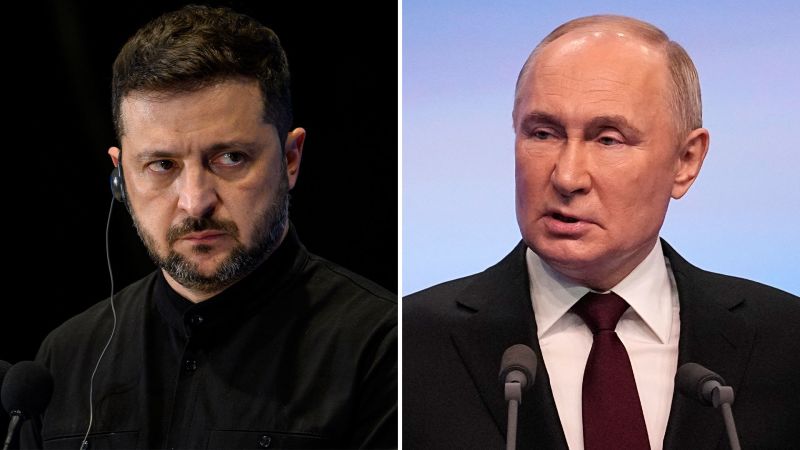
Zelensky Nails Putin in Personal Letter Pushing for Peace Talks
Zelensky needles Putin in personal letter – Ukrainian President Volodymyr Zelensky has taken a direct approach to address Russian President Vladimir Putin through a personal letter, urging immediate face-to-face peace talks to end the ongoing conflict. Delivered during the St. Petersburg International Economic Forum, the letter arrives as Putin engages with global business leaders, a moment Zelensky used to emphasize the war’s growing economic and social toll. The message serves as both a diplomatic overture and a strategic move to spotlight Putin’s challenges in sustaining the war effort.
In the letter, Zelensky highlighted the mounting pressure on Russia’s economy, noting how the war has strained resources and eroded public confidence. “The war’s consequences are no longer abstract—they’re tangible and escalating,” he wrote, framing the conflict as a test of Russia’s endurance. This personal touch aims to humanize the crisis, linking Putin’s leadership to the war’s domestic impacts. The letter also underscores Ukraine’s determination to push for direct negotiations, even as Western allies shift focus to other global priorities.
Targeting Russia’s Heartland with Strategic Strikes
Zelensky’s letter coincides with Ukraine’s military actions that have extended into Russian territory, intensifying the war’s psychological and economic effects. Recent strikes on energy infrastructure and key cities, including St. Petersburg, have created a sense of urgency by making the conflict feel personal. The attack on the city—often dubbed “Russia’s Davos” for its role as a hub for global business—serves as a symbolic blow, showing that the war is no longer confined to the frontlines but reaches the heart of Russia’s economic and cultural center.
“You’ve delayed your goals repeatedly, and the situation shows no signs of improvement,” Zelensky wrote, specifically referencing the prolonged battle for Donetsk. His argument hinges on the idea that Russia’s people are increasingly aware of the costs, from inflation to energy exports. “The people of Russia are no longer willing to ignore the war’s impact,” he noted, reflecting broader concerns among Russian business leaders like German Gref, who called the economy’s current state “a miracle” under existing conditions.
“When Russia grows tired, change comes.”
This principle, embedded in Zelensky’s message, suggests that Putin’s grip on power may weaken if the war continues to drain resources. The letter positions Zelensky as both a leader and a voice of the people, reinforcing the notion that the conflict is no longer just a military endeavor but a domestic reckoning. By highlighting the war’s reach into Russian cities, Zelensky creates a narrative that challenges Putin’s ability to maintain public support.
Kremlin officials, however, remain resolute, dismissing the letter as a necessary step toward peace. Deputy Prime Minister Alexander Novak stated that Russia’s economy is “in a state of controlled cooling,” implying the government can manage the war’s financial strain. Yet, internal warnings about economic instability persist, with reports from the International Institute for Strategic Studies suggesting Russia faces a pivotal choice: escalate demands or scale back its war aims. Zelensky’s letter, therefore, becomes a tool to amplify pressure on Putin’s decision-making.
Strategic Leverage and Internal Dissent
Zelensky’s timing is critical, leveraging the forum’s setting to frame the conflict as a domestic issue rather than purely international. This approach allows him to highlight Putin’s vulnerability, particularly as Russian leaders face scrutiny from both global investors and their own citizens. The letter also signals a broader trend of internal dissent, with business elites and officials growing more vocal about the war’s economic toll. This shift underscores a potential realignment in priorities, as Russia’s leaders reassess their long-term strategy.
By calling for a direct meeting, Zelensky aims to bridge the gap between leaders, suggesting that personal dialogue could pave the way for a ceasefire. “A clear date should be set for this meeting, in a neutral location,” he wrote, emphasizing the need for a collaborative solution. This proposal reflects Ukraine’s desire to take the initiative, rather than relying on Western support. As the war’s impact deepens, the personal letter becomes a powerful reminder that Zelensky is not only a political leader but also a catalyst for change within Russia itself.
