Russia slams key Ukrainian cities in one of deadliest offensives in months

Russia slams key Ukrainian cities in one of deadliest offensives in months
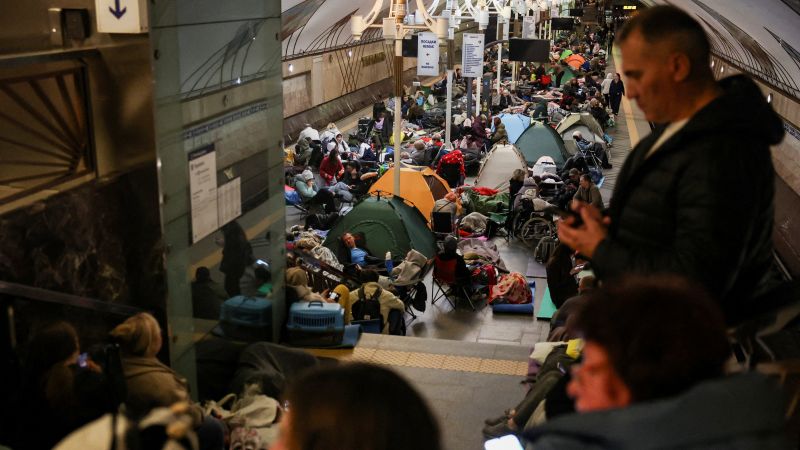
Russia slams key Ukrainian cities in one – Early Tuesday, Russia launched a powerful attack on multiple Ukrainian cities, targeting Kyiv and Dnipro in what Ukrainian officials describe as one of the most severe strikes in recent months. The assault, marked by a combination of aerial bombardments and ground assaults, caused widespread destruction and significant loss of life, with at least 23 people confirmed dead and over 100 injured. The capital Kyiv bore the brunt of the damage, with seven casualties reported, while Dnipro saw 16 fatalities. Among the victims was Major Anton Yarmolenko, a deputy fire chief, who was on duty at the time of the strikes. The attack also left thousands displaced, as more than 41,000 residents in Kyiv sought shelter in the city’s metro system, setting a record for nighttime refuge seekers in recent years.
Attack Scale and Targets
The onslaught involved more than 600 drones and a dozen missiles, including advanced hypersonic weapons, according to Ukrainian military sources. These strikes targeted critical civilian infrastructure, including hospitals, schools, and residential areas. In Kyiv alone, five medical facilities were damaged or destroyed, while several commercial and residential buildings were reduced to rubble. The attacks sparked fires that spread rapidly, ignited vehicles, and caused debris to fall onto a kindergarten. The destruction was severe, with residents recounting scenes of chaos as they emerged from shelters to survey the aftermath.
International Response
United Nations Secretary-General António Guterres condemned the attacks, with his spokesperson Stephane Dujarric stating, “Once again, we emphasize that attacks against civilians and civilian infrastructures are prohibited under international humanitarian law and must end immediately.” The UN’s stance highlights the global concern over the escalating violence, which has intensified despite a relative stalemate on the ground. Guterres’s comments come amid growing pressure on Russia to limit its military operations in urban centers, where civilian casualties have surged.
Strategic Context of the Conflict
Russia cited a series of Ukrainian strikes on its oil assets as justification for the recent offensive. Over the past four months, Ukrainian forces have targeted 15 Russian oil refineries, crippling 40% of the country’s main refining capacity. This has not only disrupted fuel supplies but also worsened Russia’s economic challenges. In response, Moscow warned of “consistent, systematic strikes” on “specific sites” in Ukraine, a move Kyiv’s leadership has labeled as an attempt at “Russian blackmail.” The latest attack appears to be part of a broader strategy to pressure Ukraine into concessions, leveraging both military force and economic disruption.
Meanwhile, Ukrainian President Volodymyr Zelensky expressed alarm over the potential for further attacks, urging citizens to remain vigilant. “According to our intelligence, another large-scale attack may occur tonight,” he stated in his nightly video address. Zelensky emphasized that the limited availability of air defenses has made it difficult for Ukrainian forces to intercept a large proportion of the missiles launched by Russia. This vulnerability has heightened fears of prolonged aerial assaults, which threaten to overwhelm cities like Kyiv and Dnipro.
Stalemate and War of Attrition
Despite the recent escalation, the war has entered a phase of relative stagnation. After four years of full-scale invasion, Russia’s ground campaigns have stalled, with Ukrainian troops reclaiming territory at an increasing rate. The Institute for the Study of War (ISW), a US-based conflict monitoring group, noted that last month’s Russian offensive was largely neutralized by Kyiv’s defenses. This stalemate has led to a grinding war of attrition, where both sides suffer heavy losses but make minimal territorial gains. Financial strains on Russia have grown as the war drags on, while Ukraine has managed to secure key regions in the east and south.
Yet, the aerial campaign has become a new front in this deadlock. The attack on Kyiv and Dnipro underscores the shift toward using precision weaponry and mass strikes to disrupt civilian life and weaken morale. With the war moving away from large-scale battles and toward sustained bombardments, the focus has turned to protecting urban populations and maintaining supply lines. The destruction of critical infrastructure, such as hospitals and transportation hubs, has raised concerns about the long-term impact on Ukraine’s ability to sustain its resistance.
Human Impact and Survivor Accounts
Residents of Kyiv described the attack as a harrowing experience, with many recounting the immediate aftermath. Mykhailo Sartynski, a local man, told CNN, “It was so powerful that everything came flying at us. I was terrified for my wife… Everything was on fire.” His account mirrors that of Karina Kasamara, who said the initial blast shattered windows, balconies, and walls. “The dog ran out into the hallway and then all hell broke loose,” she added, reflecting the widespread panic and trauma experienced by civilians.
One video clip shared by CNN showed an elderly couple carefully picking through the ruins of their flat, where the window facade had been completely blown out. The sight of charred cars buried under rubble and people navigating a debris-filled landscape painted a grim picture of the attack’s consequences. The destruction was not limited to buildings; entire neighborhoods were enveloped in thick plumes of dark smoke, which drifted through the streets as residents tried to salvage belongings amid the relentless bombardment. The chaos was compounded by the lack of effective air defenses, leaving many exposed to the full force of the assault.
Defensive Challenges and Future Outlook
Kyiv’s air defenses were reportedly less active during a ballistic missile strike around 7 a.m. local time, with CNN producers in the city center hearing explosions but not the firing of counter-air systems. This suggests that the attacks may have exploited gaps in Ukraine’s defensive capabilities, particularly in the early hours when monitoring and response are more challenging. The mayor of Kyiv, Vitali Klitschko, called the overnight assault a “massive enemy attack,” underscoring the scale of the damage.
As the conflict enters its fifth year, the toll on both sides has intensified. Russian forces have been losing soldiers at an alarming rate, while Ukraine continues to invest heavily in military and economic resilience. The recent attacks, however, signal a new phase of the war—one where the focus is not just on territorial control but on inflicting psychological and physical strain on the population. With the prospect of further assaults looming, the Ukrainian government is under pressure to bolster its defenses and prepare for prolonged air raids.
Ukrainian officials have also raised concerns about the humanitarian crisis deepening as the war continues. The destruction of key infrastructure has disrupted essential services, leaving communities to rely on makeshift solutions for shelter and basic needs. Reports of people trapped under rubble in the Podilsky district highlight the urgent need for rescue efforts and the long-term consequences of the strikes. The attack has not only caused immediate casualties but also set the stage for a more sustained campaign of terror, as Russia seeks to undermine Ukraine’s resolve.
In the wake of the assault, the Ukrainian leadership has reiterated its commitment to resisting further aggression. Zelensky’s warning about another potential strike reflects the growing uncertainty surrounding the conflict’s trajectory. While the exact scale of the next attack remains unknown, the recent barrage has demonstrated Russia’s capacity to launch large-scale offensives with advanced weaponry. The impact on civilian life is expected to be severe, with Kyiv and Dnipro serving as stark examples of the devastation.
As the world watches the situation unfold, the balance of power continues to shift. Ukraine’s ability to withstand the attacks will depend on its capacity to mobilize resources and maintain public morale. The international community, meanwhile, is calling for accountability and a swift end to attacks targeting civilians. With the stakes higher than ever, the conflict remains a focal point for global attention, as the human cost of war continues to mount.