‘Big Bang fix’ could be buying more time for the farthest spacecraft from Earth

Daftar Isi
Deep Space Engineers Extend Voyager 2’s Journey Through the Cosmos
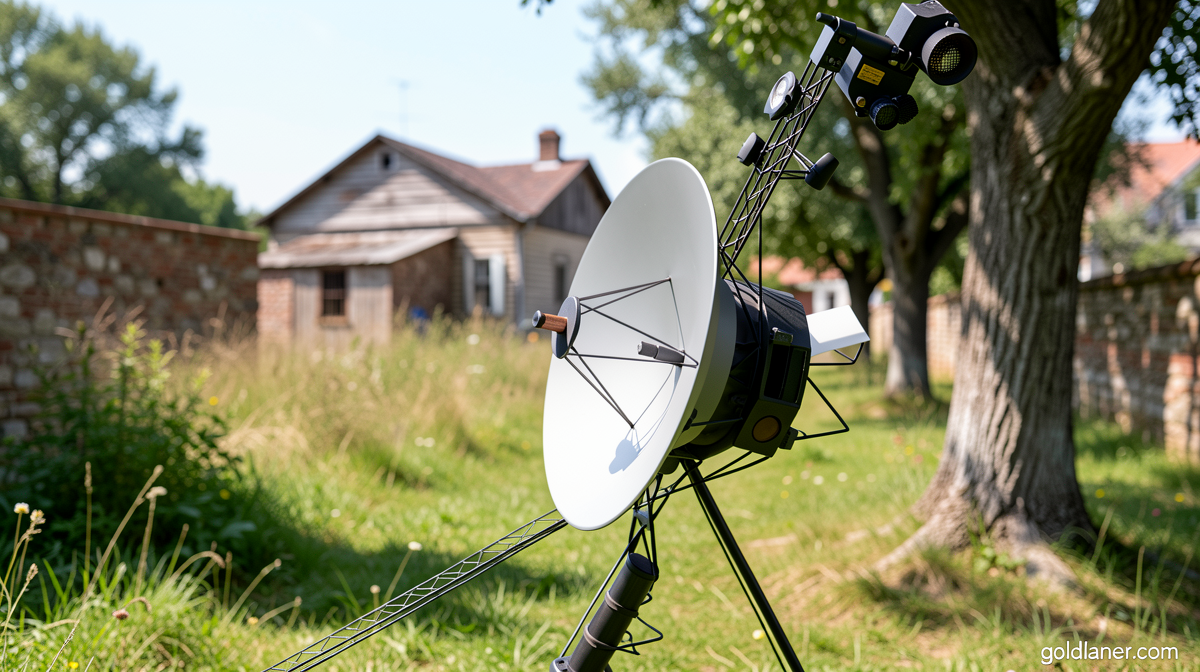
Goldlaner.com – Space exploration has reached another milestone as engineers at NASA’s Jet Propulsion Laboratory successfully implemented a critical power management strategy for Voyager 2, one of humanity’s most distant ambassadors to the stars. The ambitious maneuver, dubbed the “Big Bang” fix, has secured an additional year of scientific operations for the aging spacecraft as it continues its unprecedented journey through interstellar space.
Voyager 2 currently resides approximately 21.35 billion kilometers—equivalent to 13 billion miles—from our home planet. Its sibling spacecraft, Voyager 1, maintains an even greater distance at roughly 25.40 billion kilometers or 16 billion miles. Both vessels were launched during the summer of 1977, separated by mere weeks, and embarked on what would become one of the most remarkable chapters in astronomical history.
The Challenge of Interstellar Survival
These pioneering probes have traveled beyond the heliosphere, that vast protective bubble of magnetic fields and charged particles generated by our sun, which extends well past Pluto’s orbital path. Originally designed for a five-year mission lifespan, both spacecraft have far exceeded their projected operational period through careful engineering and strategic resource management.
The power challenge facing these distant travelers is substantial. Each spacecraft relies on radioisotope thermoelectric generators—sophisticated devices that transform thermal energy released by decaying plutonium into usable electricity. This power source diminishes at a rate of approximately four watts annually, necessitating difficult decisions about which systems remain active and which must be temporarily or permanently deactivated.
Throughout their decades-long odyssey, the Voyager team has systematically powered down various instruments and subsystems. Voyager 2 was scheduled to shut down another critical science instrument before the year concluded, potentially limiting the valuable data collection capabilities of this uniquely positioned spacecraft.
Executing the Big Bang Solution
To preserve Voyager 2’s scientific potential, engineers devised an elegant solution involving simultaneous equipment swaps. The spacecraft received commands to deactivate certain power-hungry devices while activating alternative systems that consume less energy. This careful balancing act maintained essential thermal conditions necessary for both spacecraft functionality and scientific instrument performance.
The implementation occurred on July 9, when engineers turned off two dedicated heaters alongside a digital tape recorder that primarily served as a heat reservoir. In exchange, two different heaters and an additional heat-supplying device were activated, though these alternatives draw reduced power compared to their predecessors.
“This was a team effort, the culmination of a year of work, with almost every team member contributing,” said Kareem Badaruddin, Voyager’s mission manager at JPL, in an email. “Each of us love these spacecraft, and give generously of our time off-hours and weekends, so the feeling of realizing that we had extended the life of the spacecraft and science return by 2 years or more was fulfillment and delight — it had been a difficult task and our hard work was rewarded.”
Technical Precision in Deep Space Operations
The complexity of managing spacecraft at such vast distances cannot be overstated. A command sent to Voyager 2 requires nearly twenty hours to arrive, followed by an equivalent waiting period for the spacecraft’s response before engineers can proceed with subsequent operations. This communication delay demands extraordinary precision in planning and execution.
Before implementing the Big Bang fix, the Voyager team conducted extensive testing during May and June to verify that the power adjustments would not exceed expected parameters or cause temperatures to drop below acceptable thresholds. In the extreme cold of interstellar space, freezing fuel lines could prevent the spacecraft from maintaining antenna orientation toward Earth, potentially ending the mission entirely.
Engineers also updated Voyager 2’s onboard software to ensure that if the spacecraft enters safe mode—triggered when anomalies are detected—the lower-powered devices would be incorporated into the default operational state. This precautionary measure enhances the spacecraft’s resilience against future technical challenges.
Looking Toward Voyager 1
With Voyager 2’s Big Bang fix proving successful, attention now turns to its more distant twin. The test sequences developed for Voyager 2 closely mirror those planned for Voyager 1, though the additional distance means signals require nearly twenty-four hours to complete their round trip. A successful power management operation for Voyager 1 would extend the legacy of both spacecraft even further into the future.
The achievement represents not merely a technical victory but a testament to human ingenuity and dedication. As these remarkable machines continue their solitary voyage through the void between stars, they carry with them the hopes and dreams of a civilization that dared to reach beyond its cradle and explore the infinite cosmos.
Related Reading
Frequently Asked Questions
What is Big Bang fix could be buying?
Big Bang fix could be buying is the main topic of this guide. The article explains the context, practical details, and next steps readers should understand.
Why does Big Bang fix could be buying matter?
Big Bang fix could be buying matters because readers are looking for a useful answer, not just a short summary. Good content should match search intent and help them decide what to do next.