
Turkey blocks American LGBTQ+ cruise from docking, citing ‘moral standards’
Turkey Blocks American LGBTQ+ Cruise from Docking, Citing Moral Standards
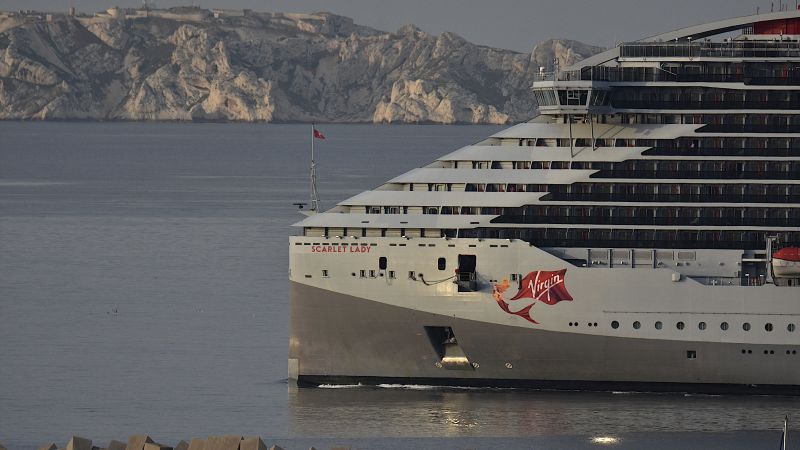
Turkey blocks American LGBTQ cruise – Turkish authorities have prohibited a cruise ship tailored for American LGBTQ+ travelers from docking in the nation’s ports, emphasizing “moral standards” and “family values” as the basis for their decision, said Rich Campbell, CEO of Atlantis Events, on Thursday. The “Athens to Venice” cruise, scheduled to depart from Greece on July 5, was initially planned to stop in Kuşadası, a bustling Turkish port, two days later, with a subsequent visit to Istanbul. However, local officials in Turkey have canceled the event, citing the ship’s charter by groups associated with “behaviors that contradict our societal norms and ethical principles,” according to Atlantis Events. The vessel, named the Scarlet Lady, is operated by Virgin Voyages, a cruise line backed by Richard Branson, as reported by MarineTraffic.
Shift in Itinerary
Atlantis Events announced the change, stating that the cruise will now make stops in Cairo, Egypt, and the Greek island of Crete instead of Turkey. The decision marks a significant disruption for the 10-day Mediterranean tour, which had been marketed as an “epic adventure” for travelers to explore destinations like the Greek Isles and Croatia. Campbell noted that approximately 1,100 of the 1,900 expected passengers are from the United States, with the remaining travelers originating from the United Kingdom, Canada, and Australia, among other nations.
“It’s quite astonishing, honestly. The reasoning behind it is that it’s a gay group,” Campbell remarked when addressing the situation. “This is deeply troubling because a country can decide which tourists are welcome and which are not, based on their identity.” He added that this is the first time in 36 years the company has been actively told to exclude a destination from its itinerary due to the group’s composition.
The move has sparked reactions from both passengers and local stakeholders. Randy Slovacek, a journalist specializing in LGBTQ+ issues, shared his perspective during an interview in Athens on Sunday. “There’s never been an issue before, but suddenly they have one,” he said. “We’re just people trying to experience the world, not make a political statement.” Slovacek also highlighted the economic impact on local vendors, who are now losing potential revenue from the cruise’s canceled stops. “Cairo and Crete will benefit from our tourism dollars, but it’s unfair to the Turkish businesses,” he added.
Broader Context of Anti-LGBTQ+ Policies
The ban on the Scarlet Lady is part of a larger trend in Turkey, where the government has increasingly criticized LGBTQ+ communities. Over the past decade, Turkish President Tayyip Erdogan’s AK Party has adopted a more assertive stance against LGBTQ+ rights, leading to the prohibition of Pride marches in Istanbul since 2015. These events have been deemed a threat to public safety and traditional values, according to authorities. The current decision reflects a continuation of this rhetoric, with officials framing LGBTQ+ travelers as incompatible with national culture.
Atlantis Events’ website describes the cruise as an opportunity for travelers to “island hop” across the Mediterranean, making “great friends” while enjoying sun-drenched destinations. However, the change in ports has raised questions about the government’s approach to international tourism. “We are not there for anything political,” Campbell emphasized. “Our goal is to spend money, have a good time, and respect every culture we encounter.” The incident also highlights tensions between Turkey’s image as a tourist destination and its evolving policies on inclusivity.
Controversial Bar Raid Linked to Cruise
Further controversy emerged when Istanbul police raided a local bar after an “Atlantis brochure” featured a party at the venue. While the brochure was not affiliated with Atlantis Events, the incident underscored how the government’s focus on LGBTQ+ behavior can lead to swift actions against public spaces. Campbell acknowledged the connection but stressed that the cruise line’s mission is to “celebrate diversity and create memorable experiences.” The bar raid, he said, “adds another layer to the narrative of exclusion, even if it’s not directly tied to our itinerary.”
The Scarlet Lady’s route, which originally included stops in Kuşadası and Istanbul, has been a point of interest for LGBTQ+ travelers seeking to explore Turkish culture. Kuşadası, known for its vibrant nightlife and historical sites, is a popular destination for international tourists. The cancellation of the port visits has left many wondering about the implications for the cruise industry and Turkey’s approach to welcoming diverse groups. “It’s not just about the cruise—it’s about how the country perceives its role in the global community,” Slovacek observed.
Global Implications of the Decision
As LGBTQ+ Pride Month gains momentum, this incident has drawn attention to the growing influence of conservative policies on international tourism. The decision by Turkish authorities to block the Scarlet Lady is emblematic of how governments can use moral arguments to restrict access to their shores. While the cruise line emphasizes its commitment to inclusivity, the move has been criticized as a form of cultural discrimination. “When a country chooses to exclude a group based on their identity, it sends a powerful message,” Campbell said.
The situation also raises concerns about the treatment of LGBTQ+ travelers in other parts of the world. In recent years, the rise of the MAGA movement and Trump-era policies have reshaped attitudes toward LGBTQ+ rights in the United States and beyond. Turkey’s action aligns with a broader pattern of countries using domestic values to influence global tourism trends. “This isn’t just about Turkey—it’s about how nations are balancing tradition with modernity in an increasingly interconnected world,” Slovacek noted.
CNN has reached out to Turkey’s Ministry of Culture and Tourism, the Turkish embassy in Washington, and Virgin Voyages for further comment. The response from these entities will likely shed light on the government’s rationale and the cruise line’s plans for future itineraries. Meanwhile, the Atlantis cruise remains a symbol of the challenges faced by LGBTQ+ travelers in regions where their identity is viewed as a point of contention. “It’s a reminder that even in the 21st century, some countries still prioritize moral codes over hospitality,” Campbell said.
With the Scarlet Lady now heading to Cairo and Crete, the cruise will have to navigate a new set of cultural landscapes. The shift has prompted discussions about the resilience of LGBTQ+ tourism and the potential for alternative destinations to fill the gap left by Turkey’s decision. For Atlantis Events, the challenge is to maintain the spirit of adventure while adapting to changing political climates. “We hope this will inspire more travelers to embrace inclusivity and support destinations that welcome everyone,” Campbell said, as the cruise prepares to set sail with a revised route.
The incident has also sparked debates about the role of tourism in promoting cultural exchange. Critics argue that blocking LGBTQ+ travelers from visiting Turkey undermines the very purpose of international travel, which is to connect people across borders. “When a country closes its doors to a group of people, it’s not just a loss for tourism—it’s a loss for understanding and acceptance,” Slovacek said. As the Scarlet Lady sails toward Egypt and Crete, its passengers will carry stories of resilience, highlighting the importance of solidarity in the face of exclusionary policies.
