
Is Britain ungovernable?
Is Britain ungovernable?
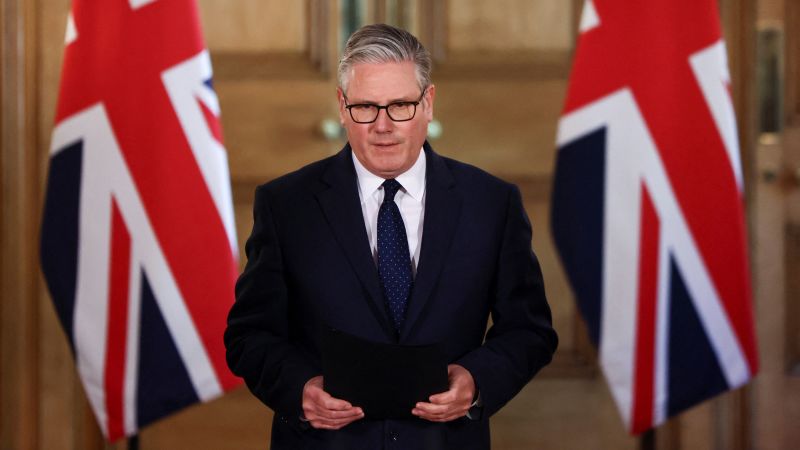
Is Britain ungovernable – Anthony Seldon, a historian and author known for chronicling the lives of the UK’s past eight prime ministers, initially anticipated a more stable political landscape when he began his work in the 1990s. At that time, the tenure of leaders in 10 Downing Street extended over multiple years, allowing for thorough analysis of their policies and leadership styles. However, the past decade has brought a wave of unpredictability, with Seldon now racing to keep pace with rapid changes. The Conservative Party’s leadership turmoil in recent years—resulting in three prime ministers in a single year—has left the country in a state of flux. Seldon hoped that Keir Starmer’s 2024 election win would signal a return to political order, but less than two years into his tenure, questions are already being raised about his future.
Starmer’s Labour Party secured a significant parliamentary majority in 2024, pledging a “decade of national renewal.” Yet, as local elections unfolded across England, Scotland, and Wales, voters decisively rejected Labour’s candidates, casting doubt on the party’s ability to maintain dominance. This has emboldened Starmer’s allies to consider his removal, a development that has left Seldon in a precarious position. His upcoming biography of Rishi Sunak, set for release in August, may be written under the shadow of a new prime minister—potentially the sixth in seven years. At 72, Seldon fears he might be perpetually trailing behind the political narrative, with his next project possibly focusing on “Angela Rayner at Number 10,” a figure viewed as a potential rival to Starmer.
The Strain of Political Instability
Britain’s political system has long been a battleground for competing ideologies, but recent years have pushed it to its limits. The revolving door at 10 Downing Street has sparked debates about whether the country can sustain effective governance. Seldon, who has tracked the evolution of leadership over decades, notes that this instability is not new but has accelerated under the current administration. The challenge lies in whether leaders can navigate the growing complexity of a fragmented political landscape without losing public confidence.
Britain’s economic woes compound the political uncertainty. The aftermath of the 2008 financial crisis left the nation in a prolonged period of stagnation, with real wages barely rising since. The pandemic and Russia’s invasion of Ukraine have since introduced new inflationary pressures, yet the country’s recovery has been uneven. The Brexit referendum, which saw the UK exit the European Union, is estimated to have reduced GDP per person by up to 8%, further straining public finances. Productivity growth remains sluggish, and government debt has reached historic levels, with UK bonds offering the highest yields among G7 nations. Meanwhile, industrial electricity costs in the UK are also at a peak, adding to the economic burden.
A Shifting Electoral Landscape
The traditional two-party system that once defined British politics is now under siege. For over a century, Labour and the Conservatives dominated the political scene, but the rise of alternative parties has fractured this balance. In England, the competition has evolved into a five-way struggle, while in Scotland and Wales, it now spans six factions. The Liberal Democrats, Greens, Reform UK, and nationalist parties advocating for independence have reshaped the political terrain, making consensus more elusive. This fragmentation poses a challenge for any leader seeking to implement long-term policies without constant upheaval.
“The political climate is unlike anything we’ve seen before,” Seldon remarked in an interview with CNN. “There’s a temptation to say that good governance has become a distant dream, but I don’t believe that’s the case.” He pointed to the previous Conservative leaders as exemplars of this trend. Boris Johnson, with his expansive vision for government and focus on “left-behind” regions, was likened to Franklin D. Roosevelt in ambition, though his execution fell short. Liz Truss, meanwhile, embodied the spirit of Reagan with her deregulatory policies, yet her 2022 tax-cut plan—unfunded and unsustainable—nearly collapsed the financial system. Her brief tenure, lasting just 49 days, ended abruptly when the Conservative Party lost patience with her economic missteps.
Rishi Sunak, Seldon argues, represents a different approach. As a proponent of fiscal restraint and a smaller state, he is compared to Herbert Hoover, the 31st U.S. president. However, by the time Sunak took office, the Conservative Party was already under significant criticism, and the public’s appetite for change had grown. Despite his efforts to restore stability, Sunak’s victory in 2024 was seen as inevitable, given the electorate’s dissatisfaction with his predecessors. In contrast, Starmer’s leadership seems to reflect a personal brand rather than a broad political strategy. “There’s elements of Jimmy Carter,” Seldon said, suggesting that Starmer’s approach is more about individual conviction than party ideology.
Will the UK Ever Stabilize?
Seldon acknowledges the challenges but remains optimistic about the country’s ability to adapt. “Britain is categorically not ungovernable,” he asserted. “Though some recent prime ministers have tried to make it so.” He attributes the current instability to a combination of economic pressures and a shifting political culture. While the first-past-the-post system struggles in a multi-party environment, he believes that the nation’s resilience will eventually prevail. “The electorate has a capacity for patience,” Seldon noted, “even if it’s tested at the moment.”
Yet, the question remains: can a single leader endure in such an unpredictable climate? Starmer’s path forward will depend on his ability to address pressing issues like inflation, productivity, and regional disparities. His success could restore faith in stable governance, while a repeat of past failures might reinforce the perception of a nation in turmoil. As Seldon continues his work, the broader implications of Britain’s political evolution will be watched closely, with the country’s future hinging on whether its leaders can find a way to unify amidst division.
“The real test is whether we can return to a model where leadership is more than a fleeting phenomenon,” Seldon said in a reflective tone. “Until then, the game of political chess will keep spinning.”
