
US aircraft carrier returns home after record deployment that included Iran war, Maduro capture
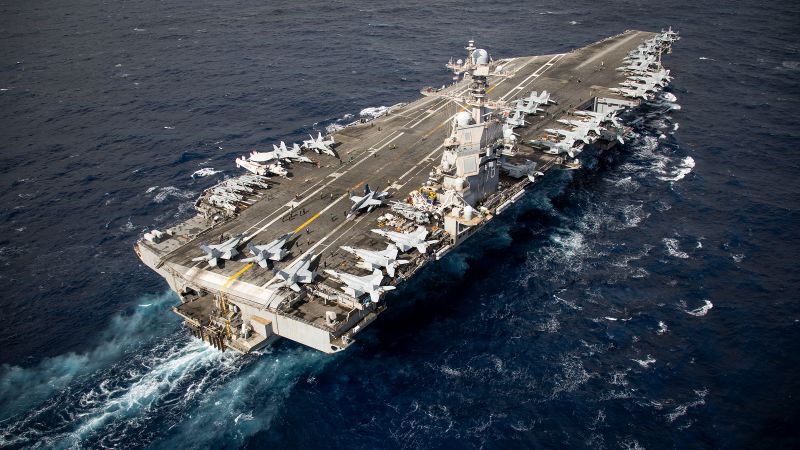
USS Gerald R. Ford Returns Home After Record-Setting Deployment
US aircraft carrier returns home after – The US aircraft carrier returns home after a groundbreaking deployment that lasted over a year, marking the end of a mission packed with high-stakes events. The USS Gerald R. Ford, America’s most advanced carrier, arrived in Virginia on Saturday following an 11-month journey that included participation in the Iran conflict, the capture of Venezuelan leader Nicolás Maduro, and a series of technical challenges that tested the crew’s endurance. This deployment not only set a new standard for carrier operations since the Vietnam War but also solidified the Ford as a central pillar of U.S. military strategy in the region.
Extending the Mission Beyond Expectations
Initially planned as a seven-month deployment, the Ford’s mission was stretched to nearly 11 months due to the complex demands of its objectives. The carrier’s involvement in the Iran war and the Maduro capture required extended time in the Caribbean, where it provided critical support for the operation that led to Maduro’s arrest. This extension underscored the flexibility of the Ford’s capabilities, allowing it to operate in multiple theaters while maintaining its strategic presence. The return home signals the completion of an unprecedented mission that blended regional engagement with global military actions.
Adm. Daryl Caudle, the ship’s commanding officer, acknowledged the unique challenges of the deployment. “We really want to deploy ships for the length they’re designed for, but this was a once-in-a-lifetime confluence of events,” he noted. The Ford’s extended time at sea also highlighted the resilience of its crew, who adapted to the demands of the mission despite logistical hurdles. The carrier’s advanced systems, including its electronic catapult, enabled it to perform critical operations while navigating the complexities of prolonged deployment.
Homecoming and Family Impact
The return of the Ford was a moment of emotional significance for its sailors’ families, who endured a year of separation. Many gathered in Norfolk to celebrate the homecoming, expressing relief and pride in their loved ones’ service. “It’s been a year of constant action,” said a sailor’s spouse, reflecting on the intensity of the mission. “We’re finally getting back to normal.” The deployment also tested the family’s ability to adjust to new routines, with some parents sharing how the absence affected daily life. For instance, Victoria Dobson, whose husband served on the carrier, described the difficulty of raising a child alone during the mission. “When he left, she was a baby, and now she’s a big girl,” Dobson shared, highlighting the personal toll of the extended service.
Other families echoed similar sentiments, expressing gratitude for the homecoming while acknowledging the stress of prolonged separation. Amini Osias, a father whose daughter works as an aviation electrician on the Ford, said the mission brought both pride and concern. “Families still had those doubts that something could happen,” he remarked. “It was a rough journey, but we’re all happy to see the ship back.” These personal stories underscore the human element of the deployment, adding depth to the carrier’s operational achievements.
Technical Challenges and Operational Resilience
Throughout the deployment, the Ford faced significant technical setbacks that tested its crew’s adaptability. A fire broke out in the laundry area in March, requiring nearly 30 hours to extinguish and disrupting daily operations. Around 600 sailors were temporarily displaced, though no serious injuries were reported. The incident, which is still under investigation, revealed the vulnerabilities of even the most advanced naval technology. Despite these challenges, the ship’s crew maintained operational readiness, showcasing their ability to overcome obstacles under pressure.
Additionally, the Ford’s onboard toilet systems experienced recurring malfunctions, forcing the crew to rely on port visits for repairs. These minor but persistent issues added to the strain of the mission, emphasizing the importance of logistics in sustaining long deployments. However, the crew’s determination to keep the carrier functional remained unwavering. “It was a constant battle to keep things running smoothly,” said one sailor, who stayed aboard during the technical disruptions. Their resilience ensured that the Ford could continue its critical role in military operations without significant setbacks.
Global Strategic Presence
The Ford’s deployment demonstrated its strategic importance in the U.S. military’s global operations. From the Atlantic to the Mediterranean and the Caribbean, the carrier served as a mobile command center, reinforcing American influence in key regions. Its involvement in the Iran conflict and the Maduro capture highlighted its versatility in supporting both combat and diplomatic objectives. As the carrier returns home, it leaves behind a legacy of adaptability and effectiveness, setting a new precedent for future deployments. The mission’s success also underscores the importance of the U.S. Navy in maintaining regional stability and projecting power across the globe.
While the deployment marked an end to the Ford’s current mission, it also paved the way for future strategic initiatives. The carrier’s extended time at sea provided valuable lessons in managing complex operations, which could inform future deployments. With its advanced technology and resilient crew, the Ford is positioned to play a vital role in U.S. military strategy for years to come. The return home is not just a celebration of the mission’s completion but also a step forward in the carrier’s ongoing contribution to global security.
