
A stillbirth and Facebook post expressing her grief landed her in prison for over 2 years. Experts say it’s part of a pattern
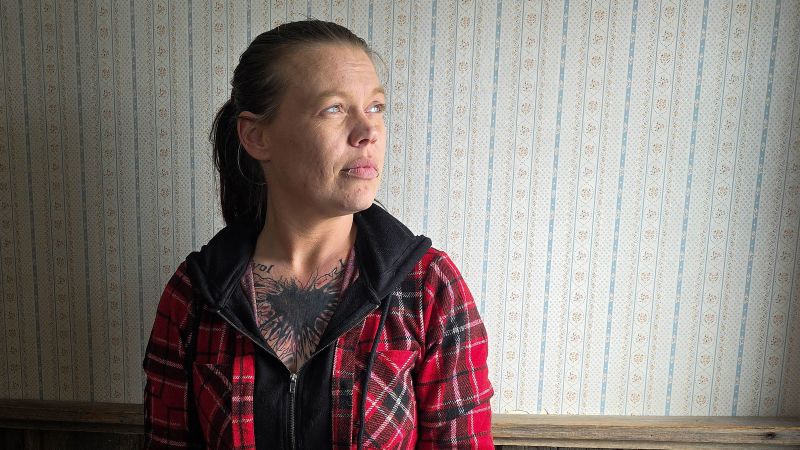
A Stillbirth and a Facebook Post Led to Two Years in Prison
A stillbirth and Facebook post expressing – Patience Rousseau’s life changed dramatically in May 2018 when a sheriff’s deputy confronted her outside her home in Winnemucca, Nevada, with a question that seemed to echo her own confusion: “Why are you apologizing, Patience?” At 26, Rousseau was still reeling from the loss of her stillborn son, Abel, and the subsequent search warrant served by law enforcement. The incident, captured on body camera footage, revealed how her grief was weaponized in a legal battle that lasted over two years.
The Emotional Toll of a Tragic Outcome
Rousseau’s Facebook post, which expressed her sorrow over the stillbirth, became the focal point of her arrest. In the post, she wrote, “I’m so sorry, Abel,” reflecting her deep emotional connection to the child she named posthumously. Her attorney described her as grappling with a mix of guilt and ambivalence about her unplanned pregnancy, a sentiment that had been amplified by her struggle to provide for her two young sons. “I had a miscarriage, OK? A miscarriage. Why are you guys here over a f**king miscarriage?” she protested to the deputy, unaware of the legal consequences awaiting her.
“Why would you be sorry? Why would you be sorry, Patience?”
On the day of the search warrant, Rousseau was in shock as officers, some in tactical gear, gathered outside her rural home. The scene was further intensified by the presence of a red-painted cross with “Abel” inscribed in black, a symbol of her loss that law enforcement used to justify their actions. The deputies dug up the remains of the stillborn baby and transported them to a vehicle, a process that left Rousseau emotionally shattered.
A Vague Statute and Criminal Charges
Rousseau’s arrest was linked to a felony manslaughter charge under Nevada law, which prosecutors used to argue she had taken drugs to terminate her pregnancy. Her defense highlighted that she had consumed large amounts of cinnamon and lifted heavy objects during her pregnancy, claiming these actions were meant to induce a miscarriage. Despite this, she was convicted in 2021 under a statute critics say is overly broad, allowing for the criminalization of pregnancy outcomes even in states where abortion is legal.
She was also charged with concealing birth, a lesser misdemeanor, but this charge was not upheld. Legal experts note that Rousseau’s case is emblematic of a trend where women are being targeted under outdated laws, such as those related to child neglect, abuse of a corpse, or even homicide, for their experiences with pregnancy loss. “There’s been a really dedicated effort to criminalize pregnancy outcomes alongside abortion,” said Karen Thompson, legal director of Pregnancy Justice, a nonprofit advocacy group. This pattern has emerged as a parallel strategy to stricter anti-abortion laws, particularly since the US Supreme Court overturned Roe v. Wade in 2022.
Broader Implications of the Legal Shift
Following the Supreme Court’s decision, Nevada saw a surge in cases where women were charged for actions tied to their pregnancies. According to data from Pregnancy Justice, the state recorded the highest number of criminal charges related to pregnancy outcomes in the first year after the ruling. These cases often rely on ambiguous statutes, creating opportunities for prosecutors to expand legal definitions to include a wide range of pregnancy experiences.
Rousseau’s ordeal exemplifies how these laws can be applied in ways that feel punitive rather than protective. The judge who overturned her conviction in 2021 criticized the overworked public defender for advising her to plead guilty, describing her case as “a total miscarriage of justice.” Rousseau was later awarded a $100,000 settlement, a gesture of acknowledgment for the trauma she endured.
A Life of Resilience and Unforeseen Consequences
Before her arrest, Rousseau’s life was marked by constant adaptation. She had moved frequently and held a variety of jobs, from bartending to cleaning hotels and Airbnbs. Her 15-year career as a taxi driver, in particular, was defined by her ability to offer empathy to passengers during tough times. “I could lend a sympathetic ear to people when they needed it most,” she recalled. Yet, on the day law enforcement arrived at her doorstep, she was the one who needed support, not the provider of it.
Her story has sparked conversations about the emotional and psychological dimensions of pregnancy-related criminalization. Experts argue that laws designed to protect women from harm are now being used to penalize them for natural outcomes, such as miscarriage or stillbirth. “This isn’t just about a single act; it’s about framing a woman’s grief as a criminal decision,” Thompson emphasized. The use of social media posts as evidence in such cases has also raised questions about privacy and the role of public sentiment in legal judgments.
Voices of Advocacy and Legal Reform
Legal advocates stress that the criminalization of pregnancy outcomes is not a new phenomenon but has gained momentum in recent years. The post-Roe v. Wade landscape has seen a sharp increase in prosecutions, with many cases targeting women who choose to end pregnancies or experience pregnancy loss. “This is a deliberate tactic to stigmatize and control women’s bodies,” said one law professor, adding that such measures often ignore the complexities of individual circumstances.
Rousseau’s case is now part of a growing body of examples illustrating the potential for legal overreach. Her conviction, which was later vacated, highlighted how a single moment of grief can become a legal narrative. The judge’s decision to call her case “a total miscarriage of justice” underscores the disparity between the emotional reality of her experience and the legal framework that sought to criminalize it. For Rousseau, the trauma of being arrested and imprisoned after a stillbirth has left a lasting impact, both personally and professionally.
A Legacy of Justice and Awareness
As Rousseau moves forward, her story serves as a cautionary tale for legal systems that prioritize punitive measures over understanding. The $100,000 settlement represents a step toward recognizing the harm caused by such prosecutions. However, legal experts warn that the pattern of criminalizing pregnancy outcomes is likely to persist, especially in states with restrictive abortion laws. “This is not an isolated case; it’s part of a larger strategy to control women’s reproductive lives,” Thompson said. The balance between individual choice and legal accountability remains a central issue in the ongoing debate over reproductive rights.
For Rousseau, the experience of being judged for her grief has been a profound loss. “I thought I was doing what was right for my circumstances, and then to be told that I was wrong, right after going through all of that alone … and then to be punished for all of it without getting any sort of help mentally has hurt me so much,” she told CNN. Her journey from a resilient working mother to a woman serving time for a personal tragedy underscores the human cost of legal policies that fail to account for the emotional realities of pregnancy and loss.
