
Kennedy, balancing MAHA and White House, says he won’t run for president in 2028
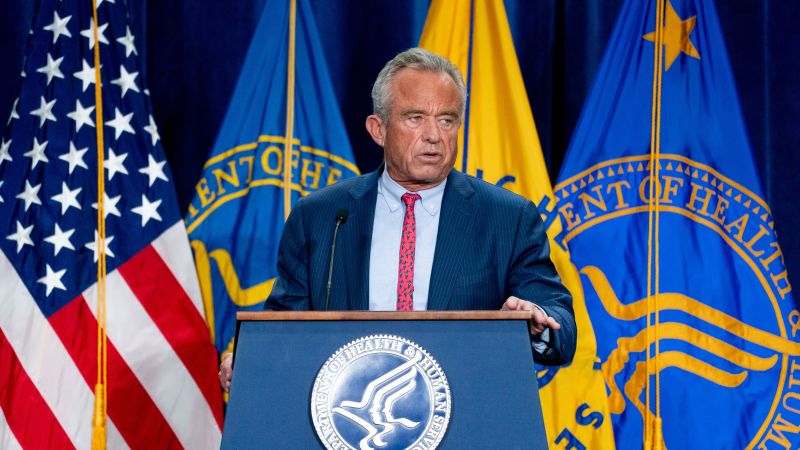
Kennedy Declines 2028 Run, Balances MAHA and White House
Kennedy balancing MAHA and White House – Robert F. Kennedy Jr., currently serving as Health and Human Services Secretary, has announced he will not seek the presidency in 2028, signaling a strategic shift as he navigates the delicate balance between his anti-vaccine movement, Make America Healthy Again (MAHA), and the White House. His decision reflects a growing divide within the health policy arena, where his focus on individual autonomy in vaccination decisions contrasts with the administration’s push to reinforce public health initiatives. This pivot has sparked debates about his priorities, with some questioning whether his role in the White House will ultimately shape his future political aspirations.
A Fractured Campaign
Kennedy’s role as a Health and Human Services Secretary has become increasingly contentious, especially as he defends his stance on vaccine mandates amid rising political tensions. While MAHA advocates see his position as a platform to challenge government health policies, the White House views his influence as a potential threat to its agenda. Recent interactions with key figures in the administration highlight this conflict, with Kennedy attempting to assert his independence without alienating either side. His upcoming events, including appearances at Republican rallies, will further test his ability to maintain this dual role.
The White House’s efforts to distance itself from Kennedy’s anti-vaccine messaging have intensified, particularly in the wake of President Trump’s controversial policies. By appointing Erica Schwartz, a vocal proponent of vaccine rollouts, as CDC director, the administration has signaled a move away from Kennedy’s earlier influence. This decision has frustrated MAHA supporters, who argue it undermines their cause. Meanwhile, Kennedy has emphasized his autonomy, claiming he has been given more flexibility in shaping health policy than any previous secretary. However, the changing political landscape raises questions about the sustainability of his current position.
Strategic Realignment
Kennedy’s withdrawal from a 2028 presidential bid has been met with mixed reactions. Within MAHA, some hope he will leverage his experience to lead a broader movement, while others worry he is being sidelined by the administration. “If Kennedy isn’t secretary, then MAHA’s influence will severely diminish,” noted David Mansdoerfer, a former Trump-era health official. This sentiment underscores the movement’s dependence on his leadership. Meanwhile, the White House has restructured its health strategy, with Trump now focusing on promoting public health measures over ideological debates. Critics suggest Kennedy’s role is being redefined to align with these new priorities.
As the midterm elections approach, Kennedy’s presence on the campaign trail has taken on new significance. His participation in GOP primary events highlights his attempt to remain relevant in the political arena. However, the White House’s push to counter Trump’s policies has created an environment where Kennedy must choose between his movement and the administration’s goals. “Running would be perfectly logical for Bobby,” added Christopher Bosso, a political analyst. “Kennedy is being a good soldier, but to what extent? That is going to be a question.” His recent speeches have sought to reconcile these competing interests, but the outcome remains uncertain.
The tension between Kennedy and the White House is not merely ideological; it also reflects broader strategic considerations. With MAHA gaining traction among certain voter groups, the administration must weigh whether to support or challenge Kennedy’s influence. This balancing act is evident in the White House’s simultaneous efforts to counter anti-vaccine rhetoric and stabilize its public health agenda. Kennedy’s role has become a focal point in this struggle, as his decisions could sway the direction of both the movement and the administration’s policies. The next few months will be critical in determining how this dynamic evolves.
