How dangerous is watching the World Cup in Mexico, really?

Security for the World Cup in Mexico: A Closer Look
How dangerous is watching the World – As the World Cup approaches, millions of international fans are expected to descend on Mexico, bringing with them a mix of excitement and concern about safety. While the country has invested heavily in security infrastructure, questions remain about whether these measures will be enough to shield visitors from the risks that have long plagued certain regions. The government has launched an expansive security initiative, deploying nearly 100,000 personnel across host cities and surrounding areas, but the challenge lies in balancing these efforts with the realities of Mexico’s complex criminal landscape.
The Plan Kukulkan Initiative
At the heart of Mexico’s security strategy is *Plan Kukulkan*, a name inspired by the Maya deity of transformation and protection. This multi-agency effort involves federal, state, and local authorities, as well as collaboration with neighboring co-hosts Canada and the United States. The plan aims to create a secure environment for both local residents and foreign visitors, addressing concerns about violence, crime, and public safety. According to Mexican officials, the strategy is designed to ensure the World Cup remains a landmark event without incident, even as the country grapples with ongoing cartel activity.
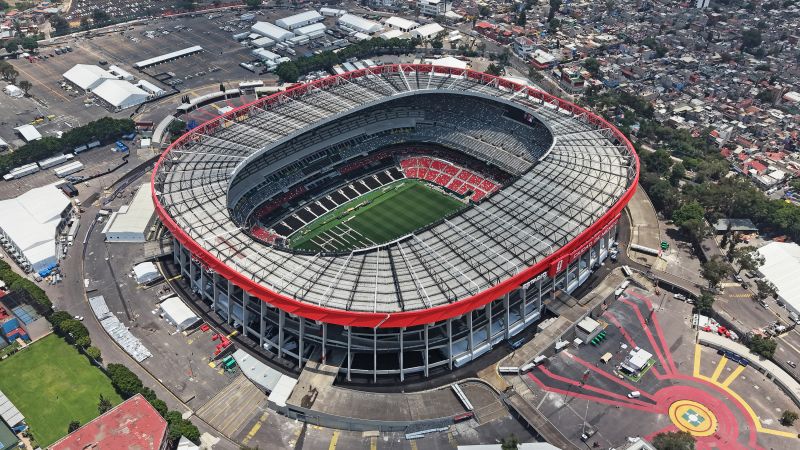
The initiative includes a range of measures, from increased police patrols to the use of aerial surveillance. In Mexico City, for instance, authorities are reportedly stationing 56,000 officers across the metropolis, which has a population of over 22 million. These officers include specialized units, traffic police, and a dedicated tourist force, all working to manage crowds and prevent disruptions. The city’s main plaza, El Zócalo, will be heavily guarded during the World Cup, with security personnel equipped with shields and automatic rifles to deter potential threats.
Host Cities and Their Unique Challenges
Mexico’s three host cities—Mexico City, Guadalajara, and Monterrey—each face distinct security concerns. While Mexico City is seen as one of the safest urban areas, it is not immune to crime. Researchers note that the capital, despite its high police presence and surveillance, still experiences street-level incidents such as pickpocketing, robberies, and scams. These risks, though less severe than those in other regions, could impact the visitor experience, especially in crowded areas.
Guadalajara, on the other hand, presents a more complex picture. As the capital of Jalisco, the city is deeply entangled in cartel dynamics. The Jalisco New Generation Cartel (CJNG) has exerted significant control over the region, leading to frequent violence and disappearances. In February, the capture of the cartel’s leader, Nemesio “El Mencho” Oseguera Cervantes, triggered a wave of retaliation, with attacks on vehicles, businesses, and security forces. The state has also reported over 16,000 cases of missing persons, many of whom are believed to be victims of organized crime. “It seems to me that of the three (host cities), Guadalajara deserves particular attention,” noted Teresa Martínez, a professor at Tecnológico de Monterrey. She emphasized that the city’s transportation system, which will be critical for moving fans during the tournament, requires more than just police presence—it needs a reliable and accessible network to function smoothly.
Monterrey, the third host city, offers a more optimistic outlook. Unlike Mexico City and Guadalajara, it is not dominated by major cartels, and crime rates are generally lower. However, experts warn that the city is still vulnerable to opportunistic threats, particularly in areas with high tourist activity. “The level of security is impressive, but the focus is on preventing large-scale incidents rather than addressing all possible risks,” said Victoria Dittmar, a senior researcher at the InSi think tank. While serious crimes like cartel violence are less common in Monterrey, petty theft and fraud remain concerns.
Historical Context and Ongoing Threats
For years, Mexico has struggled with organized crime, with cartels operating in a network of illicit activities that span drug trafficking, human smuggling, and extortion. Even in areas with robust security, the presence of these groups means that danger is never entirely eliminated. “There are very large networks of piracy, human trafficking, prostitution, obviously drug dealing, and some extortion, but it’s also the area of the country with the highest per capita police presence and security cameras,” explained Víctor Manuel Sánchez Valdés, a researcher at the Autonomous University of Coahuila. His comments highlight the dual nature of Mexico’s security strategy: a focus on both visible and invisible threats.
The World Cup provides a unique opportunity to showcase Mexico’s ability to manage large-scale events safely. However, the tension between the country’s efforts to project stability and its historical challenges with crime is evident. In the capital, for example, the government has prioritized public safety in anticipation of the influx of fans, but the city’s criminal networks continue to operate in the shadows. Similarly, Guadalajara’s recent spikes in violence underscore the need for continued vigilance, even as security forces strengthen their positions.
Transportation is another key concern. In a city like Mexico City, where millions of people will gather, ensuring a safe and efficient public transit system is a major logistical challenge. Martínez pointed out that security teams must not only monitor crowds but also coordinate with transportation officials to guarantee that fans can move freely without fear. “You need other things to guarantee that the transportation system is safe, viable, and accessible to all fans, whether foreign or not,” she said. This includes everything from maintaining traffic flow to addressing incidents that could disrupt travel.
Expert Perspectives on Safety
While many experts agree that *Plan Kukulkan* represents a significant step forward in security, they also acknowledge that the World Cup will not erase the country’s criminal legacy. “The plan is ambitious, and it’s clear the government is committed to protecting visitors,” said Dittmar. “But the level of threat depends on where you are and what you’re doing.” She noted that the majority of risks faced by tourists are likely to be minor, such as theft or scams, rather than the large-scale violence that has plagued other areas. Still, the presence of cartel groups in the host cities means that the possibility of more serious incidents remains.
Some analysts argue that the World Cup could serve as a catalyst for long-term security improvements. The event has prompted a surge in resources, with agencies working together to address vulnerabilities. However, the success of these efforts will depend on how well they adapt to real-time challenges. “The plan is designed to mitigate risks, but it’s not a guarantee of total safety,” said Sánchez Valdés. “It’s a proactive approach, but the reality is that Mexico’s crime environment is still evolving.”
Ultimately, the World Cup in Mexico is not just about soccer—it’s about proving that the country can manage its security challenges on a global stage. With nearly 100,000 personnel deployed and a coordinated strategy in place, the government is working to create an environment where fans can enjoy the matches without fear. Yet, as experts caution, the goal is not to eliminate all risks, but to reduce them to manageable levels. Whether the event will be a success or a test of Mexico’s security capabilities remains to be seen, but the preparations suggest a commitment to ensuring a safe and memorable experience for all attendees.