
Exclusive: Lebanese president accuses Iran of using his country as a bargaining chip in peace talks with the US
Exclusive: Lebanese President Accuses Iran of Exploiting Nation as a Strategic Asset in US-Israel Peace Talks
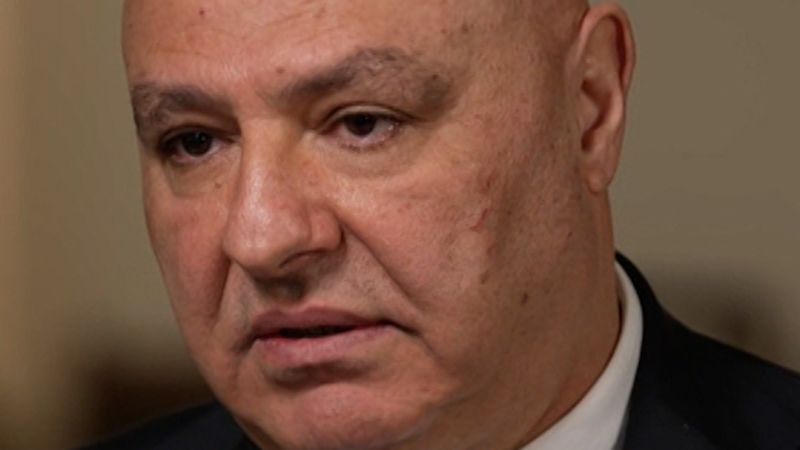
Exclusive – Lebanese President Joseph Aoun made a pointed critique of Iran during a recent exclusive interview with CNN’s Christiane Amanpour, asserting that the country has been manipulated as a pawn in diplomatic negotiations with the United States and Israel. Aoun emphasized his determination to safeguard Lebanon from the escalating tensions, stating that the people are “tired” of the ongoing war between Israel and Hezbollah, a militant group backed by Iran that has garnered significant domestic backing by positioning itself as the protector of southern Lebanon and the Palestinian cause.
In the wake of a joint US-Israeli operation earlier this year that targeted Iran’s leadership, Hezbollah launched a barrage of rockets at Israeli territory. This retaliation sparked a renewed wave of violence, resulting in over 3,500 Lebanese civilian deaths and displacing nearly a fifth of the population. Aoun highlighted the humanitarian toll, noting that the repeated cycles of destruction have left the Lebanese people yearning for stability. “The people of Lebanon deserve to live in peace and dignity,” he declared, “and they should not witness their homes reduced to rubble every five to ten years.”
“We are fed up and want to live in peace,” Aoun said, addressing Iran’s Islamic Revolutionary Guard Corps (IRGC), the primary financier of Hezbollah. “It’s not your country, it’s our country. You are using Lebanon as a bargaining chip in your negotiation with the US.”
Aoun’s remarks came as Lebanon’s government sought to navigate a precarious situation, weakened by years of foreign intervention, internal divisions, and its repeated involvement in regional conflicts. The Lebanese state had committed to disarming Hezbollah, aiming to curtail the group’s political clout and prevent further Israeli military incursions. However, Iran has tied its support for peace to Israel’s withdrawal from Lebanese soil, a condition that has left Beirut struggling to reconcile its domestic needs with external pressures.
Despite a ceasefire between Tehran and Washington in April, Aoun’s administration has taken an unprecedented step by engaging in direct talks with Israel to broker a truce. This decision reflects a growing desperation to neutralize Hezbollah’s influence, which has been a central player in Lebanon’s affairs since its formation in the 1980s. Aoun, who once served as the country’s army chief for eight years, underscored his commitment to diplomacy. “We are ready, we are willing, and we are committed to ending the war,” he told Amanpour during the interview at Beirut’s presidential palace.
The president’s stance contrasts sharply with Hezbollah’s position. In a statement released on Thursday, the group’s leader, Naim Qassem, dismissed the Lebanon-Israel discussions as a “surrender,” arguing that the truce would be rejected entirely by many Lebanese citizens. Aoun, however, pointed out that the majority of the population, including Shiites, has voiced discontent with Hezbollah’s conflict with Israel. “They are Lebanese people,” he said, “not Naim Qassem’s people.” This marked a rare public rebuke of the Iranian-backed leader, who has long held sway over the country’s political landscape.
Aoun also criticized Israel’s military strategy, suggesting that the group can only be effectively addressed through negotiations once the Israeli forces withdraw from Lebanese territory. “They can invade the whole country, flatten it, but they will never achieve their goal,” he said. “Hezbollah is not an objective you can see—it’s an idea.” This metaphor underscores the group’s deep-rooted presence in Lebanese identity, a factor that complicates efforts to disarm it.
Aoun’s Personal Stakes in the Conflict
Before ascending to the presidency, Aoun spent eight years as the head of Lebanon’s military, during which he was wounded in battle. He claims to still bear the physical and psychological scars of those experiences, including shrapnel in his body and hearing loss from close combat. Yet, Aoun has consistently advocated for peaceful resolutions, even as the conflict escalates. “I prefer negotiations over wars,” he said, “because I don’t want my child to grow up in a country perpetually at war.” His sentiment aligns with the broader Lebanese populace, which has grown weary of the cycle of violence.
The ongoing strife has strained Lebanon’s fragile institutions, forcing the government to take bold measures. With Hezbollah’s influence expanding through its domestic support, the state has been compelled to act as a mediator between Iran and Israel. Aoun’s decision to negotiate directly with Israel signals a shift in strategy, one that prioritizes immediate peace over long-term geopolitical alignment. However, this move has also drawn scrutiny, as some fear it may embolden Iran’s ambitions in the region.
The Path to Peace and the Challenge Ahead
Aoun framed the current situation as a pivotal moment for both Lebanon and Israel. “They both have a great opportunity to end the state of hostility,” he said, “and for their people to live safely.” The president argued that the conflict, which has persisted since 1948, has reached a tipping point. “This is a huge opportunity,” he added. “They both have to choose: war or diplomacy.” Yet, Hezbollah’s resistance to disarmament remains a key obstacle, as the group insists on Israeli withdrawal before agreeing to any ceasefire.
While Aoun’s administration has made progress in engaging with Israel, the broader Lebanese public remains divided. Some citizens support the group’s role in resisting Israeli aggression, while others see it as a threat to national sovereignty. The president acknowledged this complexity, stating that his government had consulted across religious and political lines. “The Lebanese people are not united in their demands,” he admitted, “but we are working to find common ground.”
The road to peace, however, is fraught with challenges. Aoun’s efforts to negotiate with Israel risk alienating Hezbollah’s supporters, who view the group as a vital force in defending Lebanon’s southern regions. At the same time, Iran’s insistence on using Lebanon as leverage in its dealings with the US has left the country caught in a crossfire. “Our interests do not coincide with yours,” Aoun said, addressing Iran. “The people of Lebanon are paying the price for your own agenda.”
As the conflict continues, the Lebanese president remains resolute. “We will do whatever it takes to protect our country,” he affirmed. With the war’s human and economic costs mounting, Aoun’s leadership will be tested in the coming months. Whether Lebanon can emerge as a neutral mediator or be further drawn into the regional struggle depends on the success of these negotiations—and the willingness of Iran and Israel to compromise. The stakes, Aoun warned, are nothing short of existential for Lebanon’s future as a peaceful nation.
