
Secret Service prepares for second press dinner after attack
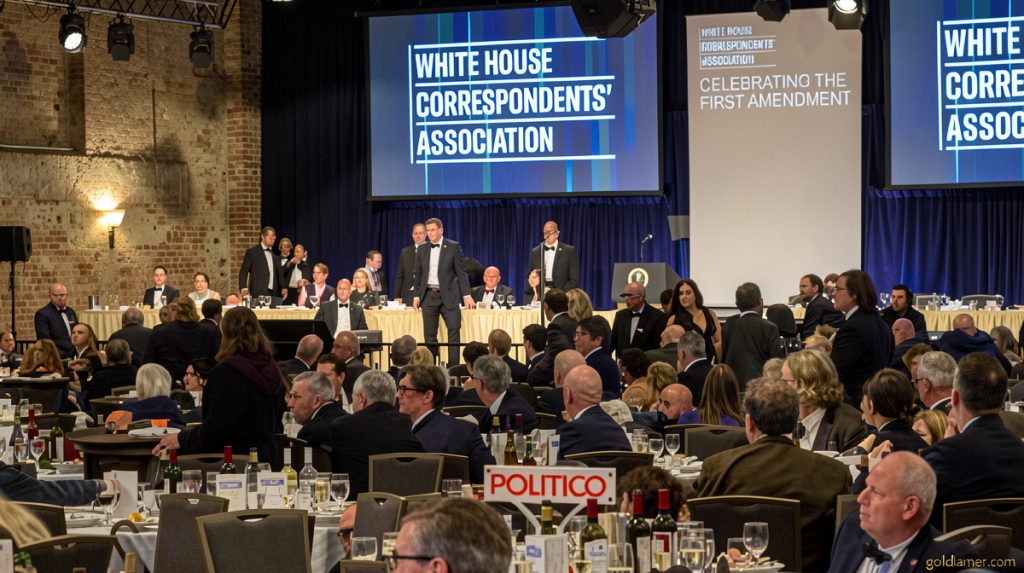
Secret Service Readies Enhanced Security for Rescheduled Press Dinner Following April Incident
Agency Leadership Defends Response to Shooting
Goldlaner.com – Washington, DC — The United States Secret Service is moving forward with preparations for a second White House Correspondents’ Dinner this year, following the dramatic disruption of the original event in April. Director Sean Curran addressed media inquiries on Wednesday, offering his assessment of how the agency managed the security situation during the initial gathering.
“It did work,” Curran stated during his press conference. “The system worked.” His comments came in response to questions about the April incident, when a gunman breached a screening checkpoint and opened fire while rushing through the floor above the dinner venue. The assailant struck one officer before multiple agents successfully detained him.
Curran emphasized that the attacker, who was registered as a hotel guest prior to the event, was intercepted more than 100 yards from the main podium. This distance, according to the director, demonstrates the effectiveness of their layered security approach.
“That is the success. That is why we set up checkpoints,” Curran told reporters when asked about security preparations and reassurances for guests attending the rescheduled event Friday. “That is why we have our teams, our special teams, in place because we do plan for that, and that’s the reality.”
New Venue Offers Strategic Advantages
The rescheduled dinner will take place at the Waldorf Astoria, marking a change from the original Washington Hilton location. According to Curran, advance teams have already conducted site visits and established comprehensive security protocols for the evening. This level of advance preparation is standard practice for the Secret Service, which manages thousands of trips and visits for their protectees throughout the year.
Law enforcement sources indicated to CNN that the Waldorf Astoria provides more limited access points compared to the previous venue. This architectural feature allows security personnel to concentrate their efforts more effectively. Additionally, the area surrounding the new location benefits from substantial police presence from both local and federal agencies, creating an additional layer of protection for attendees.
“That’s sometimes what people don’t understand. If we didn’t need the magnetometers, we wouldn’t set them up,” Curran said of the metal detectors that were being removed when the gunman rushed through. “We do expect bad people to show up. It’s just a reality of where we are.”
Not a Redo, But a Standard Presidential Site Operation
Secret Service officials have been careful to clarify that the upcoming dinner should not be viewed as a second attempt at security. Deputy Director Matthew Quinn explained the agency’s perspective on Wednesday.
“We’re not looking at this as a redo of a dinner,” Quinn said. “We’re looking at this as a presidential site with cabinet members and other protectees there, just like every site we do everywhere we go.”
The alleged gunman, identified as Cole Allen, has entered a not guilty plea to charges of attempting to assassinate the president. He continues to be held in custody while the court system works to schedule a trial date for the case.
Threat Landscape Remains Elevated
Beyond the immediate incident, Secret Service officials highlighted that broader threats continue to pose challenges. The agency noted that Iran, a nation that has publicly called for the president’s death and has previously attempted to orchestrate attacks on his life, remains a significant concern. Threats against protectees are reportedly growing in both frequency and severity.
“What we’re seeing now is something we’ve never seen,” one Secret Service official said, adding that in their nearly 30 years with the agency, the level of threats is “the highest that I’ve ever seen.”
While some public criticism has been directed at the Secret Service regarding the April shooting and subsequent arrest, agency leadership maintains that their checkpoint system functioned as designed. The metal detectors were in the process of being removed when the gunman managed to pass through, but the overall security framework successfully contained the situation and protected those in attendance.
