Elected on a promise of better times, Keir Starmer failed to deliver the change Britain wants

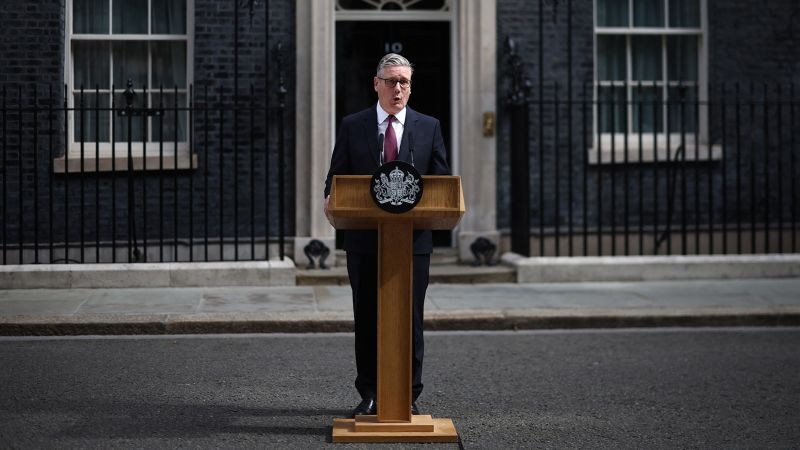
Elected on a Promise of Better Times, Keir Starmer Faced a Rapid Fall from Grace
Elected on a promise of better – In the wake of a historic shift in British politics, the Labour Party’s leader Keir Starmer was thrust into the role of prime minister after an overwhelming victory in the July 2024 general election. This marked the first time Labour had reclaimed power since 2010, ending 14 years of Conservative dominance. Yet, less than two years later, Starmer’s tenure had already come to an end, as he announced his resignation on Monday, leaving behind a government that had fractured under internal pressures.
The Fragile Promise of Change
Starmer’s campaign had promised a return to stability after years of economic uncertainty and political chaos under the previous administration. However, his government struggled to gain traction, and public sentiment quickly turned against him. By the time he stepped down, he had become the least popular prime minister in the nation’s history, with a once-enthusiastic electorate now questioning whether Labour had delivered on its pledge of renewal.
“Things will get worse before they get better,” Starmer declared in his first major address to the nation, setting the tone for a leadership that emphasized incremental progress over bold transformation. This message, while pragmatic, contrasted sharply with the optimism that had fueled Labour’s rise to power.
The Labour leader’s downfall was not solely due to his own missteps. Critics argue that the party’s cautious approach to governance, dubbed the “Ming Vase” strategy, played a significant role. This tactic, which prioritized maintaining a clean image over taking decisive action, left the government ill-prepared to address pressing challenges. Even as polls predicted a landslide win, Labour’s leaders hesitated to embrace ambitious policies, fearing that any misstep could jeopardize their slim majority.
The Legacy of Austerity
When Starmer took office, Britain was still reeling from the Conservative government’s decade-long austerity program. Despite its intentions to reduce national debt and stabilize the economy post-2008 crisis, this approach had backfired, leaving public finances strained and growth stagnant. Voters had grown weary of the economic stagnation and political gridlock, hoping that Labour’s new leadership would provide a fresh start.
Starmer, however, faced an uphill battle. His administration inherited a country grappling with inflation, a shrinking middle class, and a growing divide between the wealthy and the working poor. While the Conservatives had been blamed for decades of mismanagement, Starmer’s government was expected to reverse that trend. Instead, it found itself mired in controversy, with decisions that seemed to lack a coherent vision.
Among the most notable stumbles were policy choices that sparked public backlash. For instance, Starmer’s proposal to increase heating costs for wealthier pensioners was seen as an unnecessary burden, while his plan to cut benefits for disabled individuals drew accusations of stinginess. These decisions, though framed as necessary fiscal measures, were met with criticism for their perceived lack of compassion.
A Leadership in Transition
Starmer’s political journey had been shaped by a commitment to due process and a focus on legal principles. Before entering national politics, he served as director of public prosecutions, where his work in human rights law earned him respect. However, this background did not translate into a clear ideological framework for his government.
After a crushing defeat in 2019, Starmer had been chosen as Jeremy Corbyn’s successor, seen as a pragmatic alternative to the party’s radical left. While his tenure as shadow leader had been marked by sharp scrutiny of Conservative policies, his time in government revealed a different challenge: the difficulty of articulating a compelling political narrative. Without a defined vision, Labour’s decisions appeared reactive rather than visionary, alienating both supporters and skeptics.
One of the most controversial choices came in recent months when Starmer appointed Peter Mandelson, a former ally linked to Jeffrey Epstein’s scandal, as UK ambassador to Washington. This move, though perhaps strategic, raised questions about the leader’s judgment and integrity. The scandal underscored a pattern of perceived compromises, including his acceptance of corporate perks and his reluctance to take a firm stance on contentious issues.
The Road to Resignation
Starmer’s resignation was a culmination of mounting pressure. Despite his initial success in securing a decisive victory, his government’s inability to connect with voters or address systemic issues led to a rapid erosion of public confidence. The Conservatives, anticipating a heavy defeat, had preemptively introduced sweeping tax cuts, expecting Labour to inherit the challenge of balancing the budget. Starmer, however, ruled out raising income tax and other key levies, a decision that critics argued weakened Labour’s credibility and allowed the Conservatives to retain some of their appeal.
His leadership style, often described as measured and methodical, was both a strength and a weakness. While this approach had helped him navigate the shadow cabinet under Corbyn, it left him ill-equipped to inspire confidence during his time in power. The public, accustomed to bold promises and dramatic shifts, grew impatient with the slow pace of change. As the months passed, the pressure to deliver tangible results became overwhelming, forcing Starmer to step down despite his earlier optimism.
A New Chapter for Labour
With Starmer’s resignation, the Labour Party now faces the daunting task of selecting a successor who can rebuild the party’s image and restore public trust. Andy Burnham, the charismatic mayor of Greater Manchester, has emerged as a leading contender, with his appeal to voters who seek a leader with a down-to-earth approach. His potential leadership could signal a return to the kind of grassroots politics that defined Labour’s earlier successes.
Starmer’s fall serves as a reminder of the challenges facing modern political leaders. In an era where public expectations are high and media scrutiny is relentless, even a well-intentioned government can falter. His story highlights the importance of not only policy decisions but also the ability to communicate a clear vision. As Britain looks to the future, the question remains: can Labour rise from this setback and fulfill the hopes that had once propelled it to power?
The rapid decline of Starmer’s administration has sparked debate about the role of leadership in shaping a nation’s trajectory. While his predecessors had faced criticism for their ideological extremes, Starmer’s governance was marked by a lack of defining principles. This absence of a unifying narrative left the party vulnerable to criticism, as its actions were seen as inconsistent and uncertain.
As the political landscape shifts, the lessons of Starmer’s tenure will be scrutinized. His government’s policies, while aimed at restoring fiscal discipline, may have inadvertently deepened public disillusionment. The Labour Party, once a beacon of progressive reform, now stands at a crossroads, with the hope that a new leader can rekindle the spirit of change that had initially captured the nation’s imagination.