Alan Greenspan, former head of Federal Reserve, dies at 100

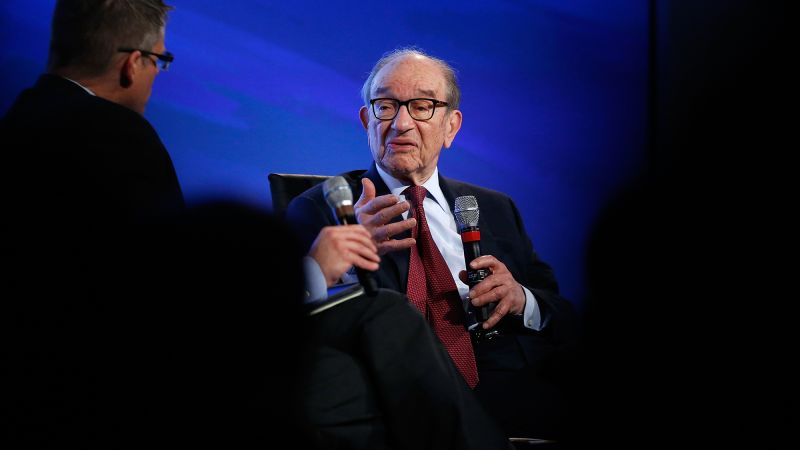
Alan Greenspan, Former Federal Reserve Chairman, Dies at 100
Alan Greenspan former head of Federal – Alan Greenspan, the iconic former chairman of the Federal Reserve, has passed away at the age of 100, according to his wife, Andrea Mitchell. Her announcement came via a statement, marking the end of an era for the central bank and the economic landscape he profoundly influenced. Greenspan’s legacy is a tapestry of triumphs and controversies, woven through decades of leadership and pivotal moments in financial history.
A Career Spanning Presidential Eras
Greenspan’s tenure at the Fed, which stretched from 1987 to 2006, was the second-longest in the institution’s history. He served under four U.S. presidents—Ronald Reagan, George H.W. Bush, Bill Clinton, and George W. Bush—yet his influence transcended political affiliations. Before his time at the Fed, Greenspan was a respected economics professor at New York University, where he taught in the 1950s. His academic background laid the foundation for his later work, which included co-founding the economic consulting firm Townsend-Greenspan & Co., a venture he led for 21 years.
His early career also included a notable role in Richard Nixon’s 1968 presidential campaign, where he served as director of domestic policy research. After Nixon’s presidency, Greenspan continued as a part-time adviser, shaping policies that would later inform his work at the Fed. These formative experiences helped mold his approach to economic management, blending theory with practical insight.
The 1987 Market Crash and a Fed Response
Greenspan’s leadership was put to the test during the 1987 stock market crash, known as “Black Monday.” On October 19, 1987, the Dow Jones Industrial Average plummeted by 22% in a single day, sending shockwaves through global markets. Two days later, Greenspan took to the podium and reassured the public that the Fed would act as a stabilizing force. His declaration that the central bank was prepared to provide liquidity helped restore investor confidence, allowing the market to recover relatively swiftly.
This moment underscored Greenspan’s ability to navigate crises with composure, but it also highlighted the complexities of his role. His tenure at the Fed coincided with one of the strongest peacetime economic expansions in U.S. history, characterized by falling unemployment, record stock market highs, and budget surpluses. Yet, his legacy would later be scrutinized in the wake of the 2008 financial collapse.
The Housing Bubble and Post-Office Controversies
Following his departure from the Fed in 2006, Greenspan faced criticism for his oversight of the housing market during the 2000s. As the dot-com bubble burst in 2000, the economy entered a recession in 2001, which was further exacerbated by the September 11 attacks. Greenspan and the Fed responded by slashing interest rates to unprecedented lows, eventually reaching 1% by 2003. While these measures were intended to stimulate growth, many economists argue they inadvertently fueled the housing bubble by encouraging riskier lending practices.
At the time, Greenspan dismissed concerns about a nationwide housing bubble, asserting that local markets might be overvalued but not the country as a whole. This stance shifted dramatically in 2008, when the collapse of home values led to a surge in foreclosures and bank failures. In a congressional hearing, Greenspan expressed “shocked disbelief,” acknowledging the broader economic damage caused by the bursting of the bubble. He later maintained that the low interest rates he advocated were not the primary cause of the crisis, believing he had made the right decisions 70% of the time during his tenure.
Despite the criticism, Greenspan’s tenure was marked by a commitment to economic stability. His policies, though sometimes contentious, were instrumental in shaping the frameworks that guided future monetary decisions. However, the 2008 crisis remains a defining moment in his career, where his early warnings were overshadowed by the magnitude of the downturn.
Complex Communication and Lasting Impact
Greenspan’s public remarks became legendary for their intricate and often opaque language. His speeches were known to challenge even seasoned economists, forcing listeners to unpack layers of meaning to grasp his intent. This style was no accident; it reflected his deep intellectual engagement with economic theory and his desire to convey nuanced perspectives.
“I spend a substantial amount of my time endeavoring to fend off questions, and worry terribly that my words might be misunderstood,” Greenspan once remarked, highlighting his awareness of the challenges his communication style posed. Yet, this complexity also earned him respect for his analytical depth and ability to articulate complex economic concepts.
As the Fed’s legacy was reflected upon, Governor Christopher Waller noted the profound impact Greenspan had on the institution. “The Federal Reserve’s enduring legacy is in those he mentored directly, in the economists and public servants he inspired, and in the frameworks and practices he helped shape,” the Fed’s official statement emphasized. This sentiment was echoed by his wife, Andrea Mitchell, who described him as “a giant of a man” whose work shaped the nation’s economic trajectory.
A Legacy of Influence and Reflection
Greenspan’s career, spanning over four decades, left an indelible mark on U.S. economic policy. From the 1987 market crisis to the 2008 financial meltdown, his decisions were both praised and debated. Yet, his ability to adapt and reassess, even in the face of criticism, showcased his resilience and dedication to economic stewardship.
His final years were marked by a blend of reflection and influence, as he continued to engage with economic discourse. The quote that became a memorable part of his legacy—“Is a recession coming? Alan Greenspan says the answer is in men’s underwear”—was a light-hearted take on his authoritative role, underscoring the cultural impact of his work.
As the nation mourns the loss of a central figure in economic history, Greenspan’s contributions remain a subject of study and debate. His career serves as a reminder of the delicate balance between visionary leadership and the unintended consequences of economic policy. In the words of his wife, his life’s work was a testament to his unwavering commitment to shaping the U.S. economy, even as he acknowledged the challenges and mistakes along the way.