
Delcy Rodríguez’s Venezuela is in such dire straits she can’t afford to reject aid from either friends or foes
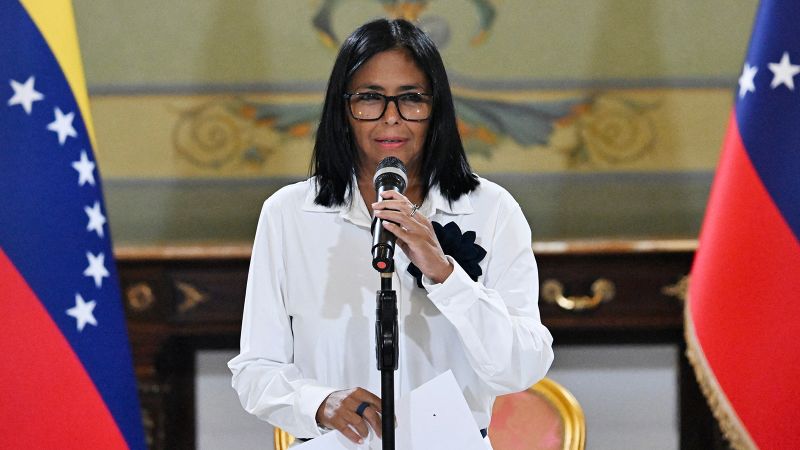
Delcy Rodríguez’s Venezuela in Dire Straits: Seeking Aid from All Sides
Delcy Rodríguez s Venezuela is in such – Four hours after catastrophic earthquakes struck Venezuela’s northern coast and the capital, Caracas, President Nayib Bukele of El Salvador posted on X, offering assistance to the Venezuelan government in managing the aftermath of the disaster. Ninety minutes later, Delcy Rodríguez, the acting president of Venezuela, retweeted the message. The former vice president of ousted leader Nicolás Maduro not only acknowledged Bukele’s gesture but also directed the foreign ministry to work with the Central American nation on coordinating support. This move underscored the urgent need for international aid, as Rodríguez’s government faced mounting challenges in recovery efforts.
Aid as a Political Tool
“Solidarity between our peoples is an invaluable force at times like these,” Rodríguez wrote in a statement, highlighting the importance of collaboration amid the crisis. Her remarks came as Venezuela grappled with a collapsing economy and a strained healthcare system, both of which have been exacerbated by years of political turmoil and mismanagement. The earthquakes, which registered magnitudes of 7.2 and 7.5, added to the nation’s woes, leaving communities in ruins and prompting a frantic search for resources.
“Solidarity between our peoples is an invaluable force at times like these.”
Rodríguez, who has long been a key figure in the Chavista movement, found herself in a precarious position. With no room for political posturing, she had to accept help from any source, whether allies or adversaries. This decision was not merely pragmatic but also strategic, as it aimed to solidify Venezuela’s position in the region while balancing the pressures of domestic discontent and international scrutiny.
Economic Crisis Deepens
Venezuela’s economic situation has deteriorated to a critical point. Disastrous fiscal policies, combined with US sanctions on the Central Bank of Venezuela and the state oil company PDVSA, have left the country in a severe financial crisis. Between 2013 and 2021, the economy contracted by three-quarters, eroding public trust and deepening poverty. The latest figures from the Central Bank reveal that the nation’s total external debt reached $161.3 billion in 2026, a stark contrast to the $28.311 billion recorded in 1998, the year before Hugo Chávez’s presidency.
Despite these figures, the impact of the earthquakes has further highlighted the gravity of the situation. Rescue operations are ongoing, and the death toll continues to rise. According to Venezuela’s top lawmaker, at least 1,450 people have lost their lives in the back-to-back disasters. The scale of the devastation has forced the government to prioritize immediate relief over long-term economic reforms, underscoring the fragility of its current position.
Historical Echoes of Crisis
The current crisis echoes a similar event from over 27 years ago. In December 1999, during Chávez’s presidency, a massive landslide in La Guaira state (then known as Vargas state) destroyed the entire town of Carmen de Uria, claiming hundreds of lives. This tragedy occurred on the very day a referendum was held to approve the new Chavista constitution, a moment that symbolized the regime’s consolidation of power. Yet, the disaster also revealed vulnerabilities in the government’s ability to respond swiftly.
Just a month after the landslide, the Venezuelan government rejected two humanitarian aid ships sent by the United States at the request of then-defense minister Raúl Salazar. The decision sparked controversy, particularly as the country’s infrastructure was already under strain. Salazar, who later retired from military service, recounted the episode in an interview with a Venezuelan newspaper. He suggested that Chávez’s refusal was driven by a desire to protect national sovereignty, though he also hinted at the influence of the growing alliance with Cuba’s Fidel Castro.
“The aid was seen as a threat to our independence,” Salazar explained. “But there was also a sense of competition with the US, which had been critical of Chávez’s policies.” This stance reflected the broader ideological divide between Venezuela and its Western neighbors, even as the country sought to position itself as a leader in the Global South.
Aid and Geopolitical Leverage
Chávez’s leadership was marked by ambitious policies, including the declaration of socialism in January 2007. At that time, he framed himself as a champion of anti-imperialism, bolstered by alliances with Brazil, Argentina, Ecuador, and Bolivia, as well as close ties with Cuba. These partnerships were not only political but also economic, as Venezuela used its oil wealth to assert influence across Latin America. However, the 1999 landslide and the subsequent rejection of US aid became a symbol of the government’s willingness to sacrifice immediate relief for long-term ideological goals.
Years later, the same region devastated by the 1999 landslide now bears the brunt of the latest earthquakes. Social media has reignited discussions about Chávez’s decision, with critics arguing that his refusal to accept aid delayed recovery efforts. The current administration, under Rodríguez, faces the challenge of avoiding such mistakes while navigating the complexities of international relations. The US capture of Maduro and his wife, Cilia Flores, has further shifted the geopolitical landscape, creating new dynamics in Venezuela’s quest for support.
The Trump administration’s close ties with Maduro have also influenced the narrative. While the previous administration had imposed sanctions, the new relationship has opened avenues for diplomatic engagement. This shift has led to debates about whether the US is now more willing to assist Venezuela, or if the aid is still a strategic move to counterbalance other regional powers. Rodríguez’s retweet of Bukele’s offer suggests a pragmatic approach, one that acknowledges the necessity of international cooperation even in the face of political rivalry.
As the earthquakes continue to reshape Venezuela’s social and economic landscape, the country’s leaders are forced to confront the reality of their situation. The debt figures, the loss of life, and the historical parallels all point to a nation in dire need of stability. Rodríguez’s actions, though criticized by some, reflect the desperate measures required to survive the current crisis. In an environment where every decision carries weight, the line between diplomacy and survival grows increasingly thin.
The earthquakes have not only tested Venezuela’s infrastructure but also its political resilience. With the nation’s economy in freefall and its healthcare system overwhelmed, the need for aid is undeniable. The Chavista regime, once emboldened by its alliances and ideological convictions, now finds itself in a position where it must rely on both friends and foes to weather the storm. This dual reliance has redefined the country’s foreign policy, as it seeks to balance regional solidarity with global partnerships in a bid to secure survival and restore order.
