
‘Leave or return in a coffin’: The threat driving migrants out of South Africa
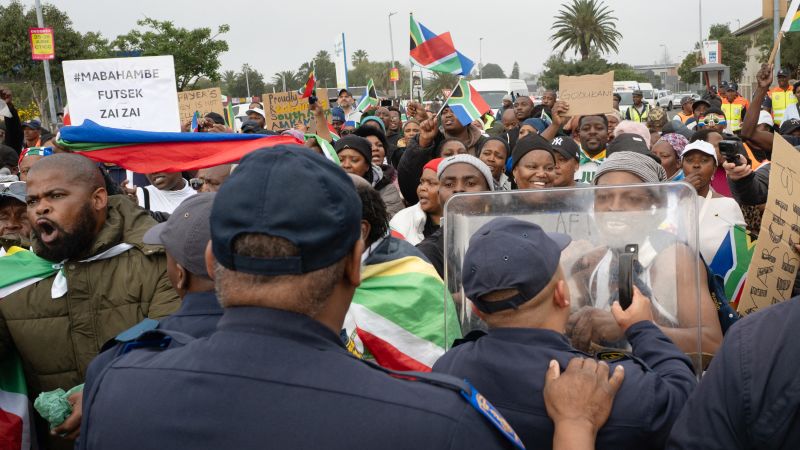
‘Leave or return in a coffin’: The threat driving migrants out of South Africa
Leave or return in a coffin – As tensions over immigration reach a boiling point in South Africa, a chilling message has been delivered to Kaunga Nyirenda, a Malawian gardener living in a Johannesburg suburb. In early June, two men confronted him with a stark warning: depart immediately or face fatal consequences. “They asked me, ‘When are you going to leave the country? We want to fix our nation. If you don’t leave now, you’ll leave in a coffin because we don’t need anyone after the 30th of June,’” Nyirenda recounted. His encounter underscores a growing wave of xenophobic hostility that has swept across the country, fueled by campaigns demanding the removal of foreign nationals.
The Deadline for Deportation
For months, anti-immigrant rhetoric had simmered in South Africa, with groups and individuals calling for stricter measures against undocumented migrants. But the urgency of the situation intensified as June approached, prompting some to issue a direct ultimatum. The groups, including prominent organizations like March & March and Operation Dudula, have been vocal about their demands, arguing that foreign nationals are taking jobs, committing crimes, and overburdening public services. These claims have galvanized public sentiment, leading to protests and, in some cases, violent confrontations.
President Cyril Ramaphosa has denounced the “deadline” as a provocation, insisting the government is actively addressing the issue of illegal immigration. “We will not tolerate any attempts to destabilize the country by anyone, whether marching or otherwise,” he stated. Ramaphosa emphasized that the violence does not reflect the views of the broader population or official policy, attributing the unrest to opportunists exploiting legitimate concerns. Despite his reassurances, the government remains on high alert, with security forces preparing to respond to potential escalations.
Groups and Their Impact
March & March, one of the most active anti-migrant groups, has called for mass demonstrations if its demands are not met. The group’s leader, Nkosikhona Ndabandaba, known as “Phakel’umthakathi,” has been a central figure in the movement. With over 1.7 million followers on Facebook, he has organized rallies featuring participants dressed in traditional Zulu warrior regalia, reinforcing a sense of cultural identity and urgency. In a recent video, Ndabandaba told a Congolese man to leave South Africa without asking about his legal status. “June 30 is the deadline, but you don’t have to wait until then—leave now,” he said. He also warned that after Tuesday, “I can’t control the people of South Africa.”
Operation Dudula, another key group, has taken a more direct approach to displacement. The name, derived from the Zulu language, translates to “push back” or “force out,” reflecting its mission to expel undocumented migrants. The organization has targeted foreign-owned businesses, intercepted individuals in the streets to verify their residency status, and blocked access to public hospitals for non-citizens. These actions have deepened the divide between communities, with some residents feeling that migrants are crowding resources while others argue the measures are necessary for national stability.
Fear and the Exodus
As the June 30 deadline looms, fear has spread rapidly through informal settlements and impoverished neighborhoods. Migrants, already vulnerable, are now scrambling to leave the country before tensions reach a violent peak. In Pietermaritzburg, near Durban, a Malawian man was allegedly killed by a mob, prompting hundreds to seek refuge in churches and mosques. Police investigations into the incident have confirmed its xenophobic nature, with officials reporting the deaths of five Mozambicans in late May in Mossel Bay. The coastal town’s informal settlements were set ablaze, destroying over 50 homes and intensifying anxieties among migrant populations.
One video circulating on social media has amplified this fear. It shows a young man holding a machete and counting down to the June 30 deadline, a visual symbol of the growing threat. The footage, though unverified, has circulated widely, spreading panic and reinforcing the idea that migrants face imminent danger. The exodus has continued unabated, with thousands voluntarily repatriating or being deported in the past two weeks. South Africa’s Border Management Authority reported that over 13,000 foreign nationals—including nearly 9,000 Malawians, 3,000 Zimbabweans, 900 Ghanaians, and 300 Nigerians—have left the country since the movement began.
Government and Public Response
Despite the government’s efforts to quell the unrest, the situation remains volatile. Ramaphosa has acknowledged the “challenge of illegal immigration” but stressed that the current wave of violence is not representative of the nation’s stance. “The attacks on foreign nationals do not reflect our people’s views or the government’s policy,” he said. However, the president’s words have done little to ease fears as the deadline draws near. The groups behind the protests argue that their actions are a response to long-standing grievances, particularly among the economically disadvantaged.
Public opinion is divided, with some citizens supporting the drive to remove undocumented migrants and others condemning the violence. The rhetoric has taken on a more aggressive tone, with slogans like “Kill the foreigners” gaining traction in social media and community discussions. While the groups claim their protests are peaceful, the escalating violence has left many questioning the legitimacy of their cause. The government has attempted to mediate, but the urgency of the situation has left officials scrambling to manage the crisis.
In a recent address, Ramaphosa warned that the government would take decisive action if the situation worsens. “We will not allow the country to fall into chaos,” he said, urging unity and calm. Yet, the threat of further attacks lingers, with migrants fearing that the deadline may serve as a catalyst for widespread violence. The exodus, now in its third month, continues to reshape the demographics of South Africa’s cities, as families and individuals leave in search of safety or new opportunities abroad.
The movement has also sparked international concern, with neighboring countries and global organizations monitoring the situation. While South Africa’s government maintains that it is addressing the issue through deportation and border control, critics argue that the measures may disproportionately affect African migrants, many of whom arrived in the country as laborers or students. The fear of being labeled as outsiders in a time of economic hardship has turned migration into a political flashpoint, with the future of the country’s multicultural society now in question.
The Road Ahead
With the June 30 deadline fast approaching, the migrant exodus shows no signs of slowing. The impact on communities is profound, as businesses close and social cohesion frays. While the government has taken steps to manage the crisis, the situation remains precarious. The groups behind the protests, such as March & March and Operation Dudula, continue to push for more aggressive action, leaving room for uncertainty about the next phase of the conflict.
For now, migrants like Nyirenda are caught in the crossfire, their lives upended by the rhetoric and violence surrounding them. The message is clear: leave or risk being seen as a threat. As the month ends, the question remains whether the deadline will mark the beginning of a new era of xenophobia—or a turning point toward reconciliation. The answer, for now, lies in the actions of those who have been called to account.
“June 30 is the deadline, but you don’t have to wait until then—leave now,” said Nkosikhona Ndabandaba, a prominent figure in the anti-migrant movement. His words, echoing through social media, have become a rallying cry for those determined to see the exodus continue.
