The Scotsman who leveled up Brazil’s beautiful game

The Scotsman who leveled up Brazil’s beautiful game
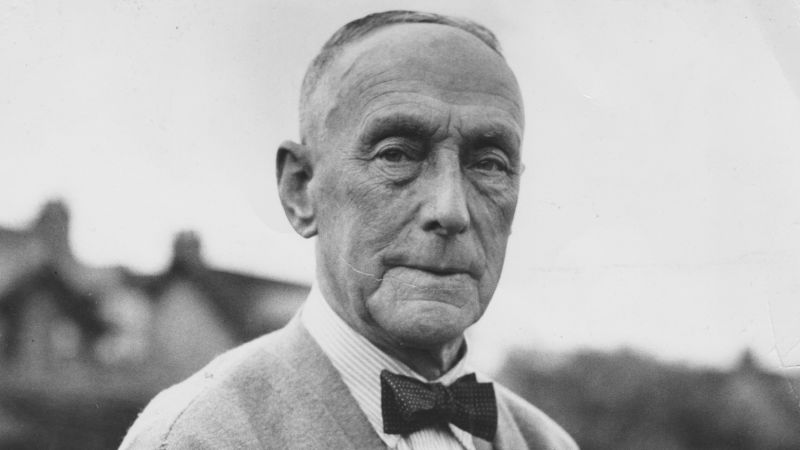
The Scotsman who leveled up Brazil – Scotland’s return to the World Cup after 28 years sets the stage for a historic encounter with Brazil, a nation also striving for a resurgence. The five-time champions, once synonymous with global football dominance, now face a prolonged drought in their quest for a sixth title. At the heart of this rivalry is Malcolm McLean, a 77-year-old man whose deep connection to both countries embodies the intertwined legacy of their footballing traditions. His affinity for the sport is split between two cultures: a Scottish heritage and a Brazilian upbringing. “My standard uniform is my Brazil top and my kilt,” McLean remarked, a testament to the duality of his identity. His grandfather, Archie McLean, played a pivotal role in shaping Brazil’s football style, introducing the nation to the rapid, short-passing game that would later become a hallmark of their success.
A Legacy of Football Innovation
Archie McLean’s journey to Brazil in 1912 marked a turning point in the country’s soccer evolution. Hired by the textile company J&P Coats to oversee a factory’s operations, he was expected to stay only six months. However, Brazil’s cultural and sporting allure held him for nearly four decades. During his time there, McLean immersed himself in the local game, adapting to its rhythms and eventually becoming a key figure in its transformation. “He loved it here, and he got heavily into playing football,” his grandson Malcolm noted. This deep-rooted influence is immortalized in historical accounts, which highlight McLean’s partnership with another Scottish expatriate, likely a colleague or friend, who together pioneered a new style of play.
“Hard though it is today to imagine Brazilians blootering the ball from back to front,” Scottish broadcaster Billy Kay wrote in *The Scottish World*, a history of the Scottish diaspora. “The Scottish World,” Kay explained, “the country’s footballing techniques were seen as revolutionary when Archie McLean arrived in Brazil.” At the time, players competed to see who could kick the ball the furthest or highest, a stark contrast to the fluid, quick-paced style that McLean and his partner introduced. Their “high speed, short passing interplay” became a blueprint for Brazilian football, earning the system the nickname “sistema inglês” or “English system,” a term that carries unintentional irony given its Scottish origins.
McLean’s influence extended beyond the pitch, leaving an indelible mark on Brazil’s soccer culture. The nation’s embrace of the new style was swift and transformative, as evidenced by the 1949 team photo featuring Arthur Friedenreich, one of Brazil’s earliest football legends, alongside Archie. This image symbolizes the merging of Scottish discipline with Brazilian flair, a fusion that redefined the game. “They were quick and devastating learners,” Kay wrote, underscoring how Brazilian players adopted and refined the techniques brought by Scottish expatriates. The result was the creation of *tabelinha*, a term that translates to “the chart” in Portuguese, which encapsulates the strategic foundation of Brazil’s modern approach.
Malcolm’s Journey Through the World Cup
Malcolm, now a lifelong Scotland fan, carries the weight of his grandfather’s legacy with pride. Born in Brazil, he moved to Scotland at the age of 10, a decision that solidified his allegiance to the Tartan Army. His passion for the sport has taken him to multiple World Cups, including the 1974 tournament in Germany, where Scotland exited the group stage without a loss—a feat still celebrated as their best performance. Despite missing the 1982 Spain games due to his wife’s challenging pregnancy, Malcolm’s commitment to following Scotland’s progress remains unwavering. His attendance at the 1998 World Cup in Paris, where Brazil defeated Scotland 2-1, is a defining memory of his journey.
For the 2026 edition, Malcolm has extended a family wedding trip in Rio de Janeiro into a prolonged stay, joining a Scottish expat community his grandfather helped establish: the St. Andrew’s Society. This group, founded during Archie’s time in Brazil, continues to unite fans across cultures. “Scotland fans and Brazil fans always get on really well together at the World Cups I’ve been at,” Malcolm said. “The Brazilians are usually drumming. And the Scots fans are playing bagpipes.” This cultural synergy is a hallmark of the event, where rivalries often blend into camaraderie.
Malcolm’s journey reflects not just personal nostalgia but a broader narrative of Scottish influence on Brazil’s footballing evolution. While his grandfather’s contributions were instrumental in shaping Brazil’s tactical identity, Malcolm’s own experiences highlight the enduring bond between the two nations. His dream remains that Scotland can overcome Brazil in the tournament, even as Brazil aims to end its 24-year wait for World Cup glory. The pressure is palpable, but the stakes are higher than ever—a clash of generations, techniques, and national pride.
Archie’s return to Paisley in 1949 marked the end of his Brazilian chapter, though his legacy lived on. His story, once overlooked in his home country, gained renewed attention when he was honored at a match in São Paulo in 1964. At 72, he made a nostalgic trip back to Brazil, where the crowd greeted him with a standing ovation. This moment, captured in a photograph, serves as a poignant reminder of the respect his contributions earned. His grandson, Malcolm, now carries this dual heritage, navigating the complexities of his identity as a Scottish fan who grew up in Brazil.
For Malcolm, the World Cup is more than a sporting event—it’s a celebration of his roots and a chance to reconnect with his grandfather’s legacy. The “no Scotland, no party” chant, which echoes through pubs in Brazil, underscores the significance of the nation’s presence on the global stage. While the focus is on the teams’ performances, the story of Archie McLean and his impact on Brazilian football adds depth to the competition. As the tournament unfolds, the narrative of how Scottish tactics reshaped Brazil’s beautiful game will be as much a part of the story as the matches themselves.
Historians like Brazilian soccer writer Tomás Mazzoni have recognized Archie’s role, calling him “an artist, a worthy exponent of the Scottish school” in 1949. This acknowledgment highlights the mutual respect between the two nations, even as their rivalry intensifies. The current World Cup offers a rare opportunity for both countries to revisit their shared history, with Malcolm’s presence in Miami serving as a bridge between past and present. As the games progress, his hopes for Scotland’s success will be tempered by the knowledge that Brazil’s journey is equally intertwined with Scottish influence.
In the end, the 2026 World Cup is not just a contest of skill and strategy but a testament to the enduring connection between Scotland and Brazil. Archie McLean’s story, once forgotten, now stands as a symbol of cross-cultural exchange in sports. Malcolm, standing in the shadow of his grandfather’s legacy, embodies the spirit of this legacy, ensuring that the tale of how Scottish techniques shaped Brazil’s footballing evolution continues to inspire. Whether Scotland triumphs over Brazil or Brazil clinches its long-awaited title, the game will remain a celebration of innovation, resilience, and the unbreakable ties between two nations.