How Trump’s takeover fractured America’s birthday party

How Trump’s Return Stretched the Meaning of America’s 250th
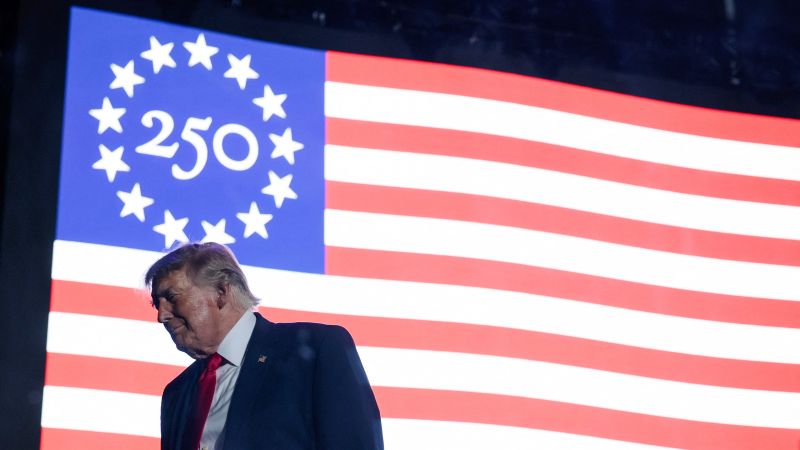
How Trump s takeover fractured America – As the United States approached its 250th birthday, a coalition of community leaders and historians had embarked on a mission to commemorate the milestone as a unifying event. The Next250 initiative, spearheaded by organizations across the country, aimed to foster shared pride in the nation’s democratic foundations, bringing together diverse groups in a celebration of collective identity. Yet, the 2026 anniversary has taken a different turn since Donald Trump’s re-election as the 47th president. His influence has reshaped the narrative, transforming what was once a symbol of national unity into a platform for partisan messaging, according to critics.
The Fracture of Unity
The original vision for the 250th anniversary centered on inclusivity, with plans to highlight the contributions of various communities. For example, a planned festival in Washington, DC, featured an indigenous-led opening ceremony, a march beginning at the site of Black Lives Matter Plaza, and opportunities for voter registration. These elements were designed to reflect the country’s pluralistic spirit and its commitment to democratic ideals. However, Trump’s reentry into the White House has led to a shift in focus. The administration now oversees the festivities with a clear emphasis on its own political agenda, turning the celebration into a showcase of loyalty to the president rather than the nation’s shared history.
“It’s a lost cause to expect anything unifying and exciting coming out of Washington,” said John Dichtl, president and CEO of the American Association for State and Local History. The group, which advised on state-level commemorations, has expressed concerns about the event’s transformation under Trump’s leadership. Dichtl noted that the new approach has “diverted the focus from collective celebration to partisan pride,” leaving many to question whether the anniversary still represents the country as a whole.
Across the nation, state and local planners have distanced themselves from the national events. While some have continued their efforts to honor the 250th anniversary through local festivals and educational programs, others have criticized the federal takeovers as overly centralized and politically driven. For instance, Next250, the group responsible for organizing the nationwide celebrations, has chosen to hold its counterprogram just a few blocks away from the White House. This decision highlights the growing divide between the grassroots efforts and the government’s centralized vision for the milestone.
A New Vision for the 250th
The Trump administration’s reimagining of the 250th anniversary began with the launch of Freedom 250, a non-partisan nonprofit under the National Park Foundation. However, its operations are heavily influenced by the White House, with top aides overseeing its activities. The group’s mission, as declared by Trump in a video posted on his Truth Social account, is to “celebrate America like no other,” emphasizing the nation’s “glory” and achievements. This rebranding has sparked debates about whether the anniversary is being used to advance political goals rather than serve as a neutral celebration.
Freedom 250’s structure allows it to operate with more flexibility than its predecessor, America250. Unlike the previous organization, which was managed by a bipartisan panel, the new entity is not subject to the same oversight. This shift has enabled the Trump team to consolidate control over the festivities, prioritizing events that align with their narrative. The organization’s fundraising efforts have also drawn scrutiny, as it has secured support from both corporate and political allies, raising questions about transparency and accountability.
“The administration doesn’t own the 250th anniversary, nor do they own the story of this country,” stated Linda Sarsour, one of Next250’s organizers. Sarsour, a prominent activist known for her role in the Women’s March on Washington, has faced criticism for her stance on Israel. Yet, she emphasized that the upcoming events will “reaffirm that this country belongs to all of us,” regardless of political affiliations.
Freedom 250’s sponsor list includes a mix of corporate giants and Trump-aligned figures. Among its backers are Palantir, Lockheed Martin, and Oracle, all of which hold significant federal contracts for data and defense services. Other partners, such as the Ultimate Fighting Championship and Penske Corp., are led by individuals close to the president, including UFC executive Dana White and Roger Penske. These collaborations have already produced 250th-related events, like the UFC fight held on the White House lawn this month and an IndyCar race in August. Even White’s Phorm energy drinks will be sold at the “Great American State Fair” on the National Mall, blending commerce with political symbolism.
Interior Secretary Doug Burgum confirmed to CNN’s Dana Bash that Freedom 250’s financial activities are being tracked through the National Park Foundation’s standard reporting processes. However, the organization’s independence has been questioned, with former White House ethics lawyer Richard Painter calling its operations “problematic.” Painter argued that the Trump administration’s direct involvement in shaping the event without congressional approval undermines the traditional framework for such commemorations. This has led to investigations by Democratic lawmakers, who are scrutinizing the group’s funding sources and influence.
The Debate Over Partisanship
Freedom 250’s leadership has defended its approach, with CEO Keith Krach stating that the organization is committed to “accountability and transparency.” Krach emphasized that the group’s focus is on “managing the books well,” ensuring that financial decisions reflect the anniversary’s grandeur. Yet, critics argue that the control exerted by the White House has turned the event into a tool for political reinforcement. The once-unified celebration of American history now seems to reflect a more divided vision, with the nation’s past and present entangled in partisan narratives.
The controversy surrounding Freedom 250 underscores broader tensions about the role of government in cultural celebrations. While the National Park Foundation maintains that it is overseeing the group’s financial reporting, the lack of bipartisan oversight has fueled doubts. For example, the group’s partnership with corporate sponsors who are also linked to the Trump administration has raised concerns about potential conflicts of interest. The event’s name, “Great American State Fair,” has been interpreted by some as a deliberate attempt to frame the anniversary as a patriotic spectacle rather than a historical one.
Despite the challenges, Next250 remains determined to counter the administration’s narrative. “We’re all in this together,” Sarsour said, highlighting the group’s belief that the anniversary should remain a shared moment of reflection and celebration. As the festivities unfold, the question remains: can the 250th birthday still serve as a unifying symbol, or has it become a battleground for political ideologies?
The debate over the anniversary’s direction reflects the broader political climate in the U.S. Since Trump’s return to power, the 250th celebration has become a microcosm of the nation’s division. While some see it as a chance to showcase America’s resilience and patriotism, others view it as a reflection of the president’s dominance. As events in Washington and beyond take shape, the anniversary’s legacy will depend on how well it balances the competing visions of the country’s past and future.