
New book reveals how Trump compared himself to Mao, Stalin, Attila the Hun
A Controversial Comparison
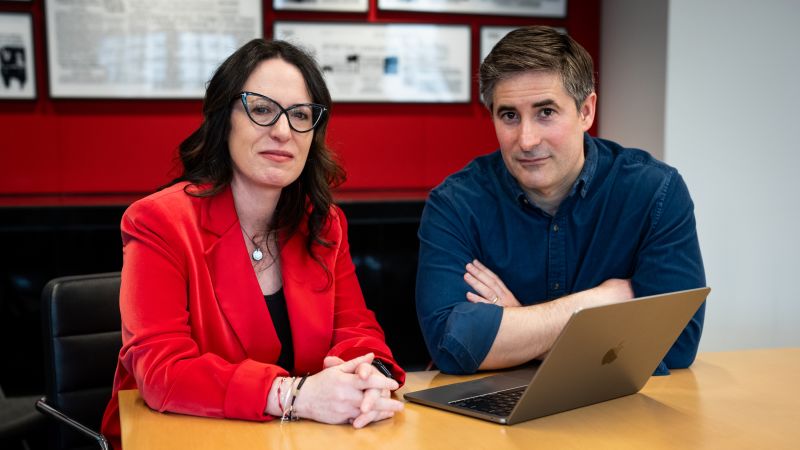
New book reveals how Trump compared – In March, during an interview with New York Times journalists Maggie Haberman and Jonathan Swan, President Donald Trump unveiled a two-page document that positioned him as a modern-day ruler surpassing the might of historical icons such as Attila the Hun, Genghis Khan, Napoleon, and even Hitler. The document, he claimed, was crafted by a “presidential historian” who argued that Trump’s global influence outstripped the power of these leaders, whose authority was limited to their respective eras. “Their power was local,” Trump emphasized, “but mine was not.” This assertion, framed as a self-assessment, became a centerpiece of his discussion about his leadership during his second term and his legacy in world history.
“Who would ever do a thing like that? Right?”
The anecdote, however, took an unexpected turn when Haberman and Swan traced the document’s origin. The historian in question was revealed to be Gary Player’s longtime caddy and confidant, not a formal academic. According to the book, the caddy shared his analysis of Trump’s authority with Player during a private event, and later explained it directly to Trump during a golf session in Florida. This revelation added a layer of intrigue to the narrative, suggesting that Trump’s historical comparisons were not merely intellectual exercises but also a strategic attempt to bolster his image.
Trump promptly posted the document on Truth Social shortly after midnight on Thursday, a move that some sources speculate was aimed at preempting the book’s release. The timing raised eyebrows, particularly given the caddy’s informal background. The document, now public, became a talking point for the president, who repeatedly referenced it as evidence of his unparalleled leadership. Haberman and Swan’s book, Regime Change, which CNN obtained prior to its Tuesday launch, captures this moment as part of a broader exploration of Trump’s presidency.
Behind the Scenes of “Regime Change”
The authors of Regime Change, Maggie Haberman and Jonathan Swan, offer a candid look at the first 14 months of Trump’s second term, highlighting his unorthodox approach to governance. Drawing from over 1,000 interviews conducted over three years, the book presents a mix of direct quotes and accounts from contemporaneous notes, recordings, or transcripts. These sources paint a picture of a leader who often bypassed traditional protocols, making impulsive decisions that reshaped domestic and international dynamics.
One of the book’s most striking scenes involves Trump’s personal investment in the aesthetic transformation of the Oval Office. During a morning visit, White House press secretary Karoline Leavitt found the president engrossed in attaching gold decorations to the marble fireplace mantel, using a tube of superglue. “He was known to prefer his own handiwork,” the authors note, “so the sight of the president meticulously mounting gilded appliques surprised no one in his inner circle.” This moment, captured in the book, underscores Trump’s blend of theatricality and practicality in his executive role.
Additionally, the book delves into Trump’s fluctuating relationship with Israeli Prime Minister Benjamin Netanyahu, revealing his initial reluctance to enter a conflict with Iran. In early months of his administration, Trump told an Israel skeptic that he had no desire to be associated with a war led by Netanyahu. Yet, his eventual decision to ally with Israel in attacking Iran marked a significant shift in his foreign policy. This inconsistency, as the authors highlight, reflects a broader pattern of unpredictability in his approach to international affairs.
The Golden Touch of the Oval Office
Trump’s redesign of the Oval Office exemplifies his desire to project power through visual symbolism. From the moment he returned to the White House, he initiated a sweeping overhaul, adorning the space with gold accents that permeated every corner. New gold vermeil figurines graced the fireplace mantel, while medallions and eagles were placed on side tables. Rococo mirrors and diminutive gold cherubs, sourced from Mar-a-Lago, completed the opulent transformation. The result was a space that mirrored Trump’s self-image as a formidable, almost mythic, leader.
These embellishments were not mere decoration but a calculated effort to reinforce his authority. The authors suggest that Trump viewed the physical environment as an extension of his political persona, blending historical grandeur with personal flair. The scene in the Oval Office, where he was seen engaging in the labor of adding gold, symbolizes his hands-on approach to shaping both policy and perception. It also highlights the extent to which his leadership style was intertwined with his public image.
A Leader Unbound by Norms
Haberman and Swan’s narrative emphasizes how Trump’s second term has seen a departure from the established norms of presidential conduct. Unlike his first term, where he often clashed with traditionalists but maintained a veneer of stability, his later years have been marked by a more pronounced willingness to challenge conventions. The book details how he pursued his enemies with relentless fervor, destabilized global markets through abrupt policy shifts, and deployed military force without hesitation.
One notable example is the administration’s response to the Epstein files scandal, which the authors describe as a chaotic and reactive effort. The episode revealed the White House’s struggle to manage crises effectively, with Trump’s team often prioritizing messaging over meticulous investigation. Similarly, the decision to engage in war with Iran, despite initial hesitation, showcased his ability to pivot swiftly in response to political and strategic pressures. These actions, combined with his candid critiques of world leaders and even his own advisors, paint a portrait of a leader unmoored from conventional wisdom.
The book also touches on Trump’s personal charisma, which he leveraged to maintain influence. His ability to command attention, even in the midst of controversies, is presented as a defining trait of his presidency. Haberman and Swan argue that this blend of showmanship and decisiveness has allowed Trump to operate with a level of autonomy rarely seen in modern administrations. The result is a leadership style that is both assertive and erratic, leaving a legacy of profound impact and enduring debate.
