
On the brink: Black lawmakers could lose decades of gains in one year
On the Brink: Black Lawmakers Face a Major Shift in Congressional Representation
On the brink – The United States faces the most significant decline in Black congressional representation in decades, dating back to the Voting Rights Act’s creation over 61 years ago. This year’s midterm elections could mark the first time since 1965 that Black lawmakers lose substantial ground, driven by aggressive redistricting strategies. With six Black House Democrats potentially unseated and a seventh, Republican Rep. Burgess Owens of Utah, departing after a judicial ruling invalidated a pro-GOP map, the erosion of Black political influence is gaining momentum. The Supreme Court’s recent decision to weaken the Voting Rights Act has emboldened efforts to reshape electoral boundaries, threatening decades of progress.
Redistricting as a Political Weapon
Redistricting has become a focal point of partisan strategy, with Republicans and Democrats both deploying it to advance their agendas. After the Supreme Court’s ruling in 2022, which curtailed the ability to challenge racial discrimination in voting practices, the push for map changes intensified. This has led to the creation of districts designed to dilute the voting power of Black communities, particularly in the South. The outcome of this campaign could reshape the balance of power in the House, with some Black representatives at risk of losing their seats in a single election cycle.
Two current Black House members are already vulnerable, as their redrawn districts face stiff competition. Four others are considered underdogs, struggling to maintain their positions in the face of new boundaries. Meanwhile, Owens, who had benefited from a map that favored Republicans, is leaving the House after a federal judge ruled against the districting plan. His departure underscores the broader impact of redistricting on Black political representation, as it removes a key voice from the chamber.
A Historical Context of Struggle and Triumph
Black Americans have endured a long journey to secure voting rights. For the first century of the nation’s existence, they were excluded from the ballot box. The Civil War and Reconstruction era saw the first wave of Black political participation, with former Confederate states granting voting rights as a condition for rejoining the Union. Federal troops in the South played a critical role in safeguarding these rights, ensuring access to the ballot for newly enfranchised citizens.
However, the withdrawal of troops in 1877 signaled the start of a new era of suppression. Racial discrimination in voting became entrenched, often through state violence and targeted efforts to disenfranchise Black voters. As a result, Black representation in Congress declined sharply by the early 1900s, with only 20 Black representatives and two senators serving between 1870 and 1901. This historical pattern of exclusion and marginalization has now resurfaced in the context of modern redistricting.
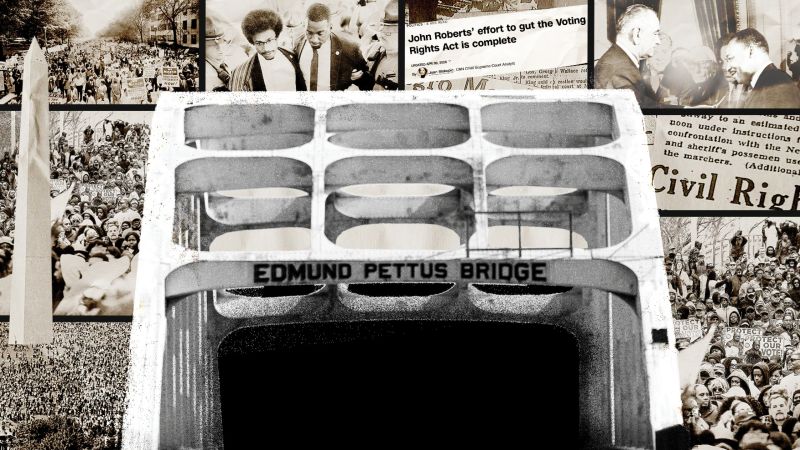
Despite these challenges, the 1965 Voting Rights Act was a turning point. Enacted the same year that Alabama state troopers brutally attacked peaceful protesters on Selma’s Edmund Pettus Bridge, the law aimed to dismantle barriers to Black voting. The “Bloody Sunday” incident galvanized national support, leading President Lyndon Johnson to sign the legislation just five months later. The act’s provisions, including federal oversight of state elections, helped increase minority representation in Congress and paved the way for new leaders.
Jim Clyburn, a prominent figure in this narrative, was first elected to Congress in 1992. His victory in South Carolina’s 2nd District made him the ninth Black congressman representing the state and the first since Reconstruction. Over 17 terms, he has built a legacy of influence, serving as the third-ranking Democrat in the House and holding key roles in shaping legislative priorities. His support was pivotal during Barack Obama’s 2008 presidential campaign, when he helped validate Obama’s appeal to Black voters as a credible candidate for the nation’s highest office.
Clyburn’s impact extends beyond politics. He has been a driving force behind initiatives that benefit the Palmetto State, such as infrastructure investments and funding for historically Black colleges and universities. Yet, the redistricting efforts targeting him have raised concerns among South Carolinians. Political scientist Claire Wofford from the College of Charleston noted that the idea of lawmakers attempting to reshape Clyburn’s district was shocking, given his stature as a leader. Still, Clyburn remains undeterred, drawing parallels between the current era and the post-Reconstruction years.
“What the Supreme Court has done is sanction discrimination against African Americans in the political process,” Derrick Johnson, president of the NAACP, told CNN. “The only time in history that we’ve seen this is after Reconstruction.”
Clyburn, who turned 85 this year, has witnessed firsthand the cyclical nature of political suppression. He recalled how his childhood in the Jim Crow South was marked by limited access to power and representation. “This Supreme Court is resegregating this country,” he said, highlighting his belief that the current redistricting tactics are echoing the discriminatory practices of the past. His comments reflect a broader sentiment among Black lawmakers who fear the loss of hard-won gains.
The redistricting battle has also had a direct impact on Clyburn. A plan to redraw his district was narrowly defeated by the state Senate, as several Republican lawmakers hesitated to disrupt an ongoing primary election. While the immediate threat was averted, some Republicans have vowed to attempt a similar strategy before the 2028 election cycle. This persistence signals a long-term effort to undermine Black political influence, even as the current midterms approach.
Historically, the Voting Rights Act was a tool to counteract such efforts, but its weakened enforcement now leaves Black voters more vulnerable. With redistricting maps increasingly tailored to dilute their power, the law’s legacy is under siege. As the 2026 midterms draw near, the stakes are high for Black lawmakers, who are now caught in a crossroads between historical struggles and modern political maneuvering.
Jim Clyburn’s experience is emblematic of this challenge. His ability to navigate the political landscape and secure support for his district has been a testament to the progress made since the 1960s. Yet, the current redistricting campaign suggests that this progress could be reversed in a matter of years. The question remains: Will the next election cycle mark the end of an era or the beginning of a new fight for representation?
As the redistricting battle continues, the implications for the future of Black political power are profound. The Supreme Court’s role in enabling these changes has sparked debates about the law’s effectiveness and the broader consequences for minority representation. With the midterms as a critical juncture, the nation watches closely to see whether decades of gains will be preserved or eroded in a single year.
