
Swiss voters poised to reject 10 million population cap in referendum, projection shows
Swiss Voters Reject 10-Million Population Cap in Referendum
Swiss voters poised to reject 10 million – Initial projections from the Swiss national broadcaster SRF suggest that Swiss voters will likely reject a proposal to cap the nation’s population at 10 million during a Sunday referendum. The estimate indicates that 55% of participants oppose the measure, while 45% support it. This outcome highlights a prevailing preference for economic stability and continued integration with the European Union, despite rising concerns about immigration’s effects on housing, public services, and crime.
Key Concerns Driving the Vote
The referendum, drawing comparisons to the Brexit vote, has raised questions about Switzerland’s future in the EU labor market. Free movement of workers between the country and the bloc is a cornerstone of Swiss economic policy. The proposal, championed by the right-wing Swiss People’s Party, requires Switzerland to maintain a population not exceeding 10 million by 2050. If surpassed for two consecutive years, the nation would face the termination of its labor mobility agreement with the EU.
Swiss population data shows the country currently has 9.1 million residents, with nearly 28% being foreigners. Government projections suggest this figure could reach 10 million by the early 2040s. However, voters remain skeptical of the cap’s effectiveness, fearing it might disrupt critical sectors like healthcare and education. Urs Bieri of GFS Bern noted that the initiative failed to resonate with the public due to its perceived impracticality and potential unintended consequences.
“It was framed as a solution to perceived chaos,” Bieri said. “Yet voters questioned whether it would truly address population pressures or create new challenges.”
Economic Implications of the Rejection
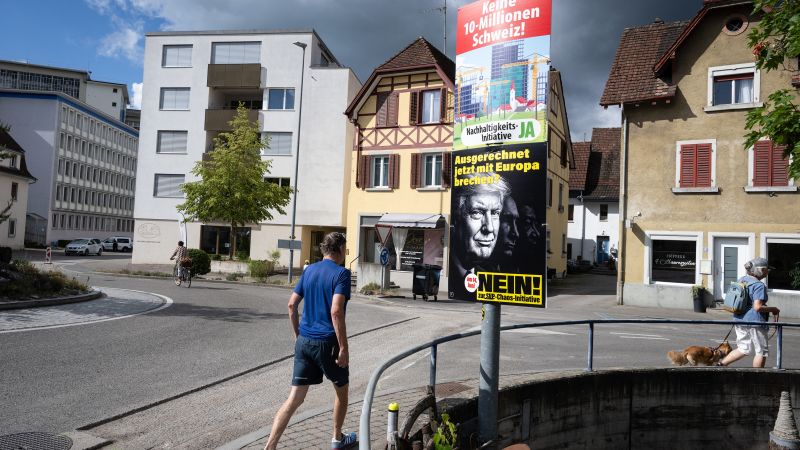
The referendum’s campaign posters emphasized stark claims, arguing that only 10% of incoming migrants were skilled workers and that asylum seekers were more prone to criminal activity. These arguments aimed to highlight risks of unchecked immigration. Yet opponents warned that the cap could lead to labor shortages and complicate trade with the EU, particularly as Switzerland relies on foreign workers for key industries.
Patrick Leisibach, a migration expert at Avenir Suisse, explained that economic worries were central to the decision. “Voters are concerned about how a yes vote would impact their daily lives,” he said. “They ask, ‘Who will staff the hospitals?’ or ‘Who will care for our aging population?’ The focus keyword “Swiss voters” is used here as a natural inclusion. The rejection signals a preference for maintaining open borders, even as the country grapples with rising migration numbers.
The Swiss People’s Party, which has long pushed for stricter immigration controls, argued that limiting population growth would protect Switzerland’s resources and maintain balance between domestic and foreign workers. However, the defeat of the 10 million cap underscores a broader European trend of public resistance to restrictive immigration policies, with voters prioritizing continuity over abrupt change.
As the referendum results emerge, the focus keyword “Swiss voters” continues to shape the narrative. While the proposal was seen as a potential tool to address population pressures, the majority chose to preserve Switzerland’s current economic framework. This decision may influence future negotiations with the EU, as the country seeks to manage immigration challenges without jeopardizing its key trade relationships.
The outcome also reflects a cautious political climate, with voters wary of policies that could destabilize the nation’s economy. The Swiss People’s Party, though disappointed, may shift strategies to address concerns about immigration’s long-term impacts while maintaining support for the status quo. The result highlights the delicate balance between managing population growth and safeguarding Switzerland’s open-border model.
