
Her boss is in US prison. How the woman running Venezuela got Trump on her side
Her Boss is in US Prison. How the Woman Running Venezuela Got Trump on Her Side
Venezuela’s Political Shift Under Delcy Rodríguez
Her boss is in US prison – Following the capture of President Nicolás Maduro by U.S. forces earlier this year, Venezuela has entered what its interim government calls a “new political moment.” This phrase, favored by officials, encapsulates the seismic changes in the country’s leadership and policies. The arrest of Maduro, a pivotal figure in the Chavista regime, has triggered a significant restructuring of the executive branch, with new laws introduced to attract international investment. These developments signal a strategic recalibration in Venezuela’s approach to its economic and political challenges.
A recent military demonstration at the U.S. Embassy in Caracas underscores this transformation. Three weeks ago, a show of American military power in the capital—once unthinkable—highlighted the evolving dynamics between the U.S. and Venezuela. This event marks a turning point for the Chavista government, which has been in power since 1999 under Hugo Chávez. Despite facing internal and external pressures, the regime continues to prioritize its ideological foundations while adapting to new realities.
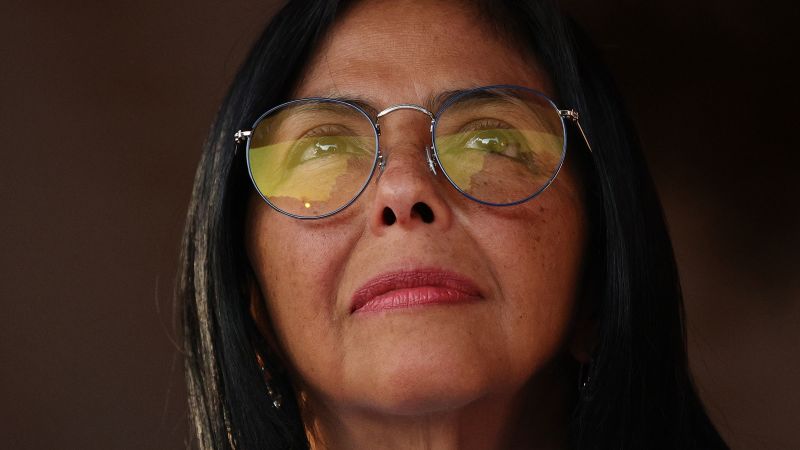
Delcy Rodríguez, Venezuela’s acting president, embodies this adaptability. She has maintained the legacy of her predecessors, who often balanced tactical compromises with the goal of preserving Chavismo’s dominance. While the anti-imperialist rhetoric that once defined the political landscape has faded, the core mechanisms of the regime—its repressive structures and control over key institutions—remain intact. The absence of a clear timeline for democratic elections suggests that the government’s commitment to change is selective at best.
According to figures from the NGO Foro Penal, over 400 political prisoners are still held in custody as of May 25. This number persists despite criticism from the United Nations and the International Criminal Court, which have labeled the government’s actions as potential crimes against humanity. The UN’s International Fact-Finding Mission condemned the repression, yet the system endures, illustrating the resilience of the Chavista regime.
Amid these challenges, Rodríguez has unexpectedly aligned with U.S. President Donald Trump. Seven days after Maduro’s capture, Rodríguez’s Minister of Communication and Information, Freddy Ñáñez, convened an emergency session with pro-government journalists. A leaked video of the meeting revealed Ñáñez outlining the government’s narrative as the participants grappled with the implications of Maduro’s removal. During the session, Ñáñez interrupted a speaker to announce that Rodríguez was prepared to address the group. She then articulated her strategy under U.S. pressure:
“We must proceed with patience and prudence, with three very clear objectives, sisters and brothers. The first is to preserve the peace of the Republic, the second is to rescue our hostages, and the third is to preserve political power.”
Rodríguez’s approach reflects a calculated balance between diplomacy and defiance. By framing her actions as pragmatic, she seeks to legitimize her leadership while ensuring the survival of Chavismo. This strategy has paid off, as the U.S. continues to support her government, benefiting from Venezuela’s oil exports amid its military campaigns in the Middle East, which have intensified ahead of the November midterm elections.
The U.S. and Venezuela’s renewed partnership was on display this week with a joint operation targeting Tren de Aragua, a notorious criminal group designated as a Foreign Terrorist Organization by Washington. Trump announced that Héctor Rusthenford Guerrero Flores, known as “Niño Guerrero,” was killed in a U.S. military strike. He described the operation as “coordinated closely with our friends in Venezuela, with whom we are working very well.” This collaboration demonstrates a shift from previous tensions, as the Venezuelan government acknowledged the intelligence and technical support provided by the U.S.
Rubio’s three-phase plan for Venezuela’s future has been a guiding framework for U.S. policy. The first phase focused on stabilizing the country, the second on recovering its economic potential, and the third on transitioning to democracy. However, recent developments suggest that Venezuela is still in the second phase, with efforts to open its vast natural resources to U.S. and international companies. This includes amendments to the Chávez-era Hydrocarbons Law, which previously centralized control over oil production and increased state royalties. The revised law, now in effect, allows greater access for foreign entities, signaling a departure from past socialist policies.
Trump’s endorsement of Rodríguez’s leadership has been vocal. He has praised her as “doing a fantastic job,” a statement that aligns with the U.S. administration’s broader goal of maintaining influence over Venezuela’s political trajectory. This partnership, while pragmatic, raises questions about the sincerity of democratic reforms. Critics argue that the U.S. prioritizes strategic interests over genuine support for Venezuela’s transition, as the country remains under a repressive regime.
The joint operation against Tren de Aragua highlights the growing alignment between the two nations. While the U.S. frames this as a counterterrorism success, Venezuela’s government sees it as a step toward greater security cooperation. This collaboration has allowed the government to maintain control over its domestic affairs, even as it navigates the complexities of international relations. The relationship between Washington and Caracas is no longer defined by outright hostility but by mutual interests in stability and resource access.
Despite these alliances, the political landscape in Venezuela remains fraught. The removal of Maduro has not led to immediate democratization, but rather a consolidation of power under Rodríguez. The government continues to suppress dissent, with opposition leaders returning to the scene but still operating under constraints. The U.S. administration, meanwhile, seems content with its oversight of Maduro’s successors, ensuring that Venezuela’s energy resources flow smoothly to support its global ambitions.
As the country moves forward, the interplay between U.S. support and Chavista resilience will shape its future. The Hydrocarbons Law’s revision, the joint military operations, and the softening of anti-imperialist rhetoric all point to a Venezuela that is adapting to new circumstances. Yet, the persistence of political prisoners and the lack of a concrete election date reveal the ongoing challenges. Rodríguez’s leadership, backed by Trump’s endorsement, remains a critical factor in determining whether Venezuela will embrace democratic reforms or continue its path under a regime that has weathered decades of international scrutiny.
The current administration in Washington, while promoting a framework for Venezuela’s recovery, appears less focused on pushing for full democratic transition. This is evident in the continued support for Rodríguez’s government, which has managed to secure both economic and political leverage. The three-phase plan, though well-intentioned, may be more symbolic than substantive, as the U.S. prioritizes its strategic interests over Venezuela’s aspirations for self-governance. For now, the country remains in a state of flux, caught between the legacy of Chavismo and the influence of its northern neighbor.
As Venezuela navigates this complex terrain, the balance of power continues to shift. The capture of Maduro and the subsequent reforms mark a new era, but the road to democracy remains uncertain. Delcy Rodríguez’s ability to secure Trump’s backing suggests that the U.S. sees her as a key player in maintaining its foothold in the region. Whether this alliance will lead to meaningful change or further entrench the regime’s grip on power remains a question that will be answered in the coming months.
