Keir Starmer Fast Facts

Keir Starmer Fast Facts: Leadership and Key Achievements in UK Politics
Keir Starmer Fast Facts provide a concise overview of the current UK Prime Minister’s journey from a grassroots background to national prominence. With a career spanning law, public service, and political leadership, Starmer has become a defining figure in modern British politics. His leadership has been shaped by a commitment to social equity, international diplomacy, and a focus on rebuilding trust in institutions. This article delves into the pivotal moments and decisions that have marked his rise to power, offering insights into his impact on key policy areas and the nation’s political landscape.
Early Life and Political Foundations
Keir Starmer was born on September 2, 1962, in London, England, to Rodney Starmer, a skilled toolmaker, and Josephine (Baker) Starmer, a dedicated nurse. His full name, Keir Rodney Starmer, was inspired by Keir Hardie, the Labour Party’s founding leader, highlighting his family’s long-standing alignment with progressive values. Growing up in a working-class environment, Starmer’s early experiences instilled a deep understanding of the challenges faced by everyday citizens, which later informed his political agenda.
Starmer’s academic pursuits were instrumental in his professional trajectory. He graduated with a first-class law degree from the University of Leeds in 1985, followed by a Bachelor of Civil Law from the University of Oxford in 1986. These qualifications laid the groundwork for his legal career, which included roles as a barrister and later as a senior public servant. His work in the justice system and policy development underscored his ability to navigate complex legal and political frameworks, setting the stage for his eventual role in national leadership.
From Legal Expertise to Political Leadership
Keir Starmer’s transition into politics began in the mid-2010s, when he was elected as a Member of Parliament for Holborn and St. Pancras in 2015. His early political career included advocacy for social justice and a focus on improving public services, which resonated with voters across the UK. In 2014, he was awarded a knighthood by Charles, then-Prince of Wales, in recognition of his contributions to public service and community engagement.
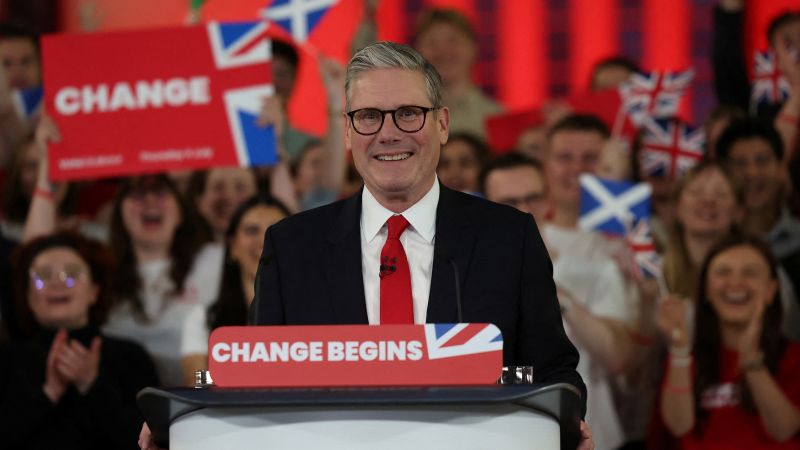
By 2020, Starmer had emerged as a central figure within the Labour Party, succeeding Jeremy Corbyn as its leader. His leadership was tested in 2024, when Labour secured a landmark victory in the general election, ending 14 years of Conservative rule. Starmer’s elevation to prime minister followed on July 5, 2024, marking a historic moment in British politics. His tenure has been defined by efforts to address economic inequality, strengthen international relations, and reform domestic policies.
International Diplomacy and Strategic Alliances
As prime minister, Starmer has prioritized global engagement, particularly in key regions like the Middle East and Asia. One of his notable decisions was the formal recognition of a Palestinian state by the UK on September 21, 2025, signaling a shift toward supporting peace initiatives in conflict zones. This move demonstrated his alignment with Labour’s traditional stance on international solidarity and human rights.
Starmer’s diplomatic efforts extended to China in 2026, when he became the first British leader to visit the nation in eight years. During his historic visit to Beijing, he met with President Xi Jinping, emphasizing the importance of strengthening trade and cooperation between the UK and its largest trading partner. These initiatives reflect his strategic approach to rebuilding global partnerships and positioning Britain as a key player in international affairs.
Domestic Policy and Social Reforms
Keir Starmer Fast Facts also highlight his focus on domestic challenges, including healthcare, education, and economic recovery. His early advocacy for healthcare reform, rooted in his mother’s battle with Still’s disease, has remained a cornerstone of his political platform. In 2024, he introduced measures to expand access to public services and reduce the burden on vulnerable communities, reinforcing his commitment to social equity.
Despite his successes, Starmer’s leadership has not been without controversy. His appointment of Peter Mandelson as ambassador to the United States in 2026 drew criticism, with opponents arguing that Mandelson’s ties to Jeffrey Epstein raised questions about the government’s priorities. Nonetheless, these decisions have been framed as part of a broader strategy to navigate complex political landscapes and achieve long-term national goals.