In casually threatening US military might against Iran, Trump may have got his own forever war

A New Era of Casual Warfare: Trump’s Approach to Iran
The Commander-in-Chief’s Changing Attitude
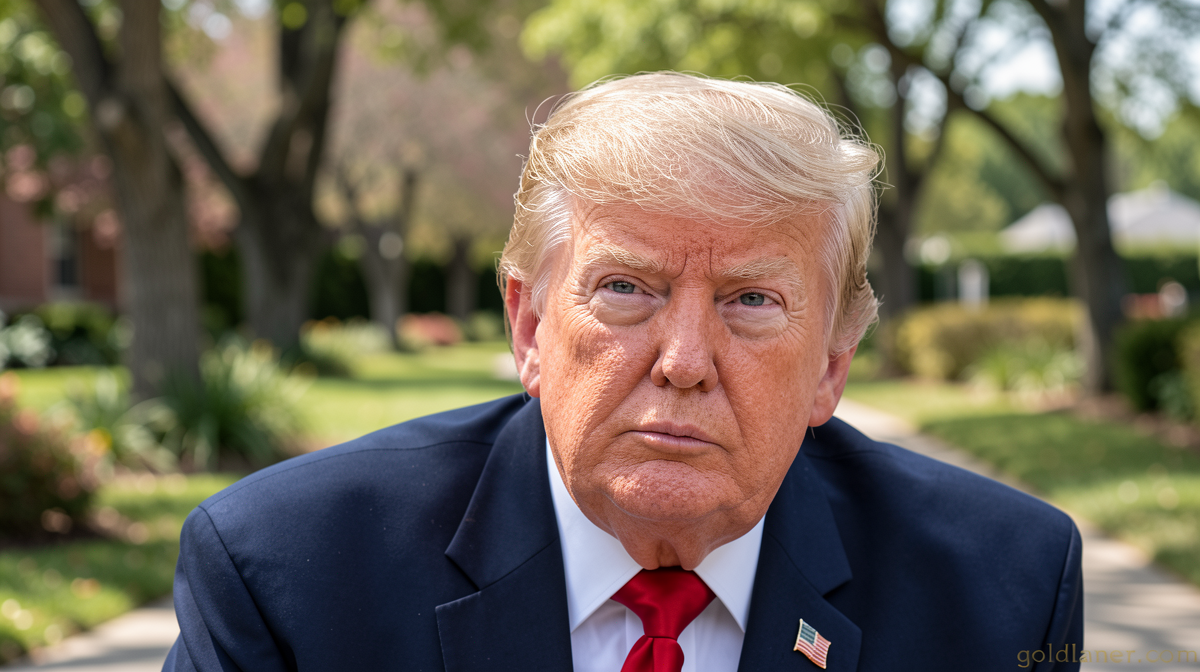
In casually threatening US military might – For a leader who once pursued a Nobel Peace Prize for his efforts to conclude global conflicts, military intervention has transformed into something remarkably routine. President Donald Trump now treats the deployment of armed forces as a conversational tool, a background mechanism to encourage diplomatic engagement with Tehran. While sending the world’s most powerful military apparatus into action represents one of the gravest responsibilities of the American commander-in-chief, Trump has elevated this power to a casual instrument of statecraft.
The Pentagon has worked to minimize public awareness of American casualties and damage to its installations, yet these losses remain both a genuine risk and an established reality. Since the most recent wave of strikes and retaliatory attacks commenced, dozens of Iranian citizens have perished. The death toll stretches into the thousands when counting from February onward. Such normalization of violence ought to serve as a critical boundary, yet its continuation or mere threat has been reduced to offhand commentary rather than serious consideration.
Legal Norms Under Pressure
The disruptive capabilities of the Trump administration have yielded genuine—sometimes unintended—advantages, and the president’s methodology certainly stands apart from tradition. However, as the collapse of the memorandum of understanding grows increasingly apparent, and the accompanying ceasefire appears beyond saving, Trump frequently mentions “devastating” Iran as though discussing the weather. This casual approach to military threats undermines American behavioral norms that once constituted the nation’s greatest strength.
Despite substantial criticism of American foreign policy throughout recent decades, the United States maintained a surface commitment to international humanitarian law. Force was consistently presented as a final option. Trump now speaks openly about destroying Iranian infrastructure—targeting bridges and electrical facilities. Legal experts and scholars will readily identify this as illegal, potentially constituting a war crime.
When Russian President Vladimir Putin strikes this type of target in Ukraine, there is rightly Western outrage.
Supporters of Trump may contend that these legal definitions have grown outdated, pointing to precedents established in recent years that have rendered the battlefield considerably more callous. Nevertheless, the rules remain unchanged in principle and practice, for sound reasons, yet Trump discusses violating them with apparent nonchalance.
From Pacifist to Perpetual Conflict
The United States’ historical reluctance to employ military force preserved the effectiveness of the Pentagon. America fought extensively but provided careful justification for each engagement. Trump’s second term has unexpectedly entered territory that previous administrations would have rejected on principle.
The capture of Nicolas Maduro, Venezuela’s president, represented a bold, high-stakes maneuver that has gradually yielded results, with Caracas growing more favorable toward American interests. Yet this action fractured two fundamental principles: the international standard against removing sitting heads of state from their capitals simply due to personal dislike, and Trump’s pacifist image after attempting—often unconventionally and without success—to conclude inherited conflicts, particularly regarding Ukraine.
With Iran, Trump now appears to be navigating toward midterm elections with his own perpetual conflict of choice—a “Forever War Lite.” This struggle features uncertain justification, shifting objectives, and diminishing domestic backing, confronting an adversary with sharper focus and greater endurance.
The Problem of Unused Might
The ceasefire’s ambiguous terms nearly invited Iran’s hardliners to breach the agreement. Iran committed to abandoning a nuclear weapons program that it claimed never possessed and never desired. In return, Tehran received potentially billions in sanctions relief, essentially returning to its February position. Despite enduring more than 13,000 strikes, Iran has survived and rebuilt rather than receiving a fatal blow.
America seems to encounter greater challenges replenishing its munitions reserves than Iran faces replacing its military leadership. This reveals the fundamental weakness of unused power: it exposes how far a military force will actually go and highlights the gap between capability and resolve.
“Forever War” originally described the Afghan conflict, where America’s celebrated inexhaustible firepower, resources, and financial capacity eventually encountered limits in both endurance and willingness to sustain distant engagements. The United States could have achieved more but chose not to, even though success in Afghanistan meant avenging September 11 and preventing similar attacks.
Iran presents an entirely different challenge: at no moment has President Trump articulated the existential necessity of this conflict to the American people. It represents his “Coke Zero conflict”—a battle he believes he can consume without consequence. He appears to have simply decided upon the war without fully explaining why it must continue.