
Wildfires cast a shadow over Utah’s Fourth of July as fireworks are restricted and communities mourn treasured places
Wildfires Cast a Shadow Over Utah’s Fourth of July as Fire Restrictions Take Effect
Wildfires cast a shadow over Utah’s Fourth of July celebrations, forcing state officials to restrict fireworks and shift focus to emergency preparedness. This year’s Independence Day marks a stark departure from tradition, with the state experiencing one of its most severe wildfire seasons on record. Governor Spencer Cox emphasized the urgency of the situation, stating that the risk of igniting new blazes has reached unprecedented levels. “Nothing about this decision was easy,” Cox said. “Utahns love celebrating the Fourth of July with family, friends, and fireworks. I do too. But this year is different. We are seeing fire behavior that even our most experienced firefighters say they’ve never witnessed before.”
Record-Breaking Wildfire Season and Escalating Risks
The current crisis stems from a combination of prolonged drought, hundreds of active wildfires, and extreme fire weather conditions that have pushed resources to their limits. Over 75% of this year’s wildfires have been human-caused, according to officials, who warn that dry vegetation and volatile weather create a highly dangerous environment. On Friday, the National Weather Service in Salt Lake City issued its first-ever “particularly dangerous situation” red flag warning, covering central and southern Utah. This rare designation signals that even a minor spark could trigger catastrophic consequences, prompting immediate action to limit ignition sources like fireworks.
Fire weather risk has been upgraded to Level 3—“extremely critical”—across much of Utah, as well as parts of northern Arizona and eastern Nevada. This classification means that firefighters are on high alert, with no room for error. “This is a temporary measure for an extraordinary year,” Cox said. “It protects lives and homes while allowing local leaders, working alongside their fire officials, to identify areas where fireworks can be used safely.” In some municipalities, designated zones for fireworks will be established, enabling controlled celebrations under safer conditions.
The Cottonwood Fire: A Devastating Threat
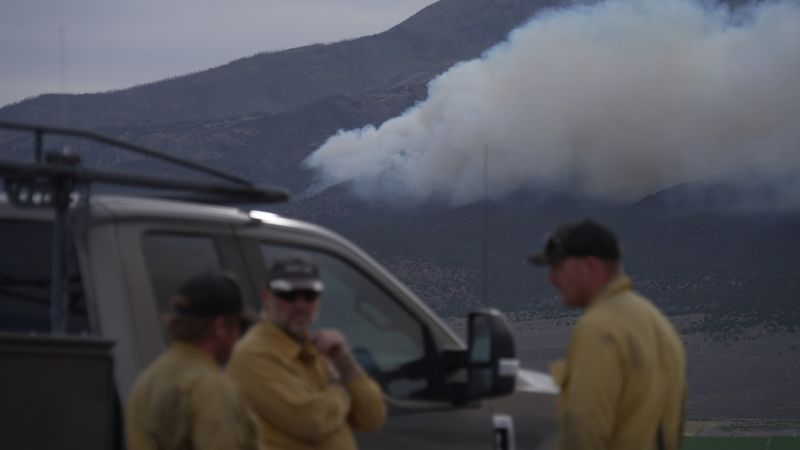
Among the most significant threats is the Cottonwood Fire, which has become Utah’s largest active wildfire. Burning through the Fishlake National Forest east of Beaver, the fire has grown to over 92,000 acres in just a few days, surpassing the area of Salt Lake City. As of Saturday night, it remains 0% contained, with evacuations in place for affected communities. Officials suspect it may become the most damaging and expensive wildfire in the state’s history. Its origin is still under investigation, though its rapid spread and unpredictable nature have left experts in awe.
Firefighters battling the Cottonwood Fire face constant danger, with over 1,600 personnel deployed to combat the blaze. “We always have safety first out there,” Alyssa Mason, a spokesperson for the emergency management team, told CNN affiliate KSL. “As soon as we see things or start getting feelings, we’ve told the guys to disengage and get to a safe place.” The fire’s erratic behavior has tested even the most seasoned crews, requiring rapid adjustments to containment strategies. Despite efforts, the blaze continues to spread, fueled by dry conditions and high winds.
Loss and Lament in Beaver Mountain Community
For many residents, the wildfires are more than a natural disaster—they are a profound loss of heritage and cherished memories. Beaver Mountain, once a symbol of family tradition, is now smoldering under the flames of the Cottonwood Fire. Evan Stapley, a local resident, described the emotional toll of watching his family’s legacy reduced to ashes. “To me, nothing’s more beautiful than Beaver Mountain in the fall,” Stapley said in a KSL interview. “The aspen yellow, and you get the reds in there and all the greens. There is nothing more beautiful in the world.”
Stapley’s words reflect the deep connection many Utahns have to the land. The cabin where he and his family created countless memories has been completely destroyed, a heartbreaking outcome confirmed when a friend sent him video of the site. “I saw that and went, ‘That’s just unbelievable,’” he said. “The fire must have moved so fast and twirled around in there and just took it … I cried,” he added. “I’ve got too many memories, too many memories of that place.” Such personal stories underscore the human cost of the wildfires, which have uprooted lives and communities.
Wildfires cast a shadow over not only the natural landscape but also the cultural fabric of Utah. The state’s iconic fall foliage, a seasonal highlight for many, is now overshadowed by smoke and the threat of further destruction. Local businesses and infrastructure have also been impacted, with the Eagle Point Ski Resort suffering significant damage. Owner Shane Gadbaw shared the resort’s fate in a Facebook post, showing the devastating loss of the historic lodge that had welcomed generations of visitors. These losses highlight the broader implications of the fire season, which have disrupted tourism, local economies, and community traditions.
Community Resilience and Long-Term Impacts
As the fire season continues, communities across Utah are rallying to mitigate its effects. Local leaders are working closely with fire officials to establish safer zones for Fourth of July festivities, ensuring that celebrations can continue without posing a risk. “We’re prioritizing prevention while still allowing for some joy this holiday,” said a spokesperson from the state’s fire department. However, the long-term impact of these wildfires extends beyond this year, with experts warning of potential changes in climate patterns that could make such events more frequent in the future.
Wildfires cast a shadow over Utah’s ability to maintain its reputation as a safe and scenic destination. The state’s tourism industry, which relies heavily on natural beauty and seasonal events, faces challenges as smoke and ash linger in the air. Meanwhile, residents are left to rebuild their lives, with the emotional and financial toll of losing cherished homes and landmarks. The fire season has also sparked conversations about sustainable land management and the need for proactive measures to reduce the risk of future disasters. For now, the focus remains on containing the flames and protecting what remains.
