
Peruvians say they were promised jobs in Russia, but landed on the front lines in Ukraine
Peruvians Say They Were Promised Jobs in Russia, But Landed on the Front Lines in Ukraine
Peruvians say they were promised jobs – In the heart of a prolonged conflict, Norma’s son made a decision that would alter their lives forever. The last time she saw him was in late January, when he stepped onto the tarmac of Lima’s airport, a place she had always associated with everyday routines. He had shared a promise of a job as a cook for the Russian military, advertised through social media, and assured her it would keep him far from the frontlines in Ukraine. With the hope of better pay and even Russian citizenship, he boarded a plane without hesitation. Norma, however, felt a pang of doubt. Her son, who had never held a weapon or ventured beyond Peru’s borders, now stood on the precipice of a new reality she could not fully grasp.
Norma’s instinct was sharp, almost instinctive. “I wanted to lock him in the house, but he had made up his mind,” she told CNN, her voice trembling. “He said, ‘Mom, please understand, I’m just going to work as a cook.’ But a mother’s heart knows when something feels wrong.” Her anxiety grew as she watched others gather at the airport, their faces hardened by the same promise of opportunity. They would not speak, only nod, as if bound by an unspoken agreement. Her son had begged her not to embarrass him, urging her to trust his choice. Yet, even as she said goodbye, a quiet dread settled in her chest.
“He left me heartbroken. Something told me there was something wrong,” Norma said. “I said goodbye, and that was the last time I saw him.”
Her fears soon materialized. By early April, Norma received videos from her son that revealed the stark contrast between his initial promises and the reality he now faced. He was no longer a cook but a fighter, clad in battle gear, constructing wooden shelters in a Ukrainian forest. The drones, once distant explosions, now hovered close, their presence a constant reminder of the war’s proximity. “He said the drones were far away,” Norma recalled. “But I could hear them in the background, and they were louder than I thought.”
The story of Norma’s son echoes a growing trend among foreign fighters recruited by Russia. As the conflict in Ukraine drags on, the Russian military has turned to developing nations, offering lucrative employment opportunities in exchange for service. Social media platforms have become a recruitment tool, luring men with promises of steady income, travel benefits, and a chance to gain Russian citizenship. Yet, for many, the reality has been far more perilous. Norma’s son joined a group of hundreds of Peruvians who had been drawn into the fray, their fate now intertwined with the war’s frontlines.
The situation has sparked concern across Latin America. In February, CNN reported that men from African countries had been pressed into military service in Russia after being promised civilian jobs as drivers or security guards. Within weeks, many found themselves in combat, their contracts signed with minimal understanding of the terms. A dozen men who spoke with CNN described the process as a whirlwind of uncertainty, with recruiters offering high salaries and bonuses but little clarity on their roles. Some, like Norma’s son, were sent into battle without adequate training.
Russia’s embassy in Nairobi has dismissed these claims as “dangerous and misleading,” according to a statement to Deutsche Welle. However, Kenya’s foreign minister traveled to Moscow in March to demand an end to the recruitment of Kenyan citizens, calling the process a human trafficking operation. Similarly, Nepal banned travel to Russia and Ukraine after thousands of its citizens volunteered for the war effort. The government’s decision followed reports of men being lured with promises of employment, only to vanish into combat without clear communication.
Stories of Peruvian Recruits and Their Families
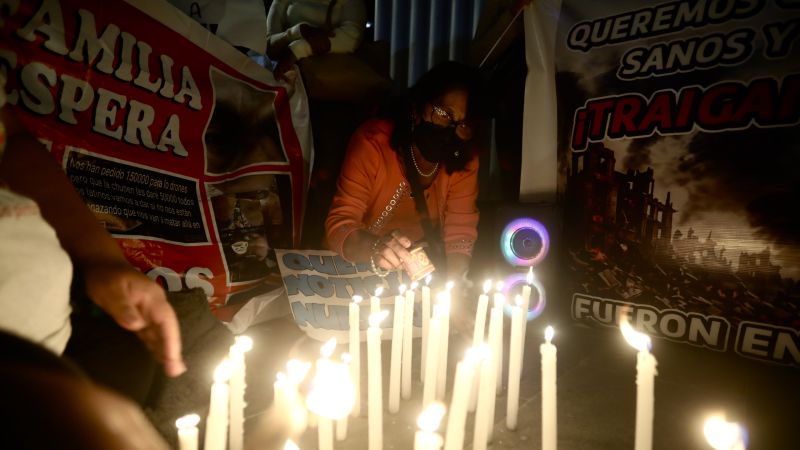
CNN’s investigation has uncovered the experiences of twelve Peruvian families who have been protesting outside the Russian embassy in Lima and the Ministry of Foreign Affairs. These relatives, many from impoverished backgrounds, had trusted the promises of recruiters without question. For some, the opportunity to work in Russia represented a chance to escape poverty and provide for their families. Others, like Rosa, believed their loved ones were joining a safe, secure mission. Rosa, a mother of three, shared her husband’s journey. He had worked as a prison guard in Lima, but his military experience was limited. “He thought he was going to be a security guard, not a soldier,” Rosa said. “He had no idea what he was signing up for.”
“My husband travelled to Russia with several other Peruvians, hoping for a job as a security guard. But soon after arriving, he was forced to sign contracts in Russian, given little training, and sent into the war,” Rosa explained.
Pedro Bravo, director of Peruvian Communities Abroad at the Foreign Ministry, noted the vulnerability of these recruits. “Many come from backgrounds where resources are scarce, and they are desperate for financial stability,” Bravo told CNN. “They don’t understand the full scope of what Russia is asking of them. It’s much easier to deceive them.” This sentiment reflects a broader issue: the Russian military’s ability to exploit economic hardship and the allure of quick financial gain. For families like Norma’s, the loss of a son or husband has become a reality they now grapple with.
Norma’s son’s disappearance marked the beginning of a new chapter for his family. “I have this light of hope that he is somewhere, hiding in a trench, but I really don’t know,” she said, her voice steady yet filled with sorrow. The emotional toll of these recruitments has left many parents and siblings in a state of limbo, waiting for news that may never come. The Russian military’s recruitment efforts, while effective, have also created a ripple effect of uncertainty and fear among communities in Peru and beyond.
A Global Recruitment Strategy
Russia’s strategy to bolster its ranks has extended beyond Ukraine. By offering jobs that sound appealing, the military has managed to draw in men from countries where economic conditions are unstable. Social media ads, often created by local recruiters, highlight the benefits of working in Russia, such as higher wages and access to citizenship. However, the transition from civilian employment to combat has been abrupt for many. Once in Russia, these men are frequently forced to sign contracts in a language they may not fully comprehend, with little time to prepare for the dangers they now face.
Some recruits, like Norma’s son, are intercepted by Russian commanders and sent directly to the frontlines. “He said he was being punished for misbehavior,” Norma recalled, her voice quivering. “But I knew he was being sent to fight.” The lack of transparency in the recruitment process has left families with few options. They rely on limited communication, often through sporadic calls or video messages, to piece together the truth. For Norma, these messages were a mix of hope and horror, revealing the stark reality of her son’s new life.
As the war in Ukraine continues, the stories of these foreign fighters and their families serve as a reminder of the human cost of Russia’s military expansion. The promise of better opportunities has become a double-edged sword, offering temporary relief but also exposing those who join to the dangers of war. In Peru, the emotional and psychological strain on families is palpable, as they wait for answers that may never arrive. The Russian military’s recruitment efforts, while strategic, have also sown seeds of doubt and anxiety across Latin America.
