
‘Only fools are not afraid’: Ukrainians adapt to life under constant Russian drone attacks
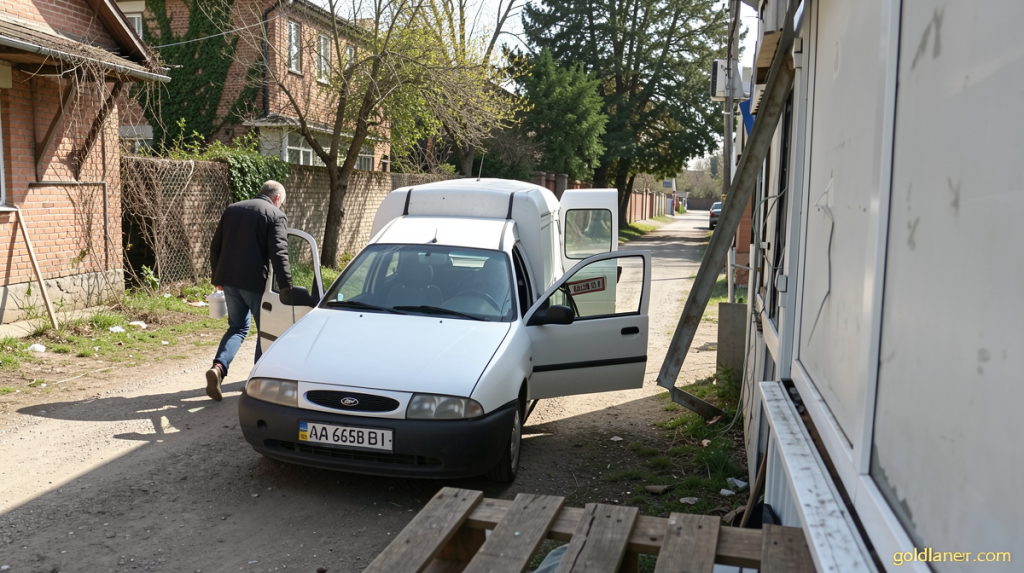
Living Under the Hum: Nikopol’s Daily Battle Against Russian Drones
Only fools are not afraid – While the occupied Zaporizhzhia Nuclear Power Plant often dominates news coverage, the nearby city of Nikopol faces its own relentless peril. Situated in southern Ukraine along the Dnipro River, this frontline community has endured nearly daily assaults since Russia launched its full-scale invasion. The proximity of Russian military installations—just two miles away on the opposite riverbank—places local residents at constant risk from short-range aerial threats.
A Growing Menace
According to local officials, the frequency of drone encounters has escalated dramatically. What once meant spotting two or three aircraft daily has now transformed into approximately three sightings every single hour, continuing through both daylight and darkness. Oleksandr Varytsev, a local poet who operates a charitable organization serving hot meals to elderly and disabled residents, has witnessed this transformation firsthand.
“We’ve actually grown somewhat accustomed to the danger, though the feeling of fear never really goes away,” Varytsev explained. “It’s very scary – and if it’s scary for me, you can imagine how older men and women feel when they come to our volunteer center.”
The human cost of these attacks has been significant. Authorities released disturbing footage in June capturing a small Russian drone striking an elderly woman seated in a wheelchair. That single incident claimed three lives, including the 87-year-old victim and her son. Earlier in April, another drone assault on a municipal bus resulted in four additional fatalities.
Adapting to a New Reality
These incidents represent just two examples of Russian FPV (first-person view) drones deliberately targeting civilian populations rather than military installations. This pattern extends beyond Nikopol to other frontline urban centers including Kherson and Kramatorsk. Despite Moscow’s repeated assertions that its strikes focus exclusively on Ukrainian Armed Forces positions, the evidence tells a different story.
Residents have fundamentally altered their daily routines to minimize exposure. Standing outdoors at bus stops has become risky behavior. Educational institutions, from schools to kindergartens, remain shuttered. Essential services such as the Ukrainian national postal system and municipal transportation operate on suspended schedules. Walking along streets requires vigilance.
“People are afraid to walk in the street, but they’re adapting to the new reality,” Varytsev said. “We keep our heads up all the time, we no longer look down at our feet.”
The Emptying City
Before the invasion commenced, Nikopol housed approximately 100,000 inhabitants and gained recognition for its strawberry cultivation destined for Ukrainian markets. Local estimates now suggest that half of this population has departed. Oleksii Kirillov, who has spent over twenty years in the freight transportation sector, has observed the city diminishing before his eyes.
“The city is emptying before our eyes. The situation is very dangerous, and there are more and more attacks every day,” Kirillov stated.
His professional focus has shifted from commercial logistics to coordinating evacuations. Through four years of conflict, he has developed the ability to differentiate between fast-moving combat drones and slower reconnaissance aircraft. While fear has diminished somewhat, it persists. As Kirillov observes, “Only fools are not afraid.”
Technological Defenses
Nikopol’s streets and sidewalks are increasingly draped with overhead fishing nets designed to intercept incoming FPV drones. This innovation, now common across Ukrainian frontline cities, aims to create safer pedestrian corridors. Additional protective measures include a municipal warning application that alerts residents to approaching threats.
Emergency responders and certain businesses have acquired handheld detection devices known as “Chuykas,” manufactured by Ukrainian firm BlueBird Tech. These instruments emit beeps when analog radio frequency drones approach. However, experts note limitations. The devices cannot detect drones operating on preset navigation paths, those utilizing fiber-optic connections, or systems employing digital signals.
“It’s better than nothing, but it’s not a silver bullet,” said Carmine Clemente, a professor in radar systems at the University of Strathclyde in Scotland. “It can give you probably a couple of minutes, at least, to get off the bus and try to get sufficiently far away to hide.”
Kateryna Bondar, a senior fellow at the Washington-based Center for Strategic and International Studies, noted that these detection tools are finding greater civilian adoption than military use. Bus operators, drivers, emergency volunteers, medics, and soldiers alike have embraced the technology. As Bondar emphasized, “Every civilian can become a target because unfortunately Russians use” aerial weapons indiscriminately against populated areas.
