Trump’s Gulf allies fear his Iran agreement is a ‘disastrous turning point’

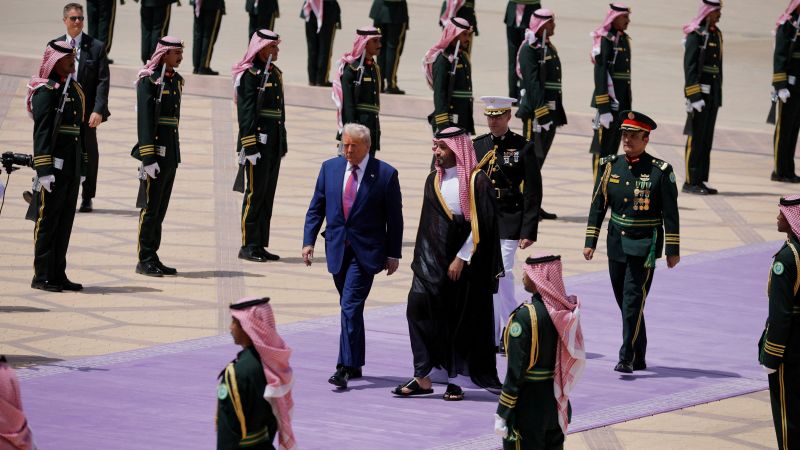
Trump’s Gulf Allies Fear His Iran Agreement Marks a ‘Disastrous Turning Point’
Trump s Gulf allies fear his Iran – For years, the United States has maintained a deep alliance with the Gulf Cooperation Council (GCC) nations, including Saudi Arabia, the United Arab Emirates, and Qatar. These countries have long regarded the partnership as a vital pillar of their national security, relying on American military support to deter regional threats. However, under President Donald Trump, this relationship evolved into something more transactional, with Washington prioritizing economic interests over consistent strategic commitments. This shift has raised concerns among Gulf leaders, who now view Trump’s Iran deal as a pivotal moment that could redefine their security landscape.
In 2018, Trump’s approach to the Gulf was laid bare during a televised exchange with Saudi Crown Prince Mohammed bin Salman. “King, we’re protecting you. You might not be there for two weeks without us. You have to pay for your military,” he remarked, reflecting his belief that the US should be compensated for its role in defending the region. This mindset, while pragmatic, contrasted sharply with the GCC’s perspective, which saw the alliance as an enduring guarantee of stability. A year later, when Iran launched a massive attack on Saudi oil facilities, the kingdom’s oil production dropped by nearly half, causing global oil prices to spike. The incident exposed the fragility of the US commitment to the Gulf, as Washington blamed Tehran for the strikes but hesitated to escalate military action.
Shifting Tides in US-Iran Relations
By the time Trump’s second term began, the Gulf states had grown increasingly wary of the US’s reliability. Despite their financial contributions to American infrastructure, they questioned whether Washington would stand by them in a crisis. This doubt deepened in 2020 when the US, in coordination with Israel, initiated a military campaign against Iran. The conflict led to retaliatory strikes across the Gulf, forcing regional governments to reevaluate their reliance on American protection. For many, the war highlighted a growing disconnect between US policy and their security needs.
“From the Arab Gulf states’ perspective, the Iran war is a disastrous turning point for the regional security order,” said Hasan Alhasan, a senior fellow at the International Institute for Strategic Studies (IISS). He argued that the agreement with Iran signals a broader US retreat from the region, which could empower Tehran to expand its influence. “US disengagement from the Gulf and the flow of financial and economic resources to Iran are likely to embolden Tehran further,” Alhasan added, emphasizing the long-term implications of the deal.
While the Gulf states have supported the emerging US-Iran pact, they remain divided on its terms. The agreement, finalized this year, allows Iran to oversee commercial traffic through the Strait of Hormuz alongside Oman. This provision, though seemingly minor, has sparked apprehension among Gulf leaders, as it could give Tehran a formal role in regulating their energy exports. The deal also includes a $300 billion reconstruction fund for Iran, a measure that has drawn criticism from some in the region who fear it will perpetuate Iran’s power rather than diminish it.
Secretary of State Marco Rubio’s recent visit to the Gulf underscores Washington’s efforts to reassure its allies. During his stop in Abu Dhabi, Rubio stated, “We are going to protect this country,” a pledge aimed at restoring faith in US security guarantees. However, the task is complex. The agreement has left many Gulf nations uncertain about whether it will address their key concerns, such as Iran’s missile program and its support for proxy groups in the region. These issues, which Gulf leaders have long highlighted as existential threats, remain unresolved in the new pact.
Historically, Gulf states opposed the 2015 Iran nuclear agreement under President Barack Obama, arguing it failed to curb Tehran’s regional ambitions. Trump’s decision to withdraw from that deal in 2018 was initially seen as a victory, as it aligned with the Gulf’s desire to weaken Iran’s leverage. Yet, the recent peace deal has stirred unease, as it lacks the same level of constraints on Iran’s military activities. “A bad deal is still preferable to war,” Alhasan noted, acknowledging the Gulf’s pragmatic approach despite their reservations.
Legacy of Trust and Emerging Doubts
The war against Iran in 2020 has left a lasting impact on the region’s perception of US leadership. A senior Gulf diplomat told CNN that the conflict revealed Iran’s well-prepared strategy to target key infrastructure in the Gulf, raising questions about the effectiveness of US deterrence. This sentiment is echoed by many in the region, who now wonder if the agreement will serve as a lasting solution or a temporary fix. “The agreement grants Tehran a formal role in overseeing commercial traffic through the Strait of Hormuz alongside Oman,” the diplomat said, stressing the strategic risks of granting Iran such influence.
Rubio’s tour, which includes stops in the UAE, Bahrain, and Kuwait, reflects the US’s focus on securing regional cooperation. These countries, which suffered the most during the 2020 attacks, are among the most skeptical of the new deal. “We want to hear their thoughts, especially in the aftermath of this weekend in Switzerland, and make sure that their views are taken into account in every decision we make,” Rubio said, referencing the recent talks that led to the agreement. The Gulf states’ involvement in the deal, however, has been driven more by necessity than optimism, as they seek to avoid further conflict and economic disruption.
The 14-point US-Iran peace plan, which forms the backbone of the agreement, has been criticized for its leniency toward Iran’s military capabilities. While the pact addresses nuclear enrichment, it does not impose significant limits on Iran’s missile program or its backing of militant groups like Hezbollah and the Houthis. This omission has fueled concerns that the deal prioritizes diplomatic convenience over security. “Iran’s missile program will most certainly come up in these conversations,” Rubio said in Abu Dhabi, but Trump’s recent comments downplayed the issue, suggesting it is fair for Iran to possess missiles if Saudi Arabia does.
Despite these challenges, the Gulf states have remained committed to the agreement, viewing it as a necessary compromise to prevent war. Their support, however, is conditional. “We are not just signing away our security for the sake of peace,” a Gulf official told CNN. “We want to ensure that the deal strengthens, rather than weakens, our position in the region.” This sentiment reflects a broader anxiety: the fear that the agreement, while ending immediate hostilities, may leave the Gulf vulnerable to Iranian aggression in the long run. As the US continues to negotiate with Tehran, the question remains whether this new accord will solidify regional stability or mark the beginning of a more precarious era for Gulf allies.
With the Trump administration’s focus on economic deals and geopolitical pragmatism, the Gulf states are left to navigate a complex balance between diplomacy and defense. The upcoming negotiations will be critical in determining the extent to which the agreement addresses their core concerns. For now, the deal stands as a symbol of shifting priorities, with Gulf leaders urging Washington to reaffirm its commitment to their security in the face of growing uncertainty.