
Nigel Farage quits UK parliament amid financial donations controversy and will seek re-election
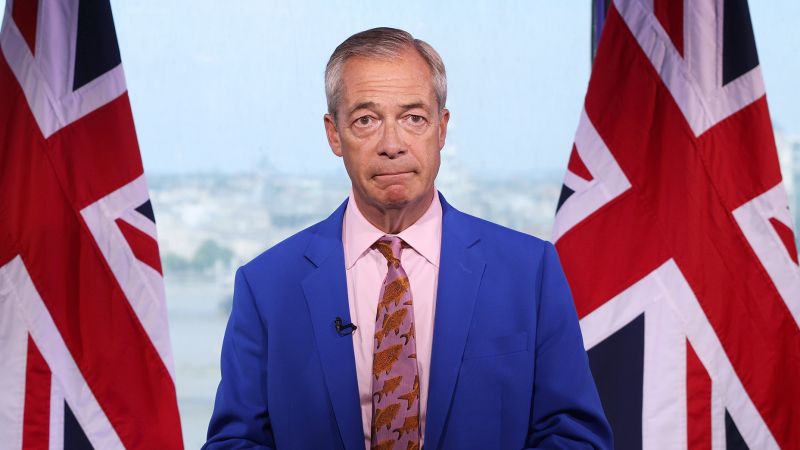
Nigel Farage Quits UK Parliament Over Financial Donations Scandal
Resignation and By-election Strategy
Nigel Farage quits UK parliament amid – Nigel Farage has left the UK Parliament, setting the stage for a by-election in his Clacton-on-Sea constituency. The decision, announced via his YouTube channel, follows mounting pressure over his financial disclosures and ties to wealthy donors. By stepping down, Farage aims to spotlight his wealth sources and allow voters to judge his conduct directly. His move comes as the standards watchdog of the UK Parliament reviews his financial practices, potentially impacting his political credibility.
Farage’s exit has sparked discussions about the future of Reform UK, the party he founded and led through the Brexit campaign. The by-election will serve as a critical test of public sentiment toward his leadership and financial transparency. His resignation also adds to the recent wave of high-profile exits in British politics, including Prime Minister Keir Starmer’s departure earlier this month. Analysts suggest Farage’s strategic timing could position him to reclaim his seat and reaffirm his influence in the right-wing political sphere.
Financial Scrutiny and Legal Context
Farage’s departure is tied to allegations of undisclosed financial contributions. The Sunday Times revealed that he received gifts and payments from George Cottrell, a businessman with a history of financial crimes. Cottrell was previously indicted in the U.S. for laundering money, wire fraud, and extortion, though he avoided a longer prison sentence through a plea deal. These revelations have intensified scrutiny over Farage’s adherence to parliamentary rules, particularly his declaration of income and potential conflicts of interest.
The UK Parliament’s standards watchdog has paused its investigation into Farage’s finances until the by-election concludes. This procedural step allows him to demonstrate transparency before facing further judgment. In his speech, Farage defended his actions, asserting that his financial decisions were legally sound and aligned with parliamentary guidelines. He emphasized that the people of Clacton would be the final arbiters of his conduct, framing the by-election as a chance to “win back the trust” he claims to have earned.
Farage’s financial disclosures have highlighted his substantial earnings beyond his parliamentary role. Public records show he reported over £2 million in “other” income since 2024, surpassing 20 times the basic MP salary. While second jobs are permitted, critics argue his diverse income streams—spanning media ventures and financial promotions—raise questions about impartiality. Supporters, however, view his financial success as proof of his business acumen and political savvy.
Political Repercussions and Public Debate
Farage’s resignation has stirred debate about the role of wealth in politics. His departure leaves a leadership vacuum in Reform UK, which has grown significantly since its founding. The party’s recent electoral gains have positioned it as a key player in the Conservative Party’s shadow, but Farage’s financial controversies may challenge that momentum. His by-election bid is seen as a high-stakes gamble to reclaim his seat and reassert his political vision.
The controversy surrounding Farage has also drawn attention to broader issues of political accountability. His case underscores the tension between personal financial interests and public service. As the standards watchdog resumes its inquiry, the focus will remain on whether his actions violated parliamentary ethics. The outcome could set a precedent for how political leaders are held accountable for financial ties, influencing public perception of reform efforts in British governance.
Farage’s leadership in the Brexit movement remains a defining aspect of his political legacy. Even as his personal finances come under scrutiny, his influence on the UK’s political direction persists. The by-election in Clacton-on-Sea is expected to draw strong competition, with Farage’s candidacy likely to galvanize both his supporters and detractors. The results could signal the next phase of the Conservative Party’s evolution or the rise of new right-wing voices in Parliament.
