Man charged with threatening to kill ICE officer as protests continue outside New Jersey detention facility

Man Charged with Threatening to Kill ICE Officer as Protests Continue Outside New Jersey Detention Facility
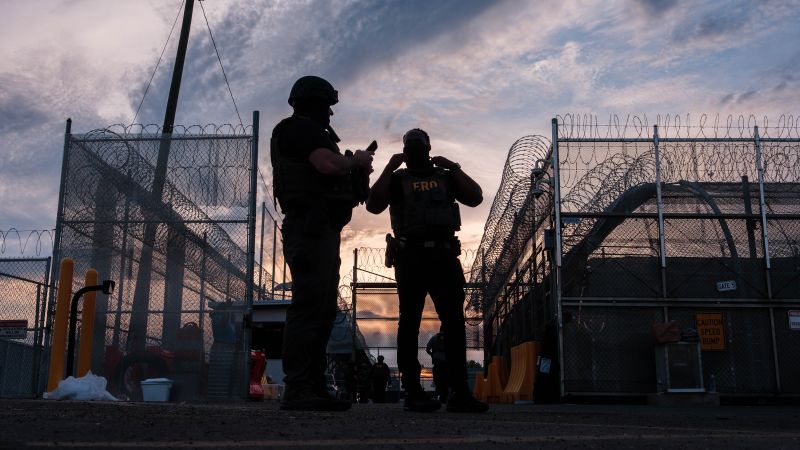
Man charged with threatening to kill – Protests persisting near a Newark, New Jersey detention center have intensified in recent days, resulting in confrontations between demonstrators and law enforcement personnel. A number of arrests have been made during these demonstrations, which have drawn widespread attention to the conditions at the facility. Now, a 27-year-old man from Brooklyn, New York, has been charged with making threats against an Immigration and Customs Enforcement (ICE) officer and his family, according to a criminal complaint filed this weekend.
Nicholas Matthew Scelfo, the accused, is alleged to have issued the threats during protests that took place last week at Delaney Hall—a privately operated detention facility with a capacity of 1,000 beds. Detainees have previously raised concerns about the facility’s conditions, including reports of mistreatment and inadequate living standards. However, the recent escalation of tensions occurred over Memorial Day weekend, when hundreds of detainees organized a hunger strike to express dissatisfaction with both the quality of food and the overall treatment they received.
Lawyers representing some of the detainees described the hunger strike as a response to deteriorating conditions, which they claim have been a source of frustration for months. Despite these allegations, the Department of Homeland Security (DHS) has maintained that the conditions at Delaney Hall are acceptable and have continued to defend its practices. When asked about the ongoing protests, DHS Secretary Markwayne Mullin emphasized the importance of peaceful demonstrations under the First Amendment, while warning against actions that endanger officers or their families.
“Demonstrators have the right to protest, but they must do so without threatening the lives of an ICE officer or their family,” Mullin stated during a Monday news conference. “Actions like spitting on an officer, physically touching them, or damaging federal vehicles constitute verbal and physical assault on federal property.”
Scelfo’s alleged confrontation with an ICE officer occurred on May 27, when he reportedly pointed at the officer during a crowd control situation and shouted, “I’ll kill your whole f***ing family. Your whole whole f***ing family is dead! Your children, your wife, all dead… you’re dead.” The complaint details that the officer, who was present at the time, responded by hitting Scelfo twice in the leg with a baton, escalating the situation into a physical altercation.
According to the complaint, investigators identified Scelfo through a combination of methods, including motor vehicle records that included a photograph from his driver’s license. The FBI’s role in the process was highlighted by Director Kash Patel, who shared on X that facial recognition technology played a key part in tracking down the suspect. “Let this be a message to any criminal actor who may try something similar,” Patel noted in his post, underscoring the seriousness of the charges.
During police questioning, Scelfo allegedly admitted to the threats he made against the ICE officer and his family. The complaint outlines that the incidents occurred in the context of broader protests, which have grown increasingly vocal in their criticism of the detention system. The charges against Scelfo include the intent to commit verbal assault, a crime that could lead to a maximum of 10 years in federal prison and a $250,000 fine if he is found guilty.
Acting Special Agent in Charge Spiros Karabinas of Homeland Security Investigations in Newark stated in a formal announcement that calling for the murder of a federal law enforcement officer and his family is not protected under the Constitution. “This is a grave criminal offense that will not be tolerated,” Karabinas said, emphasizing the legal consequences of such actions.
As of Monday afternoon, the area surrounding Delaney Hall appeared to be relatively calm, according to New Jersey Attorney General Jennifer Davenport. In a statement posted to X, she noted that state police will continue to support local authorities in ensuring community safety while upholding the right to peaceful protest. “We remain committed to protecting the constitutional rights of demonstrators while maintaining order,” Davenport added.
The case against Scelfo highlights the ongoing conflict between detainees and ICE officials, with tensions rising as protests have become more frequent and aggressive. The detention facility, which has been a focal point of discontent, is now under scrutiny for its role in these events. While the DHS has dismissed claims of inhumane treatment, the incident involving Scelfo underscores the potential for violence during these demonstrations.
Scelfo’s case may serve as a pivotal moment in the broader debate over immigration policies and the treatment of detainees. His admission during questioning adds weight to the allegations, suggesting a deliberate intent to intimidate the officer. The use of facial recognition technology by the FBI has also drawn attention to the role of digital tools in identifying individuals involved in protests, raising questions about privacy and surveillance in such cases.
Legal experts have noted that the charges against Scelfo could set a precedent for how threats during protests are handled in federal courts. The complaint’s emphasis on verbal assault as a criminal act aligns with broader efforts by the DHS to maintain authority in situations where demonstrators challenge ICE operations. Meanwhile, the hunger strike organized by detainees has become a symbol of their collective frustration, with some activists arguing that the conditions at Delaney Hall have been a long-standing issue requiring immediate attention.
As the protests continue, the focus remains on balancing the right to free speech with the need to protect law enforcement personnel. Scelfo’s case exemplifies the high stakes of these demonstrations, where the line between advocacy and aggression is increasingly blurred. The Department of Homeland Security’s response, while firm, reflects the ongoing struggle to manage public sentiment in the face of growing criticism.
With the investigation ongoing, the incident at Delaney Hall serves as a reminder of the challenges faced by both detainees and officers. The allegations against Scelfo, combined with the facility’s reported conditions, have reignited debates about the treatment of immigrants in the U.S. system. Whether this case will lead to reforms or further escalation remains to be seen, but it has already sparked renewed attention on the issue of federal law enforcement accountability.