
Fossils reveal the earliest animal with a head was also the oldest known ‘righty’
Oldest Known Right-Handed Creature Discovered in Ancient Fossils
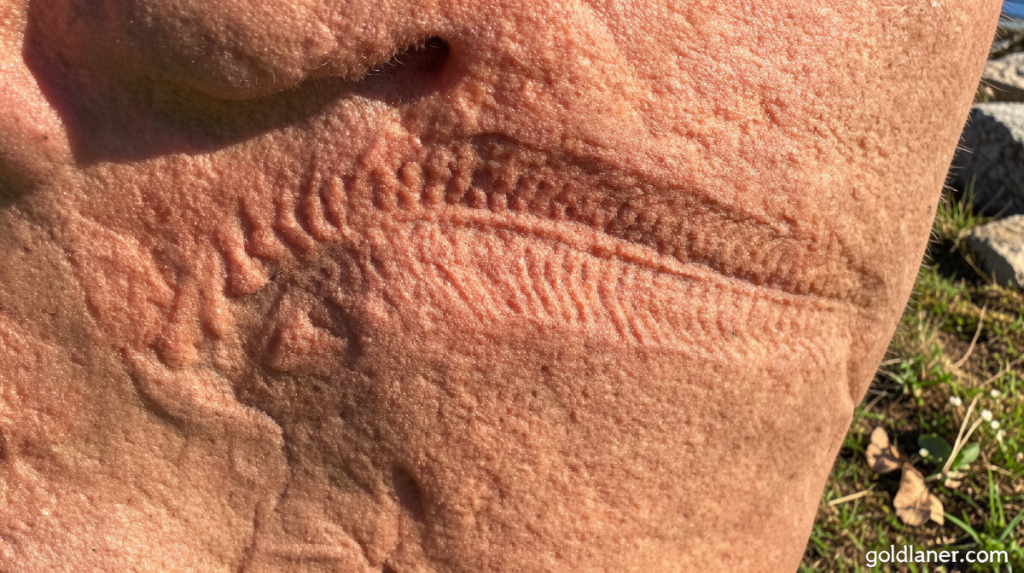
Fossils reveal the earliest animal – Individuals who favor their right hand might find their evolutionary roots stretching back half a billion years to a peculiar wormlike organism. This ancient creature, which roamed Earth approximately 550 million years ago, demonstrated a consistent tendency to curve toward its right side. Spriggina floundersi emerged during the Ediacaran Period, which spanned from 635 million to 542 million years ago, representing one of the earliest chapters in animal evolution.
Discovered exclusively through fossil remains in what is now South Australia, this diminutive organism possessed a flattened, segmented body shaped like an elongated oval. One extremity narrowed to a pointed tip while the opposite end featured a prominent curved formation, establishing Spriggina as the oldest documented animal possessing a distinct head structure.
Decades of Scientific Debate Resolved
When paleontologists first cataloged Spriggina specimens in 1958, questions arose regarding the creature’s capacity for independent movement. Recent investigations have finally addressed this uncertainty through an extensive examination of over one hundred fossil specimens, marking the most thorough analysis conducted since the initial discovery.
The research team determined that Spriggina actively wriggled across ocean floors rather than remaining stationary. More remarkably, the statistical distribution of fossil orientations revealed something unexpected: a majority of specimens curved toward the left side of the rock matrix. This pattern indicated that the living animals consistently bent their bodies to the right, demonstrating a behavioral preference remarkably similar to right-handedness observed in contemporary species.
“Fossils of early animals, to most people — even to me — they look weird,” said Scott Evans, lead author of the study detailing the findings that published Thursday in the journal Scientific Reports. “But if you push past that weirdness, ‘what we see is that a lot of the fundamental characters that we associate with animals today, things like the ability to move and even having this behavioral handedness, are present in these earliest animal communities.'”
Understanding the Evidence
The fossil record presented varied orientations. Some specimens remained relatively straight, while others displayed pronounced curves. Crucially, these fossils represented mirrored impressions of the organisms’ soft tissues. The predominance of leftward curves in the rock suggested rightward bending during life.
S. floundersi measured no larger than four inches (ten centimeters), with most individuals ranging between 0.8 and 1.2 inches (two to three centimeters) in length. To determine whether environmental factors like water currents or storms might have caused the curved positions, researchers carefully analyzed the surrounding sedimentary rock for evidence of ancient hydrodynamic activity.
“The really surprising thing was that they had this ‘handedness,'” said Evans, an assistant curator of invertebrate paleontology at the American Museum of Natural History in New York City and an assistant professor at the museum’s Richard Gilder Graduate School. “About twice as many of these things are bent to the left as are bent to the right.”
Evans initially found the preponderance of left-bending specimens puzzling but uncertain in meaning. Upon investigating modern methods for identifying handedness in living animals, he discovered an identical two-to-one ratio favoring right-sided preference. This parallel strongly suggested that Spriggina maintained a genuine behavioral inclination.
“I never thought that for an impression of a half- billion-year-old organism, we’d be able to say it preferred to turn one way versus the other.”
Scientific Significance and External Validation
While no modern creature resembles Spriggina directly, this ancient organism established the evolutionary foundation for directional preference. This characteristic persists across numerous species including humans, other primates, mice, frogs, and various insects.
Diego García-Bellido, a senior paleontology researcher at the South Australian Museum and associate professor of paleontology at Adelaide University, provided independent validation of the findings. Though not participating in the new study, García-Bellido emphasized the methodological rigor employed by the research team.
“I am very cautious when interpreting the fossil record, and I believe Evans and coauthors have been as well,” said García-Bellido, a specialist in animals from the Ediacaran and Cambrian periods, in an email. “They have clearly considered and stated all alternative hypotheses and they offer clear, valid arguments for their interpretations.”
The statistical significance of identifying right-handedness through fossil orientation suggests that Spriggina possessed a nervous system connected to muscular structures, enabling controlled, preferential curvature. Unlike certain extinct species that left behind fossilized trails providing direct evidence of locomotion, Spriggina required scientists to employ more sophisticated analytical approaches to confirm its mobility and behavioral preferences.
