Former NYC Mayor Eric Adams’ chief of staff arrested in corruption probe

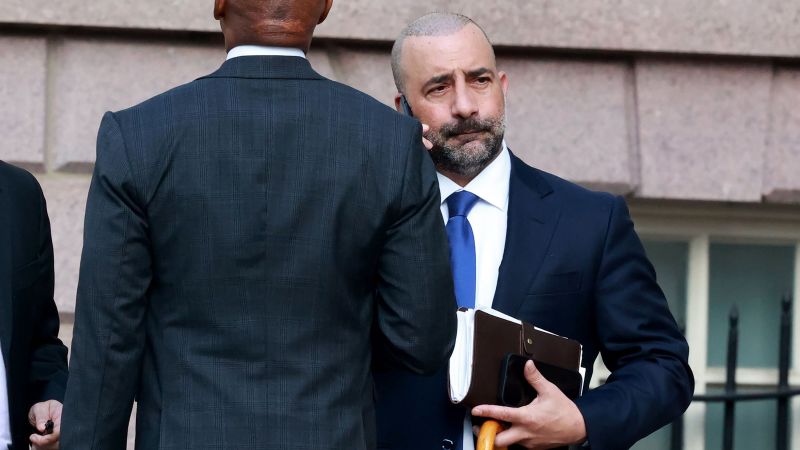
Former NYC Mayor Eric Adams’ Chief of Staff Arrested in Corruption Probe
Former NYC Mayor Eric Adams chief – On Wednesday, the former chief of staff to New York City Mayor Eric Adams, along with his brother and two other individuals, was charged with bribery and money laundering as part of a scheme allegedly tied to the city’s migrant crisis. The federal indictment, unsealed in the Eastern District of New York, accuses the four defendants of colluding to exploit the surge of migrants arriving in 2022 for personal gain. This marks another significant setback for the former administration of Eric Adams, who is currently under scrutiny for alleged mismanagement of city resources.
A Scheme to Profit from the Migrant Crisis
According to the indictment, Frank Carone—long a trusted advisor to Adams—agreed to accept bribes from employees Crystal Chen and Yan Po Zhu. The funds were allegedly funneled through Anthony Carone, Frank’s brother, who operated a law firm. The conspiracy centered on directing a multimillion-dollar contract for migrant housing to a Long Island City hotel owned by Zhu and Chen, the legal documents state. The total amount of money involved in the scheme is said to have reached approximately $120,000, which was used to cover personal expenses rather than public services.
“The alleged conspiracy resulted in a massive betrayal of the American taxpayers’ trust by steering millions of dollars in funding for asylum housing in exchange for illegal bribe payments, which were then funneled to cover personal expenses,” said James C. Barnacle, assistant director in charge of the FBI’s New York field office.
The charges highlight how the city’s legal obligations to house migrants may have been leveraged for financial benefit. At the time of the crisis, New York was required to provide shelter to thousands of asylum seekers, a responsibility that has since become a focal point of political controversy. The indictment suggests that this duty was manipulated through backdoor deals, raising questions about the integrity of the city’s leadership during the pandemic-driven influx of migrants.
Arrest and Legal Proceedings
Frank Carone was taken into custody early Wednesday after federal agents executed a search of his residence. The operation, led by law enforcement sources, uncovered evidence linking him to the alleged corruption. His brother Anthony Carone and employees Chen and Zhu are also facing charges, with all four expected to appear in court for arraignment at 2 p.m. local time. The indictment details the timeline of the scheme, emphasizing how the bribes were orchestrated to secure a lucrative contract for the migrant shelter.
Carone’s legal team has dismissed the accusations as politically motivated. In a statement, attorneys Andrew Goldstein and Russell Capone argued that the case is “utterly misguided” and that their client played a vital role in addressing the migrant crisis. “He was instrumental in helping the city navigate an unprecedented migrant crisis, but had absolutely nothing to do with granting the temporary migrant shelter at the center of these charges,” they said. The defense also called for a speedy trial, asserting that the facts will ultimately exonerate Carone.
The Political Landscape Shifts
As the corruption probe unfolds, the political scene in New York City has seen a notable shift. Current Mayor Zohran Mamdani celebrated Wednesday’s results of House Democratic primary elections, where three of his allies secured key positions. This success underscores his growing influence within the party, even as his predecessor faces legal challenges. The case against Carone is part of a broader pattern of scrutiny directed at the former Adams administration, which has been implicated in multiple allegations of misconduct.
Mamdani took to the podium to emphasize the importance of transparency in city governance. “Our government should serve the public with integrity. Any corruption would amount to a serious violation of the responsibility within the NYPD, and a breach in public trust,” he stated during a press briefing. His remarks were met with mixed reactions, with some supporters praising his efforts to rebuild trust, while critics questioned whether his actions have been equally transparent.
Broader Investigations and Public Trust
The case against Carone is not an isolated incident. Separately, the US Attorney’s Office for the Southern District of New York has been investigating current and former NYPD officials, including one high-ranking individual. Law enforcement sources confirmed that search warrants were executed earlier this week, but it remains unclear whether those targeted were arrested. The probe, which has been ongoing for years, is part of a larger effort to uncover bribery and unethical conduct within the department.
NYPD Commissioner Jessica Tisch affirmed the importance of the investigation, stating, “This morning, members of the NYPD’s Internal Affairs Bureau and the FBI executed search warrants as part of a criminal investigation being pursued by the NYPD, the FBI, and the U.S. Attorney’s Office for the Southern District of New York. The investigation is ongoing and concerns conduct by former and current members of the NYPD. When I became Police Commissioner, I promised New Yorkers that under my leadership the NYPD would conduct itself with integrity and that there would be a thorough investigation of any claim that members of service failed to meet that standard.”
Defense and Public Reaction
Frank Carone’s defense has focused on distancing him from the alleged misconduct. His attorneys argue that the charges are based on incomplete evidence and that the city’s migrant crisis was a priority for Carone’s work. “He dedicated decades to public service, the legal profession, and helping countless individuals, businesses, and charitable organizations throughout New York,” said Todd Shapiro, a spokesperson for Adams. “This is an ongoing legal matter, and my prayers are with his family.”
Meanwhile, the public reaction to the arrests has been divided. Supporters of Adams have expressed disappointment, viewing the charges as an attack on his legacy and the work he spearheaded during the pandemic. Critics, however, have seized on the allegations as proof of systemic corruption within the city’s leadership. The case has reignited debates about accountability and the role of political allies in shaping policy decisions.
Impact on City Governance
The arrests and charges have cast a shadow over the former administration’s reputation, particularly in light of its efforts to address the migrant crisis. While Adams’ team emphasized their commitment to public service, the legal actions have underscored the potential for abuse in high-profile contracts. The indictment serves as a reminder of the financial stakes involved in city operations and the pressure on officials to balance humanitarian goals with fiscal responsibility.
As the legal proceedings continue, the case may set a precedent for how future leaders are held accountable. The involvement of multiple entities—federal agencies, the US Attorney’s Office, and the NYPD—highlights the complexity of the investigation and the wide-ranging implications for New York’s political and law enforcement institutions. The outcome of the trial could shape public perception of the city’s governance for years to come.
With the migrant crisis still a major issue in the city, the corruption charges have added a new layer of scrutiny to the ongoing debates about immigration policy and government transparency. The Carone case exemplifies how public officials can become embroiled in legal troubles when financial interests intersect with policy decisions. As the trial approaches, the focus will remain on whether the allegations hold up under scrutiny and whether the city’s leadership can restore its credibility in the eyes of the public.
The Southern District investigation, meanwhile, is expected to further complicate the narrative. While the Carone case centers on migrant housing contracts, the NYPD probe suggests that corruption may extend beyond the city’s mayor’s office. Law enforcement sources noted that the NYPD-related investigation is part of a long-running effort to address bribery and misconduct dating back several years. The US Attorney’s Office declined to comment on the details, leaving the public to speculate about the scope of the allegations.
As the city grapples with these developments, the balance between public service and personal gain remains under close examination. The indictment against Carone and his associates raises important questions about the role of advisors and the extent to which they can influence major decisions. With the legal system moving forward, the case will likely serve as a catalyst for deeper reforms and increased accountability within New York’s political landscape.