Lawyers for Rep. LaMonica McIver force judges to weigh the limits of congressional immunity

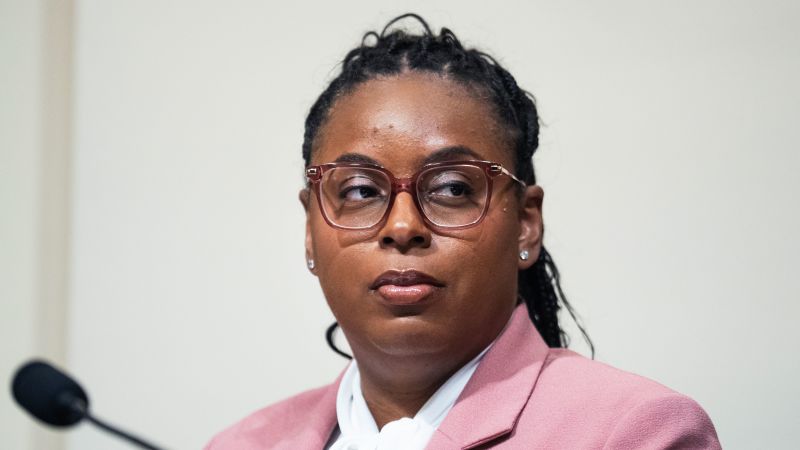
Lawyers for Rep. LaMonica McIver Challenge Congressional Immunity Limits
Legal battle over congressional protections and federal officer assaults
Lawyers for Rep LaMonica McIver force – Lawyers for Rep. LaMonica McIver have ignited a pivotal debate about the extent of congressional immunity, as a recent hearing in Wilmington, Delaware, scrutinized whether lawmakers can be shielded from criminal charges when using physical force against federal officers. The case involving Democratic Congresswoman LaMonica McIver of New Jersey has drawn attention to the constitutional boundaries of legislative protection, with three federal judges deliberating on the implications for congressional accountability. Central to the discussion is the question: does the Speech and Debate clause extend to acts of physical aggression during oversight activities?
Context of the incident and charges
The controversy stems from an incident in 2025 when McIver was charged with assaulting a federal officer while visiting an immigration detention facility in New Jersey. The arrest of Newark Mayor Ras Baraka outside the facility sparked the confrontation, though prosecutors later withdrew the charges. According to the indictment, McIver used her forearm to strike one officer and attempted to restrain another during her efforts to re-enter the building. While the charges were dropped, the event remains a focal point for legal arguments about the balance between legislative immunity and accountability for physical actions.
“The charges are not about her role as a legislator, but the force she applied during the encounter,” stated Mark Coyne, the Justice Department’s lead attorney, emphasizing the case’s significance. “This is a test of whether congressional immunity can be stretched to protect actions involving physical harm.”
McIver’s defense team, led by attorney Paul Fishman, argued that the incident was part of her legislative duties. Fishman highlighted that the detention facility had become a hotspot for protests and clashes, framing McIver’s presence as necessary to conduct oversight. “The reason they ventured outside was to monitor the actions of Immigration and Customs Enforcement,” he explained, stressing that the force used was justified within the context of congressional oversight.
Diverging legal perspectives
The hearing revealed stark differences in legal interpretations. Judge Stephanos Bibas, a Trump appointee, questioned the strength of the prosecution’s case, suggesting the charges might be an overreach. “Is this as weak as I thought?” he asked, challenging the notion that force used during a legislative mission automatically shields lawmakers from accountability. Conversely, Judge Thomas Ambro, a Clinton appointee, raised doubts about the definition of assault, noting that pushing an officer during a chaotic moment may not meet the legal threshold for such charges.
Lawyers for Rep. LaMonica McIver have used this opportunity to argue that congressional immunity should protect members who act in the public interest. Fishman emphasized that the clause was intended to safeguard lawmakers from retaliation, not to justify physical aggression. “If any member walks into a bar and decks an ICE officer, that would not be protected,” he said, contrasting the incident with more routine legislative activities.
“The key is whether the force was incidental to legislative duties or a deliberate act of aggression,” Coyne pointed out, acknowledging the complexity of the case. “The McIver team is trying to redefine the scope of immunity to fit their narrative.”
Broader implications for legislative immunity
The case has sparked wider debates about how far congressional immunity should extend. While the Speech and Debate clause typically protects lawmakers from prosecution for actions taken in their official capacity, its application to physical force remains contentious. Lawyers for Rep. LaMonica McIver argue that the clause covers all activities related to legislative oversight, including interactions with federal officers. However, critics suggest that the term “force” should be narrowly defined to exclude actions that could be seen as personal or retaliatory.
As the judiciary weighs the merits of both sides, the outcome could set a precedent for future cases. If McIver’s defense prevails, it may signal that lawmakers can use physical force without facing criminal charges, even during high-profile visits. Conversely, a ruling in favor of the prosecution could narrow the scope of immunity, making it harder for congressmen and women to claim protection for actions involving physical aggression.