
8 crew members dead after B-52 bomber crashes at California’s Edwards Air Force Base
Eight Crew Members Dead in B-52 Bomber Crash at Edwards Air Force Base
8 crew members dead after B 52 – Monroe morning brought a tragic development at Edwards Air Force Base, a remote military installation northeast of Los Angeles, when a B-52 bomber crashed shortly after takeoff, killing all eight crew members aboard. The incident, which occurred at 11:20 a.m. local time, marked the most severe crash involving the aircraft since 1982. Officials confirmed the fatalities, emphasizing the gravity of the event as they transitioned from emergency response to a full recovery operation.
A Historic Tragedy at Edwards Air Force Base
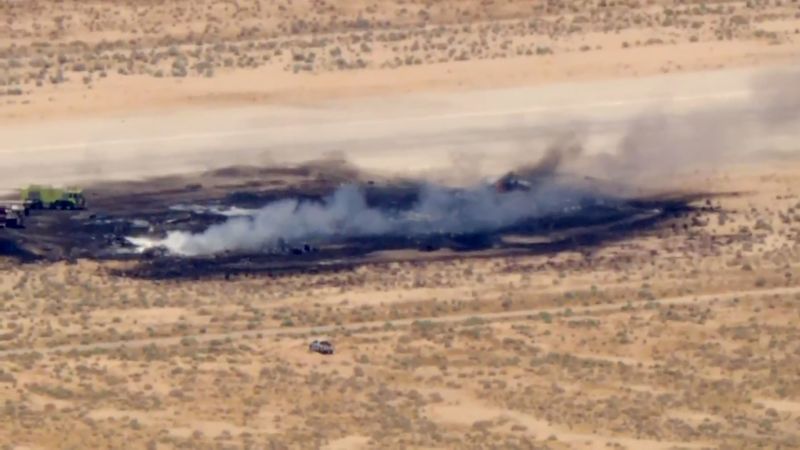
The crash site, located on the base’s sandy runway, left behind a massive blackened scar and lingering smoke. Video footage from CNN affiliate KCAL captured the aftermath, showing a towering plume that signaled the plane’s dramatic descent. Despite immediate action by emergency crews, the tragedy was described as “unsurvivable” by Colonel James Hayes, who addressed reporters at a press conference. “This is a moment that will be remembered for years,” Hayes said, reflecting on the loss of life.
“It was tragic and unsurvivable,” said Colonel James Hayes at a news conference.
While the exact cause of the crash remains under investigation, the Air Force has confirmed that the aircraft was on a routine test mission. Such flights are typically conducted to evaluate new systems or upgrades, and this particular mission supported the radar modernization program. The base’s role as a testing hub for military and civilian aviation has been central to its operations for decades, yet the crash underscores the inherent risks of these high-stakes tests.
Commemoration and Support for Families
Chief Master Sgt. Joshua T. Skarloken, who coordinated the response, noted that teams are working to inform the families of the victims. The crew, a mix of military personnel, government civilians, and contractors, included two Boeing employees, according to the manufacturer’s statement. “We are in contact with their families and are offering support,” Boeing said, highlighting its commitment to assisting those affected by the tragedy.
“Teams are working to notify families about the deaths over the next several hours,” said Chief Master Sgt. Joshua T. Skarloken.
The condolences of national leaders were quickly shared on social media. Secretary of the Air Force Troy E. Meink, House Speaker Mike Johnson, and California Governor Gavin Newsom all expressed their sympathy for the loss. Newsom specifically thanked the first responders, acknowledging their critical role in the incident’s aftermath. “The entire Edwards Air Force Base community is in our thoughts,” he said, emphasizing the shared grief across the state.
Edwards Air Force Base: A Testing Ground for Innovation
Edwards Air Force Base has long been a cornerstone of aerospace testing, hosting flights for a wide range of aircraft, helicopters, drones, and even space shuttles. Its extensive runways and strategic location make it ideal for evaluating new technologies under real-world conditions. Richard Kolko, a retired US Navy commander and former P-3 pilot, noted that the base’s reputation as a proving ground for aviation advancements is well-earned. “If it flies, it’s tested at Edwards,” he said, underscoring the facility’s significance in military development.
The crash occurred during a test flight, a standard procedure that often involves experienced pilots and engineers. Kolko explained that such missions are carefully planned, with crews selected for their expertise and reliability. “Test flights bring together the most seasoned personnel,” he added, “and teams are prepared for any scenario, from minor malfunctions to catastrophic failures.” Despite this preparation, the B-52’s crash highlights the unpredictable nature of aviation safety, even in controlled environments.
Legacy and Modernization of the B-52 Stratofortress
The B-52 bomber at the center of the crash is one of the Air Force’s oldest aircraft, having entered service in 1955. Despite its age, the plane remains a vital asset, with the B-52H variant still in active use. The current model can carry up to 70,000 pounds of bombs and munitions, making it a key player in long-range bombing operations. Recently, it has been deployed in missions against Iran, showcasing its enduring relevance in modern warfare.
The aircraft’s longevity is a testament to its design and the continuous upgrades it has undergone. Since 1962, when production ceased, the B-52 has relied on life-extension programs to maintain its operational status. These efforts have included modernizing engines and avionics, with the latest upgrade initiative expected to cost $48.6 billion, as reported by Defense News. The Air Force continues to rely on the B-52H, which is now part of a fleet of 76 planes before this incident.
Investigations and Recovery Efforts
Following the crash, military officials launched an investigation to determine the cause of the accident. The process will take several months, as they sift through maintenance records, analyze debris, and interview witnesses. Hayes emphasized that the public will have to wait for detailed findings, stating, “The exact details won’t be available to the public for around six months.”
Recovery operations have already begun, with teams focusing on securing the crash site, recovering remains, and gathering evidence. The base, which has been reopened to normal operations, will see a temporary pause in activities through Tuesday. This slowdown allows for a thorough review of the incident while ensuring the safety of personnel and equipment. The runway, though damaged, remains functional, though some parts of the wreckage are still unclear due to the intensity of the crash.
Aircraft Replacement and the Boneyard
The B-52’s age also raises questions about its future. Since production ended in 1962, any replacements must come from the “Boneyard” at Davis-Monthan Air Force Base in Arizona, where retired aircraft are stored and repurposed. This process was recently used after a non-fatal crash in Guam in 2016, which destroyed a B-52H but did not result in casualties.
Though the B-52 has been in service for over six decades, its modernization efforts ensure its continued role in the Air Force’s arsenal. The latest upgrades, including new engines, aim to extend its operational life well into the 2030s. However, the recent crash serves as a reminder of the challenges faced by aging aircraft, even with advanced modifications. Kolko noted that the B-52’s design and adaptability have made it a symbol of resilience in military aviation.
As the investigation unfolds, the focus remains on understanding how this tragedy unfolded. With its long history and critical role in both conventional and nuclear warfare, the B-52 continues to be a cornerstone of US airpower. Yet, this incident highlights the need for ongoing safety reviews and the importance of maintaining the balance between innovation and reliability in military aviation. The families of the victims, the base community, and the broader national defense sector will now await the full report of what happened in the skies over Edwards Air Force Base.
