Drone nearly hits United plane landing in Newark, pilot says

Drone Nearly Hits United Plane Landing in Newark, Pilot Reports Close Call
Incident Near Newark Liberty International Airport Raises Concerns Over Drone Safety
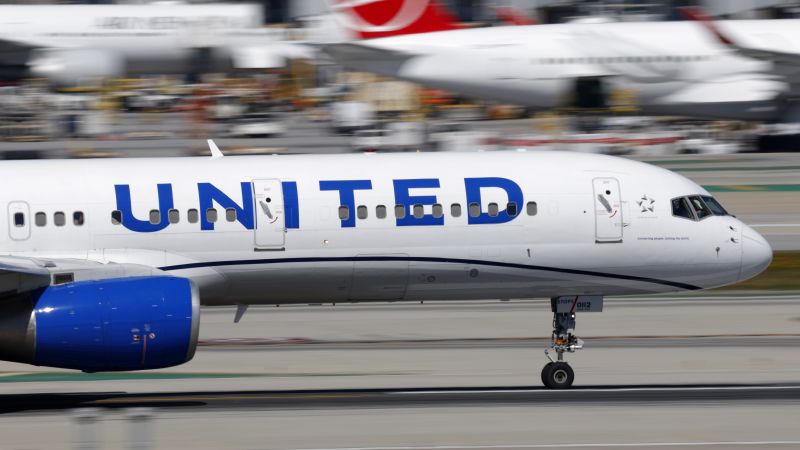
Drone nearly hits United plane landing – A United Airlines passenger aircraft came perilously close to a drone during its approach to Newark Liberty International Airport on Friday, June 27, 2026, according to a pilot’s report. The incident, captured in verified air traffic control audio by CNN, highlights the growing challenge of managing drone traffic near commercial airports. The pilot described the drone as a circular object, approximately three feet in diameter, which appeared at a height of about 100 feet beneath the plane during its final descent. While the aircraft avoided a collision, the close encounter underscores the potential risks posed by unmanned aerial devices in controlled airspace.
“We almost hit a drone,” the pilot said, as captured in the air traffic control recording. “It was about 100 feet below us.”
The Boeing 737, which was en route from Key West, Florida, with 106 passengers and five crew members aboard, landed safely at approximately 5:30 p.m. United Airlines confirmed in a statement that the plane touched down without incident, with passengers exiting the terminal as usual. Despite the near miss, the flight’s operations were not disrupted, and no injuries were reported. The airline emphasized that the incident was resolved swiftly, with the pilot and air traffic controllers coordinating to ensure the plane’s safe arrival.
Minutes before the United Airlines flight, a pilot on a United Express service operated by GoJet Airlines also reported spotting a drone at an altitude of roughly 2,000 feet. The ATC audio from that time corroborates the claim, suggesting a possible convergence of drone activity and air traffic. While the exact location of the second drone remains unclear, the report adds to the mounting evidence of drone encounters in the vicinity of New Jersey’s busiest airport. Both incidents occurred within the same timeframe, prompting questions about the coordination of drone operations and the effectiveness of current airspace management protocols.
The Federal Aviation Administration (FAA) has acknowledged the frequency of such incidents, noting that approximately 100 drone sightings are recorded near U.S. airports each month. This figure, however, represents only a fraction of the total drone activity, as many incidents may go unreported or unnoticed by ground observers. The FAA has established guidelines requiring drone operators to obtain permission for flights near manned aircraft, particularly within controlled airspace. Yet, the recent events suggest that compliance with these rules may still be inconsistent, especially during high-traffic periods.
Drone-related near-misses have become a recurring issue in recent years, driven by the rapid proliferation of unmanned aerial systems. The FAA attributes these incidents to a combination of factors, including pilot error, operator negligence, and the increasing number of drones in the skies. According to the agency, drones are allowed in controlled airspace under certain conditions, such as maintaining a safe distance from aircraft and adhering to altitude restrictions. However, the absence of a centralized system for real-time drone tracking has created vulnerabilities, particularly during the approach and landing phases of flights.
United Airlines’ statement highlighted the importance of maintaining vigilance in the airspace surrounding Newark Liberty International Airport, which handles over 100,000 flights annually. The incident occurred during a busy summer evening, when the airport is likely to experience higher traffic volumes. This timing raises concerns about the capacity of air traffic controllers to monitor and respond to potential threats, especially when multiple drones are active in the same vicinity. The pilot’s report of a drone at 100 feet below the plane during landing suggests that the device was close enough to cause a significant hazard, prompting calls for stricter enforcement of drone regulations.
Experts in aviation safety warn that drones, due to their lightweight design and unpredictable flight patterns, can pose a serious risk to commercial aircraft. The FAA has been working to address this by expanding its drone registration program and promoting public awareness campaigns. However, incidents like the one in Newark highlight the need for more advanced technology, such as real-time tracking systems and automated collision avoidance features, to mitigate risks. Airlines and airports are also exploring partnerships with drone operators to create designated flight paths and reduce the likelihood of such encounters.
While the United Airlines flight landed without issues, the event has sparked discussions about the balance between drone accessibility and air safety. The FAA is currently reviewing its procedures to determine if additional measures are necessary, such as enhancing communication between drone operators and air traffic control. In the meantime, pilots are being trained to remain vigilant for potential obstacles, particularly during critical phases of flight. The incident in Newark serves as a reminder of the importance of adhering to airspace regulations, even as drone technology continues to evolve and integrate into daily life.
Authorities have begun investigating the specific drone involved in the near collision, with the goal of identifying its operator and understanding the circumstances of its flight. The FAA has also reached out to the National Transportation Safety Board (NTSB) to assess the incident and evaluate whether any safety protocols were overlooked. Meanwhile, the Newark Liberty International Airport is working with local agencies to improve its drone monitoring capabilities, ensuring that similar incidents can be prevented in the future.
The FAA’s statement on the matter noted that drone sightings near airports have increased significantly over the past decade, with many incidents occurring in urban and suburban areas. This trend is expected to continue as the popularity of drones grows, particularly for recreational use and commercial applications such as delivery services. The agency has encouraged drone operators to stay informed about local flight rules and to report any sightings or incidents to the appropriate authorities.
United Airlines’ pilot, who initially voiced concern about the drone, has not yet provided further details on the event. However, the airline is cooperating with the FAA to analyze the situation and implement additional safeguards. As drone technology advances, the integration of these devices into the skies must be accompanied by robust safety measures to protect both manned aircraft and passengers. The incident in Newark is a timely example of the challenges that arise when the boundaries between recreational flying and commercial air travel become increasingly blurred.
With over 100,000 drones estimated to be in operation across the United States, the potential for collisions with aircraft is a pressing concern. The FAA has called for stricter enforcement of drone regulations, particularly in areas where air traffic is dense. This includes requirements for operators to maintain visual contact with their drones, avoid restricted zones, and register their devices with the agency. The incident involving the United Airlines flight is likely to serve as a catalyst for increased scrutiny of drone activity near airports, ensuring that the skies remain safe for all users.