AI glasses are aiding cheating in exams. Test-obsessed Asia is ground zero

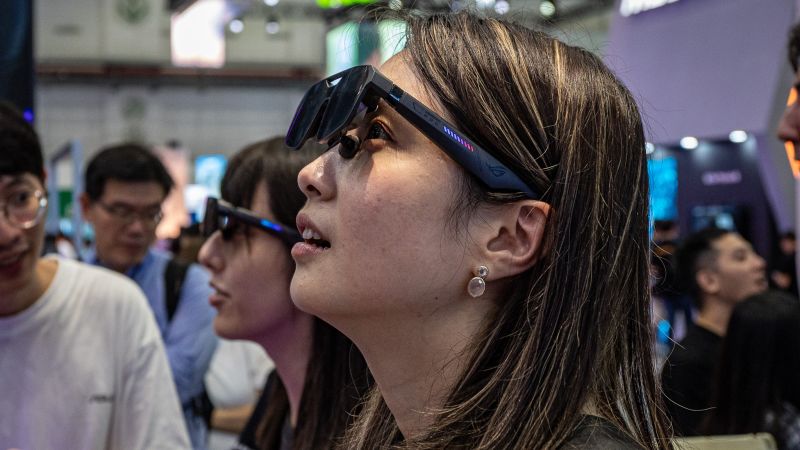
AI-Powered Glasses Reshape Exam Integrity in Academic Arenas
AI glasses are aiding cheating in exams – Throughout history, students have devised creative methods to circumvent academic assessments, from glancing at neighbors’ papers to jotting notes on hidden surfaces. However, the advent of artificial intelligence has introduced a new dimension to this age-old challenge. In regions where academic performance is paramount—particularly in East Asia—students are increasingly relying on AI-enhanced smart glasses to gain an edge. These sleek, wearable devices, now more affordable and sophisticated, are raising questions about the future of traditional education practices and the balance between learning efficiency and fairness.
Smart Glasses in the Spotlight
The issue has escalated rapidly, with recent incidents in South Korea and Taiwan highlighting the growing concern. In South Korea, two separate cases emerged last month where examinees were caught using AI-powered glasses during English proficiency tests. These exams, crucial for determining job placement, revealed how easily technology can blur the lines between honest study and cheating. In Taiwan, a student was discovered wearing smart glasses during a medical school entrance exam after proctors noticed unusual behavior. An inspection confirmed the frames were emitting heat, indicating they were transmitting data. These events underscore the urgency for educational institutions to adapt to this emerging threat.
Global Efforts to Counter the Trend
As AI-enabled wearables become more prevalent, governments and educators are taking proactive steps. In China, where the annual college entrance exam—a high-stakes test for over 10 million students—was recently conducted, authorities implemented rigorous screenings for all glasses. This measure reflects the growing awareness of how such technology can compromise exam results. Meanwhile, in the UK, the head of England’s exam watchdog warned earlier this month that AI glasses and other smart devices, such as earpieces, could exacerbate cheating. These actions signal a broader shift in how exams are monitored and managed.
South Korea’s college entrance exam administrator, in response to the two incidents, stated that the country is collaborating with the Education Ministry and local offices to develop strategies against AI glasses. These devices, already banned from exam rooms alongside other electronics, are now at the center of discussions about stricter regulations. Similarly, Taiwanese universities are revising their policies to address the use of AI eyewear, recognizing that the problem may extend beyond isolated cases.
Rethinking the Role of Technology in Education
Experts warn that these individual reports are just the tip of the iceberg. Thomas Corbin, a lecturer at Deakin University in Australia, emphasized that the number of unreported incidents is likely much higher. “If we’re seeing a few cases being reported, we’re seeing a lot more cases not being reported,” he explained. This suggests that the current measures may not fully capture the scale of the issue, leaving educators to grapple with a system that is being redefined by technology.
As AI technology advances, smart glasses are evolving into more compact, discreet tools. These devices now integrate independent AI models capable of processing information without constant connectivity, making them harder to detect. This innovation poses dual challenges: maintaining the integrity of exams while also addressing privacy concerns. The ability of these glasses to capture, analyze, and transmit data raises questions about how much personal information students might inadvertently share during tests.
Real-World Experimentation and Results
Researchers are already testing the impact of AI glasses on academic performance. Meng Zili, an electrical engineering professor at the Hong Kong University of Science and Technology (HKUST), recounts an incident a year ago where a student wore stylish glasses during an exam. Though the frames were initially dismissed as ordinary, Meng saw potential in the technology and later conducted an experiment using commercial AI glasses in an undergraduate course. The results were astonishing: a student who used the device scored within the top five of a class of over 100 students, surpassing the average of 72. This experiment demonstrated the glasses’ capacity to significantly alter exam outcomes.
Such findings highlight a fundamental shift in how students approach assessments. Meng noted that the question is no longer whether AI can assist in exams, but how much knowledge students need to retain manually versus how much they can delegate to intelligent systems. The ease with which AI glasses can access real-time answers challenges the traditional model of education, where memorization and critical thinking were central to success.
The Future of Exam Practices
Meta’s entry into the AI glasses market in late 2023 marked a turning point. The company’s collaboration with Ray-Ban introduced a product that quickly gained popularity, with over seven million units sold in the following year. This surge in adoption underscores the mainstream appeal of wearable AI devices, which are no longer just tools for convenience but also for academic advantage. Corbin, reflecting on the trend, likened the challenge to the disruptive impact of ChatGPT on essay writing in 2022. “Wearable AI is as much of a challenge to exams as ChatGPT was to essays,” he said. “I just don’t think there is any real way that we can reliably have exam practices moving forward.”
The integration of AI into everyday learning tools is reshaping the educational landscape. While these devices offer unprecedented access to information, they also demand a reevaluation of how assessments are structured. Educators must now consider whether exams should remain knowledge-based or evolve into platforms that leverage AI for real-time problem-solving. This debate is not limited to Asia; it has global implications, as the pressure to perform academically continues to rise across all regions.
As technology becomes more embedded in education, the line between innovation and cheating grows thinner. The examples from South Korea and Taiwan illustrate how quickly AI glasses can become a standard part of exam preparation. With more students adopting these tools, the focus is shifting from preventing cheating to integrating it into the learning process. This transformation could redefine academic success, making it essential for institutions to update their policies and technologies in tandem with the growing use of AI in education.