
The Trump administration fought to change a national park slavery exhibit. Here’s why Philadelphia vows to keep fighting back
The Trump administration fought to change a national park slavery exhibit. Here’s why Philadelphia vows to keep fighting back
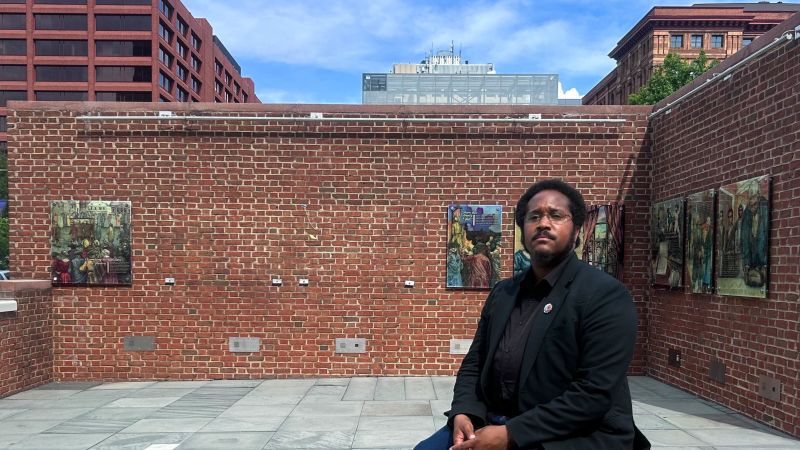
The Trump administration fought to change – As the nation approached its 250th anniversary and stood at the birthplace of the United States, a historic district in Philadelphia faced a unique disruption. Visitors to the City of Brotherly Love encountered a section of Independence National Historic Park that had been left incomplete, a result of a months-long conflict between the city and the Trump administration over a slavery exhibit. Mijuel Johnson, a local guide affiliated with The Black Journey, described the moment as “a living historical moment,” emphasizing its significance as a reminder of the country’s complex past.
The Legal Battle Over Slavery in Philadelphia
The dispute centered on the President’s House, a less familiar but crucial part of the national park that includes the Liberty Bell and Independence Hall. This site, where George Washington and John Adams once resided, had long served as a symbol of the nation’s origins. However, the city’s exhibit highlighted the enslaved individuals who lived and worked in Washington’s Philadelphia household, offering a nuanced perspective on the history of slavery in America. The Trump administration, through its Department of Interior, sought to revise the display, arguing that it unfairly portrayed the Founding Fathers.
As part of the “Restoring Truth and Sanity to American History” executive order, the administration launched a nationwide campaign to remove content from cultural institutions that, in its view, “inappropriately disparage Americans past or living.” This directive led to the targeting of the President’s House exhibit, which had been a collaborative effort between the City of Philadelphia and the National Park Service. The original display included a timeline of American slavery and detailed the lives of nine enslaved people who were part of Washington’s household during his presidency.
“This Court is now asked to determine whether the federal government has the power it claims — to dissemble and disassemble historical truths when it has some domain over historical facts,” wrote U.S. District Court Judge Cynthia Rufe in a February opinion. “It does not,” stated Rufe.
Despite the city’s initial success in court, the battle continued. In January, crews dismantled large panels at the site, using crowbars to remove historical displays. The City of Philadelphia filed a lawsuit to halt the changes, and in February, a federal judge ruled in its favor, allowing the original exhibits to remain. However, the Trump administration appealed the decision, and the legal process reached a new stage in June when a panel of three judges unanimously sided with the Department of Interior, reversing the earlier ruling.
The Historical Context of the Exhibit
For over a decade, the President’s House exhibit had honored the lives of enslaved individuals, shedding light on their contributions and the injustices they endured. The display’s historical timeline traced the broader arc of slavery in America, connecting Washington’s personal experiences to the national system of bondage. Advocates for the exhibit argued that it provided an essential counterpoint to the idealized narratives often associated with the Founding Fathers.
Yet the Trump administration’s revised exhibit took a different approach. According to the Department of Interior’s proposal, the new panels focused more on the context of slavery than its harsh realities. The original version, which noted Washington’s oversight of over 300 enslaved people at his Virginia plantation, was replaced with a more concise description. Critics, including Johnson, claimed the changes diluted the exhibit’s message, downplaying the systemic cruelty of slavery and softening Washington’s role in the institution.
Johnson, who leads tours in the historic district, viewed the conflict as a pivotal moment in the preservation of historical truth. “When all of this is put back up, we might be able to add something talking about this part of the memorial,” he said, reflecting on the battle. The guide pointed out that the struggle itself — over how to represent slavery — should be commemorated, ensuring that future visitors understand the significance of the debate.
The City’s Resolve and the Path Forward
Philadelphia’s determination to defend the exhibit has become a symbol of its broader commitment to history. The city argues that the President’s House is not just a site of presidential legacy but also a testament to the lives of those who were enslaved. The current stalemate, with the federal government holding the upper hand, has left the exhibit in a state of uncertainty. While the new panels are set to be installed, the city remains resolute in its efforts to restore or replace them.
The outcome of this dispute carries implications beyond Philadelphia. It reflects a larger trend of the Trump administration’s efforts to reshape historical narratives in alignment with its political vision. The exhibit’s original content, which emphasized the human cost of slavery, has been challenged as “inappropriate” by officials who favor a more selective portrayal of the past. For now, the federal government’s decision has paused the city’s plans, but the fight for historical accuracy continues.
Johnson, who has witnessed the changes firsthand, remains hopeful. “Even if the panels are put back up, we can still add layers to the story,” he said, noting the importance of Juneteenth as a day when the opinion on the legal battle was released. The guide’s words underscore the city’s belief that the struggle over the exhibit is itself a chapter in American history worth remembering. As the final decision looms, Philadelphia stands prepared to fight for the inclusion of its enslaved residents in the national narrative, no matter the cost.
With the legal process unresolved and the physical exhibit in flux, the city’s position has gained momentum. The battle over the President’s House highlights the tension between preserving historical truth and aligning it with contemporary political values. For Philadelphia, the fight is not just about the panels in question but about ensuring that the stories of all Americans — including those who were enslaved — are recognized in the nation’s collective memory.
As the summer of 2026 draws to a close, the outcome of this dispute remains uncertain. The city’s legal team continues to push for reinstatement, while the federal government’s revised exhibit stands as a temporary compromise. Regardless of the final decision, the debate has already sparked a deeper conversation about the role of history in shaping national identity. For Mijuel Johnson and others like him, the fight is far from over — and the City of Brotherly Love is ready to keep advocating for a more complete and inclusive account of the past.
